Last updated November 18, 2026

Free written scope consultation - allowances, timeline, and change-order rules on paper before a single trade is scheduled
The Complete Fence Installation Guide for Lake Forest Homeowners
Orange County has some of the highest rates of neighbor fence disputes in California, and in Lake Forest the combination of zero-lot-line construction in older tracts and strict HOA material lists means your fence choice has legal implications before it has aesthetic ones. A fence that looks perfect on the drawing you sketched in the driveway can still get flagged by an architectural committee, encroach on a city easement, or fail three years in because the posts were set in decomposed granite with the wrong footing mix. We’ve watched all three happen. This guide covers what a Lake Forest fence actually has to clear: HOA material rules, the California Good Neighbor Fence Law, hillside soil and post depth, city permits for anything over six feet, and which materials survive a decade of UV and Santa Ana wind. Read it before you sign anything.
Quick Answer
Fence installation in Lake Forest typically runs $3,400 – $8,200 for a standard side or back yard, and the biggest cost swings come from material choice, post depth in rocky or decomposed granite soil, and any HOA or city permit requirements. Before work starts you need HOA architectural approval, a check that your fence stays inside the city’s setback and height rules, and written notice to your neighbor under the Good Neighbor Fence Law if you’re asking them to share cost. Most Lake Forest fence projects take one to three days of construction once approvals are in hand.
Styles & brands we work with
- Kitchen remodeling
- Bathroom remodeling
- Home additions & ADU
- Roofing
- Windows & doors
- Driveway & pavers
- Fence
Table of Contents
- Lake Forest HOA Material and Color Restrictions, by Community Zone
- The California Good Neighbor Fence Law, Explained Plainly
- Rocky Hillside Soil and Post Depth in Lake Forest
- Permits, Height Limits, and Setbacks in Lake Forest
- Which Fence Materials Last in Lake Forest’s Climate
- How a Lake Forest Fence Installation Actually Runs, Step by Step
- What Fence Installation Costs in Lake Forest
- Common Mistakes to Avoid
Lake Forest HOA Material and Color Restrictions, by Community Zone
Lake Forest is a patchwork of master-planned tracts and older unincorporated-era subdivisions, and the HOA rules change with the tract. Some of the original homes south of El Toro Road sit in an established tract with recorded architectural guidelines, while the big planned communities have their own committees and design review processes. Two whole communities in Lake Forest share a single Lake Forest signature block: you can’t assume the fence your neighbor built last year will pass your committee.
What home architecture committees in Lake Forest typically regulate:
- Material. Many Lake Forest HOAs restrict fencing to specific materials, and it’s not unusual for a tract to allow wood/composite but bar chain link, or to require anything prefinished to meet the adjacent homes.
- Color. Stains and paint are usually fixed to a palette. Common directives here lean toward earth tones, with some tracts requiring the fence color to match the home. You usually send in a color sample or stain card with your application.
- Height. HOAs often hold side and rear fences to six feet or less even where the city would permit seven with a beaverboard cap.
- Visible side. The “good side” facing inward is standard. If you build like a typical installation with the finished side out, an HOA can require you to flip it, and in a Lake Forest tract with neighbor views that means planning for it up front.
- Gate placement and trash enclosure screens. Many Lake Forest communities dictate where fencing can start and stop, and how trash bins must be screened from street view.
How to request a variance when your preferred material conflicts
A variance is a written request to the architectural committee asking them to approve something outside the recorded guidelines. In our experience the requests that succeed are the ones that answer the committee’s three real fears: that your material will look different from the rest of the street, that the color will fade or clash, and that the structure will sag or fail. Send photos of the manufacturer’s warranty, a physical board or sample, the stain card, and a site plan showing fence height and the visible face. Give a reason beyond taste, such as a wood-alternative material chosen for termite resistance or a lightweight panel that passes wind load. If the committee pushes back, ask for the specific guideline section they’re citing so you can address it directly.
The California Good Neighbor Fence Law, Explained Plainly
California’s “Good Neighbor Fence Law” (Civil Code Section 841) settles the fence question that Lake Forest neighbors argue over most: who pays. The short answer is that adjoining landowners are presumed to share the cost of a “reasonable portion” of a boundary fence in proportion to the benefit. If you’re both using it, the law assumes you’re both paying something toward it.
What that means when the fence goes up:
- You give written notice before you build. Before any work, send the adjoining owner a written notice describing the proposed fence, its material, height, and your share of the cost, and how their share was calculated. Hand-delivered or mailed to their last known address.
- They have 30 days to respond. If they object in writing, the law’s quick path is a 50/50 split of costs on a standard fence; you’ll need to resolve the rest through agreement or mediation.
- If they don’t respond or refuse to pay. You can proceed and the law allows you to recover their share, but the practical route in Lake Forest is usually a written cost-share agreement reviewed before you build, not a court action after the fact.
- The fence is on the boundary, not on your property. A fence set entirely inside your own line is your fence and your cost. A shared boundary fence is the one the law governs.
Where disputes usually start in Lake Forest
Two things trigger most of them: a fence added along a shared chain-link-to-block boundary in an older tract where the “who pays” was never written down, and a homeowner who wants a taller privacy fence than a neighbor wants to look at. Our advice for both is the same and it’s boring: get the surveyor’s line marked first, put the cost split and the height in writing, and don’t start until everyone has signed. A $1,200 fence built on the wrong side of an unmarked line costs far more than the survey.
Rocky Hillside Soil and Post Depth in Lake Forest
Lake Forest sits on ground that changes block by block. Along the eastern ridges running toward the national forest, fences often hit bedrock, decomposed granite, or clay-based hillside soil within a foot or two of the surface. In the older flatland tracts closer to El Toro, you may find compacted fill and former orchard ground. Both conditions affect the same two things: how deep the post goes and what the footing is made of.
Why depth matters under Santa Ana wind. A fence is a sail. During a strong Santa Ana event, a six-foot solid fence with a 100-foot run can take serious load. Underbuilt posts fail at the base, and the most common repair we see is a leaning fence on a Lake Forest slope where posts were set with concrete poured around a ball of dry soil.
What to plan for:
- Post depth. In normal soil, posts are usually set roughly two feet below grade with a one-third-of-height rule for wind exposure. On Lake Forest’s sloped and decomposed granular lots, we plan on deeper footings and tighter spacing.
- Footing mix. A minimum 3,000 psi concrete mix works on stable ground. On decomposed granite or loose fill, posts call for a wider, deeper bell of concrete plus clean gravel at the base for drainage.
- Rock encounters. Hitting bedrock on the northeast-facing slopes is routine. The options are pinning the post to the rock with anchor hardware, moving the line by a few inches to set into dirt, or a short steel post in a drilled hole. This is the single most common source of cost overruns we see on Lake Forest fence bids, and it’s why an estimate has to include a soil contingency.
- Drainage. Lake Forest hillsides shed water downward. Posts set in wet clay swell, heave, and tilt within two seasons. Build for drainage: gravel at the bottom of the hole, concrete crowned slightly above grade, and the grade itself graded away from the post.
Permits, Height Limits, and Setbacks in Lake Forest
The city’s general rule is simple: a fence six feet or under typically does not need a permit, and anything over six feet does. That “typically” hides the exceptions. A front-yard or corner-lot fence has to clear sight-distance rules at the intersection, and no fence can encroach on a public easement, whether it’s for drainage, utilities, or right-of-way. The city enforces those setbacks regardless of what your HOA says, and the HOA can be stricter than the city on top of it.
Before you dig, the checklist:
- Measure your true property line. A licensed surveyor marks it. Easements and setback distances are measured from that line, not from the fence you’re replacing.
- Check the corner and front-yard sight-distance rules. Fences near street corners get pulled back so drivers and pedestrians can see. These rules are usually enforced at the curb, not the fence line.
- Check utility easements. If your rear fence line crosses a drainage easement or a utility corridor, the city may require it to stop short or be removable so crews can access the line.
- Submit the permit if you’re over six feet. A permit isn’t just paperwork. It’s the inspection that catches footing and post-spacing problems before the fence is full of lumber and can’t be fixed.
- Pull the HOA architectural approval before permits. Some Lake Forest HOAs will only look at your application once the city permit is issued, and some want it the other way around. Confirm the order before you pay a fee.
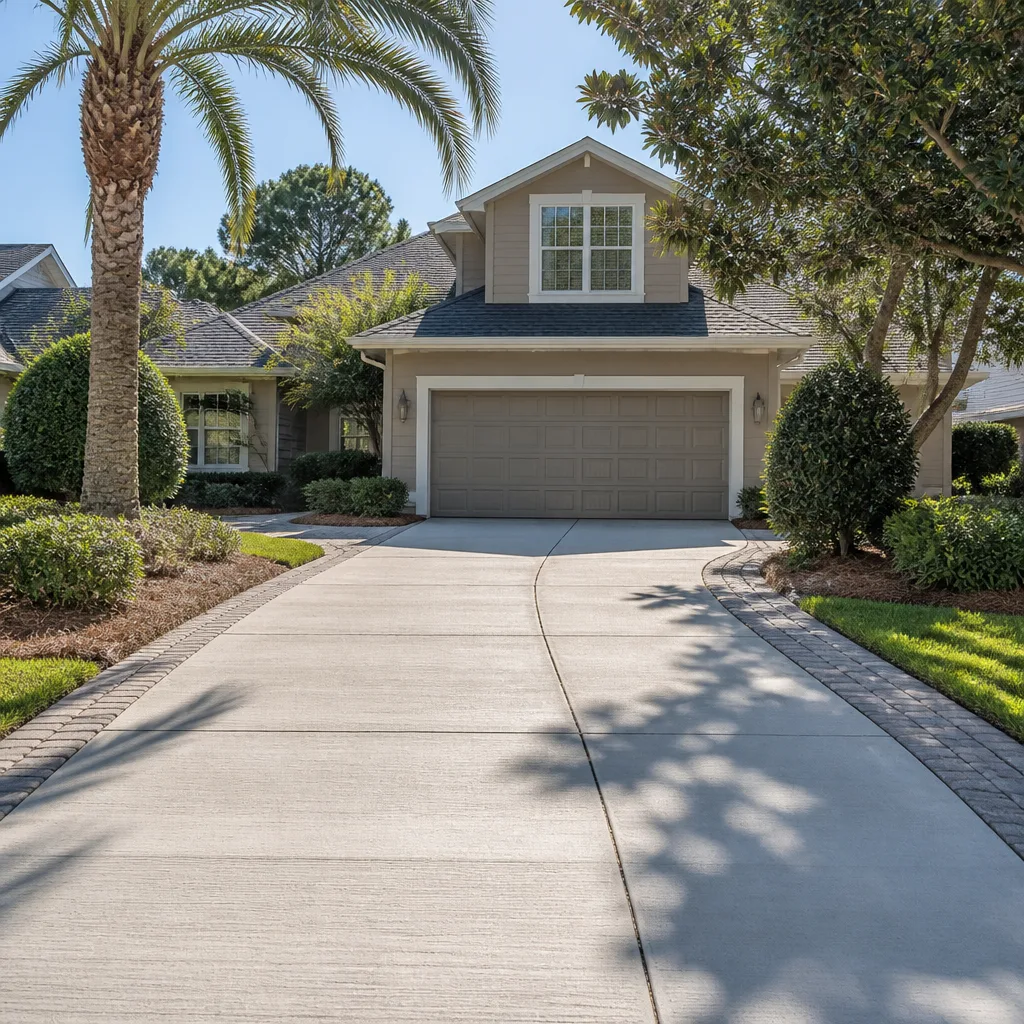
Work with a professional who pulls the permits and passes the inspection. Our Fence Installation in Lake Forest team handles both, and we won’t start the post work until the approvals are in hand, because re-digging a set row of posts costs more than doing it once. If your project involves grading or a new hardscape, coordinate the fence and pavers in the same plan. Our Driveway & Pavers in Lake Forest work is often scheduled alongside fencing so the whole yard gets finished once.
Which Fence Materials Last in Lake Forest’s Climate
Lake Forest’s climate is a specific test: strong sun year-round, low humidity with dry Santa Ana wind events, and occasional heavy rain and hail. Materials that perform, in our experience, over a 10-to-15-year horizon:
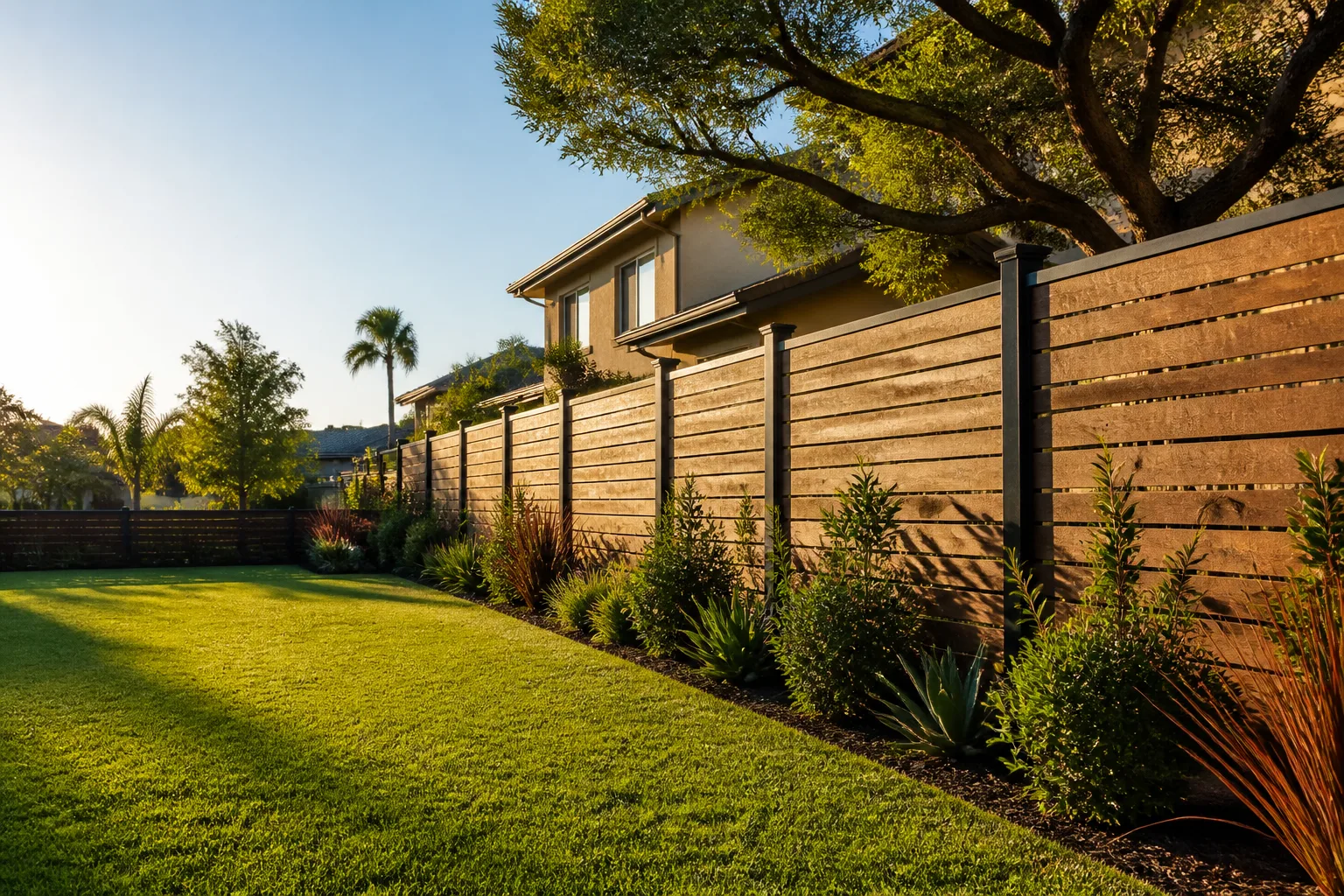
- Vinyl or composite panels. Handle UV and wind load well and don’t need repainting. A quality vinyl or capped composite panel is a solid 15-20-year fence in Lake Forest. Budget for the impact of a warranty that covers color fade, and check the panel rating and wind-load spec.
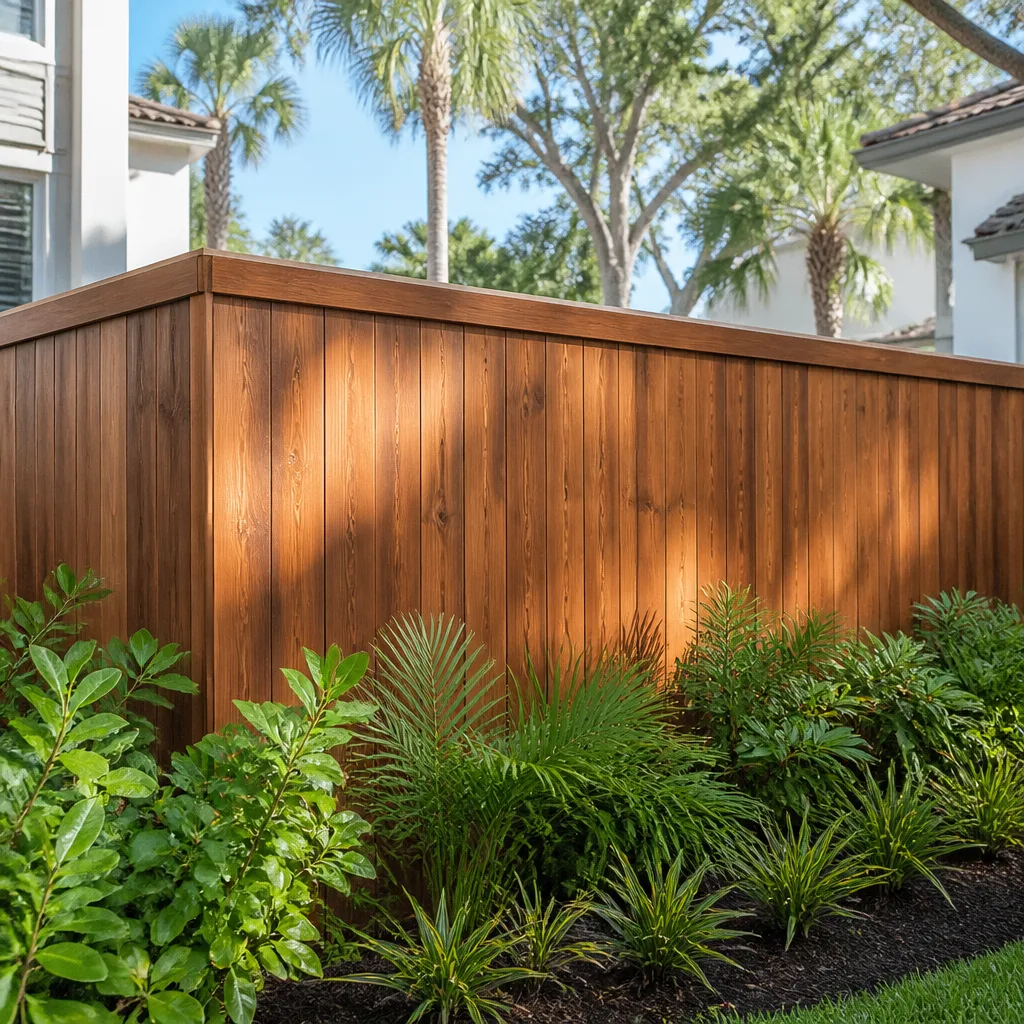
- Wood (cedar or treated redwood). The classic Lake Forest look where an HOA palette allows. It looks right immediately and stains well, but expect restaining every few years and a realistic 10-15-year structural life. Board condition in high-sun sections tells you when it’s time to replace panels, not the whole fence.
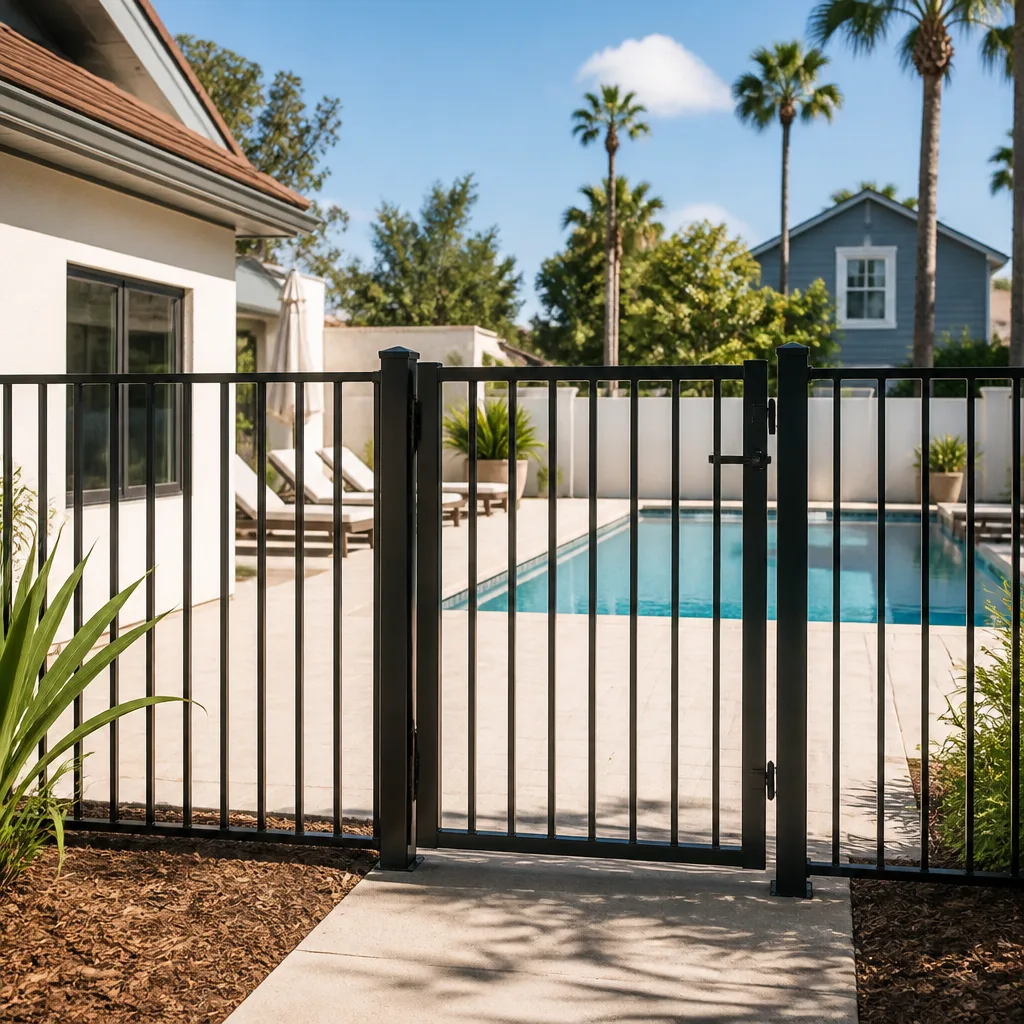
- Powder-coated steel or aluminum. Strongest against wind and a sensible choice on windy hillside runs, though the material palette may be limited by HOA rules. Expect 20+ years with little care.
- Masonry block. Common in Lake Forest tract boundaries and on drainage-adjacent runs, and excellent against fire and wind. It’s often a shared-boundary choice with a neighbor, so the cost and legal conversation comes first.
Heavy-metal or coated-steel panels are the right call on the windward ridgelines. Wood is the right call on the flatland tracts where neighbors built in the same style and a Lake Forest HOA requires it. The mistake we see most is choosing on looks and not wind load. A fence that looks perfect but fails at the post in a January wind is not a finished fence. Built with materials we’re willing to stand behind, it is, and our 730-Day Done Right Promise covers the workmanship for two full years after the last post goes in.
How a Lake Forest Fence Installation Actually Runs, Step by Step
The physical install is one to three days once approvals are set. The approvals are the part that takes a Lake Forest homeowner by surprise, so here’s the realistic sequence.
- Survey and site plan (1-2 weeks). Get the property line marked. Confirm easements and the corner sight-distance clearance. This is where most disputes and most surprises originate.
- HOA architectural approval (2-6 weeks depending on the community). Submit the plan, material samples, stain card, and elevations. Some Lake Forest committees meet monthly; plan around that calendar.
- City permit for fences over six feet (1-3 weeks). Filing, review, and issuance. The inspection usually happens after the posts are set, so the order matters.
- Utility locate (48-72 hours). Never skip it. A post driven through a private irrigation or lighting line is a cheap mistake. A post through a buried utility is not.
- Removal and footing (1-2 days). Old fence out, post holes dug, concrete poured. In rocky Lake Forest soil, expect some posts pinned to rock and the schedule to flex.
- Installation (1-2 days). Posts, rails, panels, gates, staining. Gates need special attention because they take the most load and are where fences are usually reported as “broken.”
- Walkthrough and inspection. We walk the fence with the homeowner, confirm the gate swing, and close the permit inspection before we call the job done.
What Fence Installation Costs in Lake Forest
These are the line items we see quoted for a typical Lake Forest residential lot. Material, footage, and the soil conditions you hit will move the numbers. Get a written line-item estimate before you commit, and ask each contractor whether a soil contingency is included.
- Standard wood privacy fence, 6-foot, installed: roughly $38-$65 per linear foot
- Cedar or premium treated wood upgrade: $55-$85 per linear foot
- Vinyl or composite panel fence, 6-foot: $45-$80 per linear foot
- Powder-coated steel or aluminum fence: $60-$90 per linear foot
- Extra post depth and rock pinning in rocky or decomposed granite soil: $45-$95 per post
- Concrete footing and form prep where soil is loose or sloped: $25-$55 per post
- HOA architectural submission and plan review support: $150-$400
- City permit fee for fences over six feet: variable by scope, typically a few hundred dollars
- Gate hardware upgrades and custom gate: $250-$900
- Site survey or property line marking: $300-$750
For a Lake Forest lot with a typical 100- to 150-linear-foot boundary run, a straightforward wood fence lands in the $5,000-$8,500 range including fees. A steel or aluminum run on a windy hillside can push past that. Upfront pricing is the only kind we give. If you’re comparing quotes, our Lake Forest fence installation estimate breaks each line out and comes with a design consult at no charge. Homeowners planning a bigger yard project can bundle the fence with a patio or driveway scope and take $1,000 off projects over $10,000, plus 0% financing for 18 months.
Common Mistakes to Avoid
- Building before the HOA approves. A Lake Forest architectural committee can require you to tear out a brand-new fence built on the wrong material or color. Submit the application and get it in writing before a single post goes in.
- Skipping the survey and assuming the line. Fences are the number one source of boundary disputes in Orange County. A few hundred dollars for boundary marking is cheap insurance against a fence you have to move or a neighbor’s claim.
- Setting posts in dry soil without clean gravel or concrete. In Lake Forest’s decomposed granite and clay hillsides, this is the root cause of leaning fences within two seasons. Get the footings right, even if it adds a little to the estimate.
- Choosing a material on looks and ignoring wind load. A six-foot solid panel on a ridgeline in a Santa Ana wind is a structural question before it’s a style question. Know the wind-load rating of what you buy.
- Excluding your neighbor from the cost-share conversation. The Good Neighbor Fence Law assumes shared cost on a boundary fence, but only if you’ve given written notice. Talking about it after the fence is up makes the conversation harder and the money owed a matter of argument.
- Working around an easement or ignoring setback rules. A fence in a drainage or utility easement has to be pulled, sometimes by the city at your cost. Check the easement line before the surveyor sets stakes.
- Cutting corners on the gate. Gates are where a fence fails first. Cheap hinges, a mis-set post, or a gate that rubs the ground will make a good fence feel broken in 18 months. Budget for proper hardware and a post set in concrete.
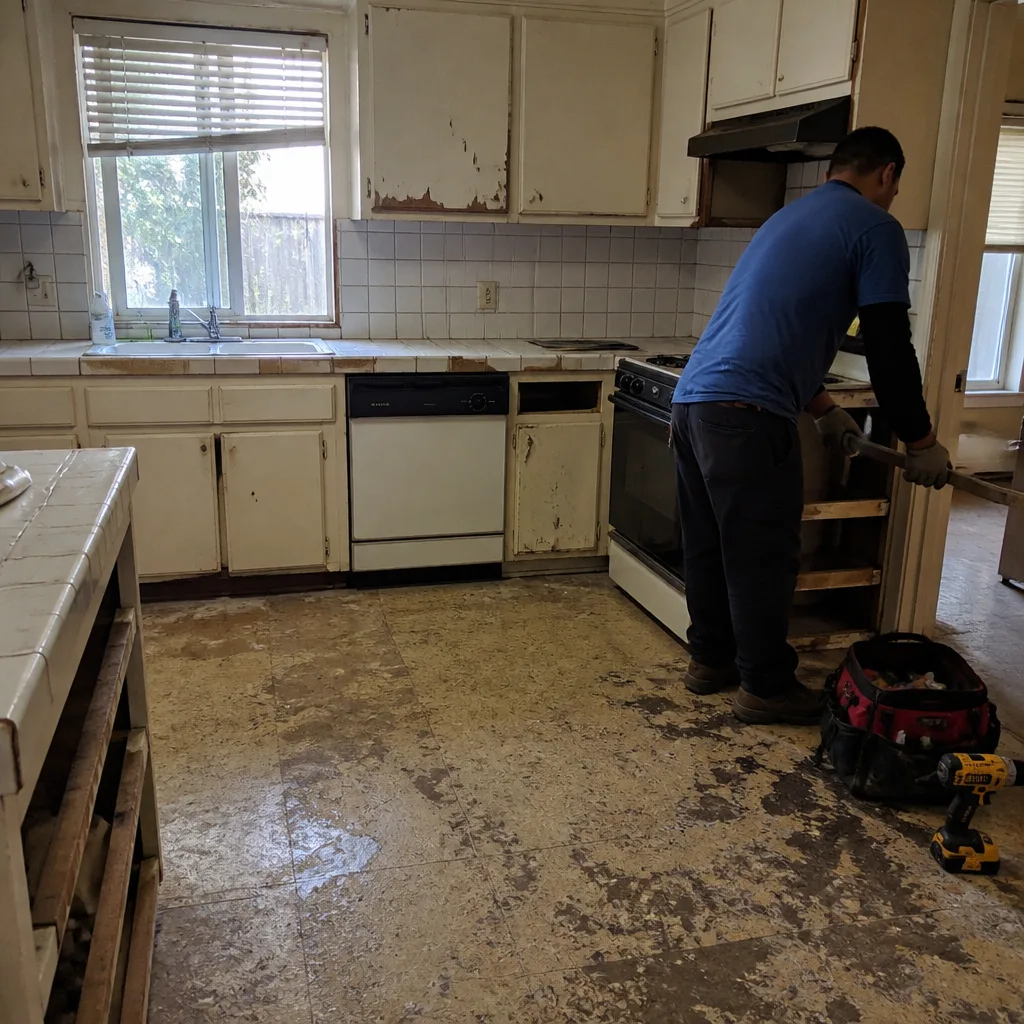
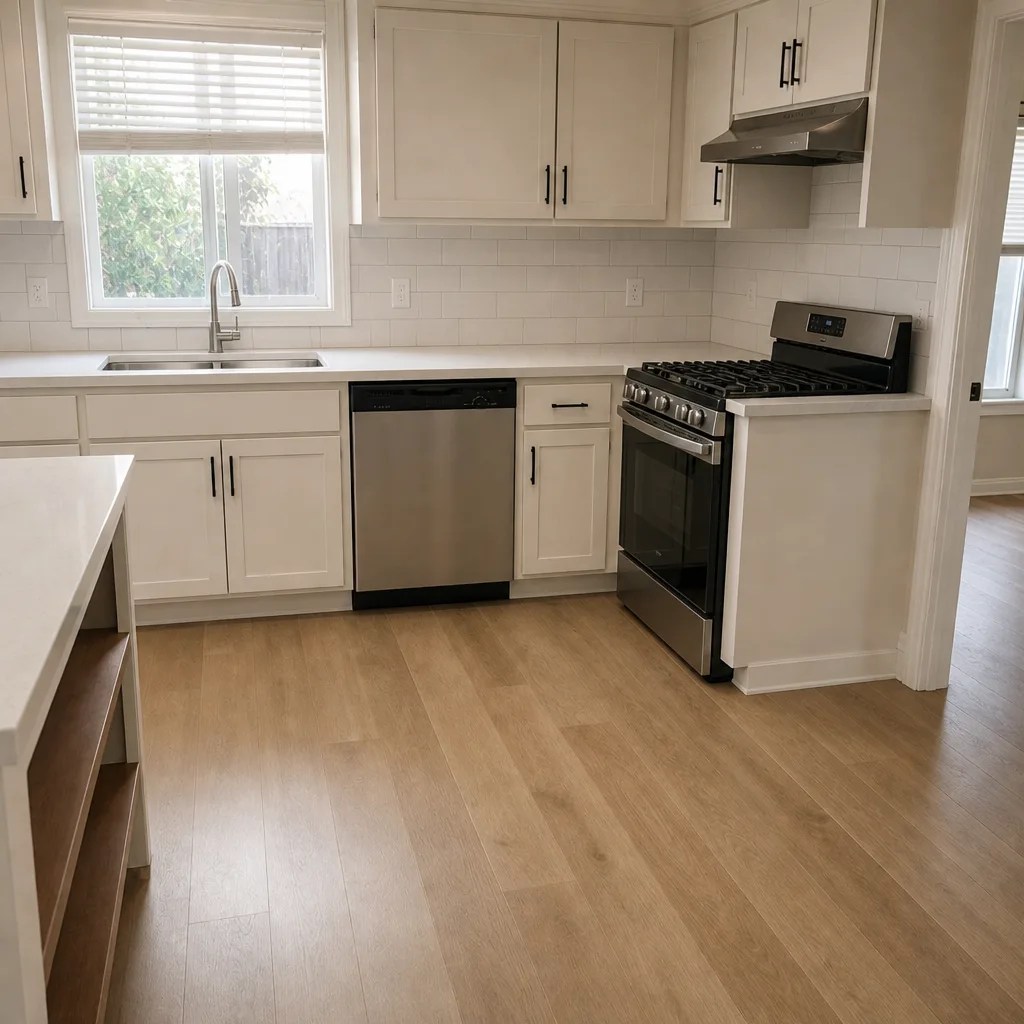
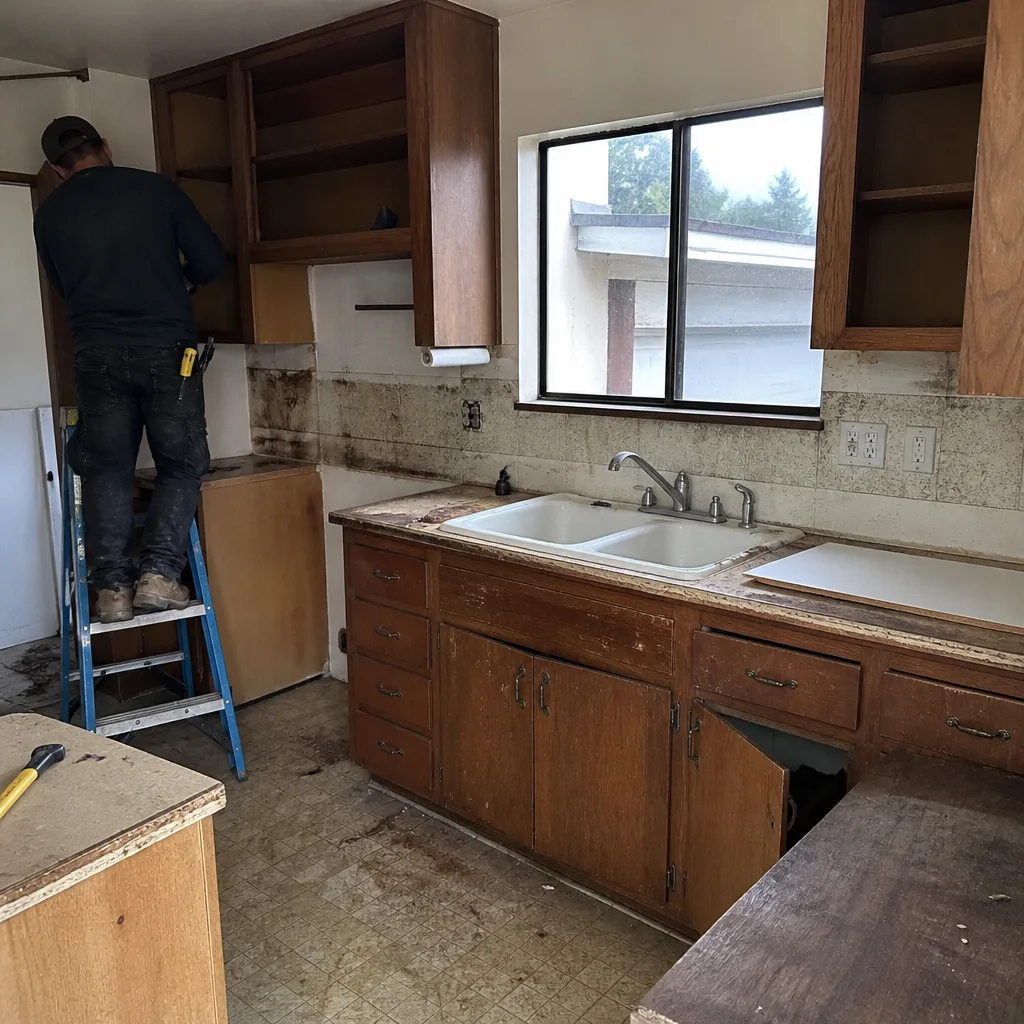
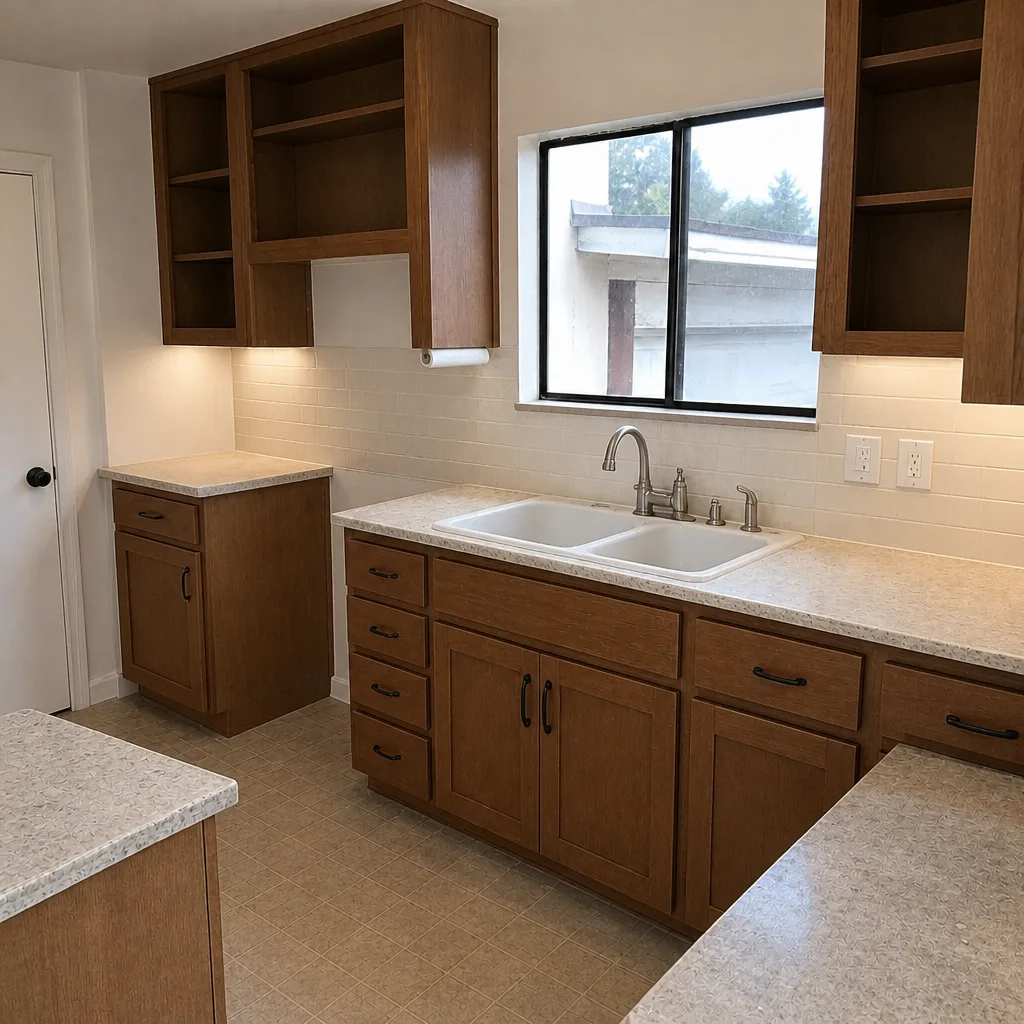
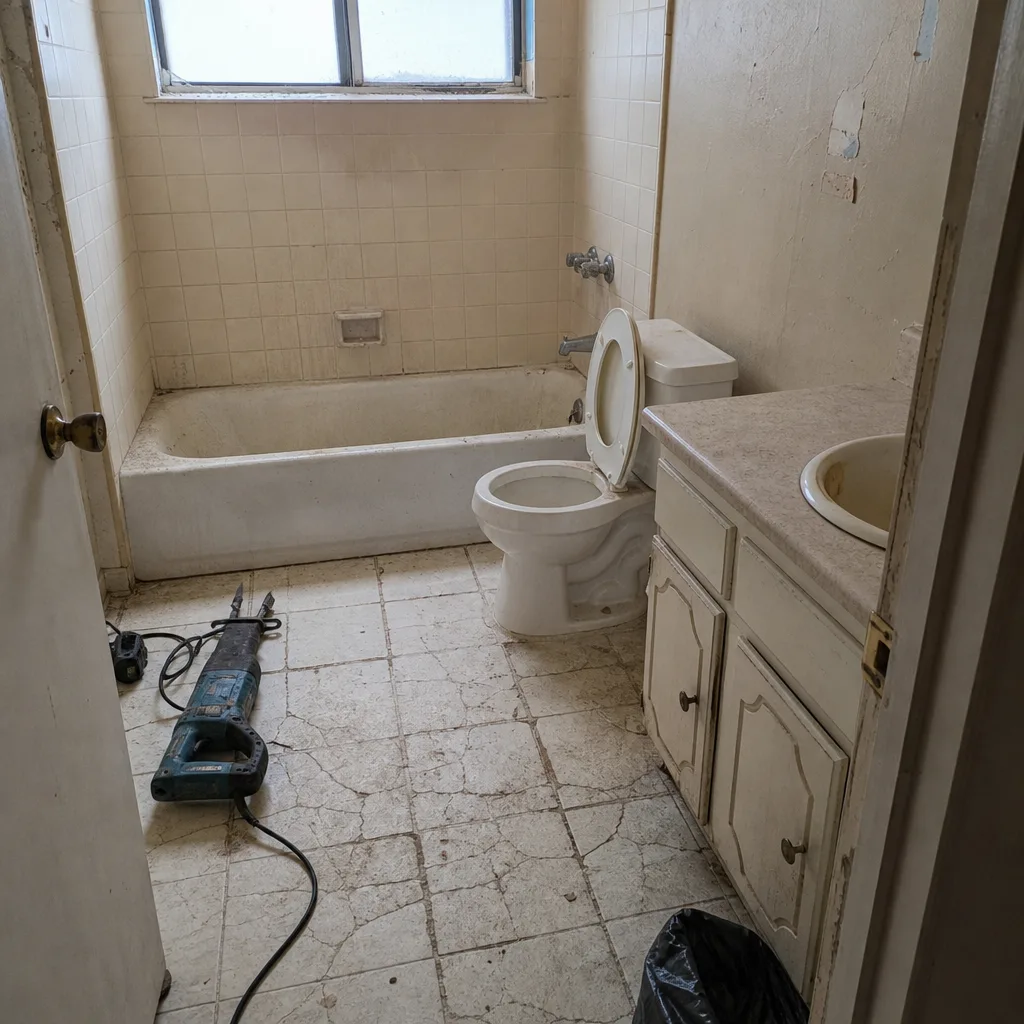
See the difference
 Before
 After
 Before
 After
 Before
 After
When to Call a Professional
Some fence work is a weekend saw and a truck bed. A boundary line that needs a survey, a height over six feet, HOA architectural review, or a hillside soil condition that could fail a footing is where a homeowner’s plan runs into money and liability. Our technicians have up to 12 years of experience with Lake Forest’s soil and community rules, and we bring the same 730-Day Done Right Promise to a fence as we do to a kitchen remodel. A background-checked, uniformed crew pulls the permit, passes the inspection, and leaves a written line-item quote before the job starts. Groundwork Construction Co. of Lake Forest offers free estimates in Lake Forest. Call (855) 532-8973. A live person answers, 24/7, and a free design consult is part of the estimate.
If your project grows past the fence into a bigger outdoor build, we handle that too, including Home Additions & ADU in Lake Forest and the full Groundwork Construction Co. of Lake Forest home service. One team, one schedule, one point of contact from foundation to finish line.
Frequently Asked Questions
Fence installation in Lake Forest typically runs $3,400 – $8,200 for a standard residential boundary, with most projects landing around $5,000 – $8,500 for a 100- to 150-foot wood fence with permits and HOA fees included. Costs rise with hillside soil conditions, extra post depth and rock pinning, and premium materials like steel or aluminum. Call (855) 532-8973 for an exact quote. Estimates are free.
Fences six feet and under generally don’t need a city permit in Lake Forest, and anything over six feet does. Front-yard fences and corner-lot fences also have to clear sight-distance rules, and no fence can be placed inside a public easement. The city’s rules apply on top of your HOA’s, which may be stricter. Call (855) 532-8973 and we’ll tell you what your specific line needs before you file.
Under the California Good Neighbor Fence Law, adjoining landowners are presumed to share the cost of a boundary fence in reasonable proportion. You’re legally required to give the neighbor written notice of the proposed fence, its material, height, and your share, and they get 30 days to respond in writing. If you want their share in writing, get the cost-split agreement signed before work starts. Call (855) 532-8973 to talk through the notice and the estimate.
In Lake Forest’s decomposed granite and clay hillside soil, expect posts set roughly two feet below grade with deeper footing and wider concrete for exposed runs. On the bedrock-filled ridges, posts often get pinned to rock rather than digging deeper. A fence that’s tall or sits on a windy ridgeline needs the footing planned for wind load, not just for looks. Call (855) 532-8973 and we’ll price the right footing for your lot.
The build itself usually takes one to three days, but the full timeline from first call to finished fence runs four to ten weeks because of the survey, HOA architectural approval, and city permit. HOA review is usually the longest and most schedule-dependent part. Our crews confirm the sequence for your community when you call (855) 532-8973.
Vinyl or capped composite is the best balance of looks and durability in Lake Forest, usually good for 15-20 years, and powder-coated aluminum or steel is the strongest against wind. Wood looks right immediately where an HOA palette allows but needs restaining and realistic 10-15-year expectations. Whatever you choose, check the wind-load rating and the warranty that covers color fade. Call (855) 532-8973 for a material consult with your free estimate.
The Bottom Line
A Lake Forest fence project is a legal and structural project before it’s a style choice. Get the property line surveyed, submit to your HOA, pull the permit for anything over six feet, give your neighbor written notice under the Good Neighbor Fence Law if you’re sharing cost, and build the footing for Lake Forest’s soil and wind. Choose the material for the load and the community, not the photo. Do those in order and the fence you build this spring is still straight in a decade. Skip them and the cheapest quote becomes the most expensive fence you’ve ever owned. We handle all of it under one written quote, with a 730-Day Done Right Promise behind the work. Call (855) 532-8973 to schedule your free estimate.
Written by the team at Groundwork Construction Co. of Lake Forest.