Last updated November 18, 2026


Free written scope consultation - allowances, timeline, and change-order rules on paper before a single trade is scheduled
Fence Installation Warning Signs Every Homeowner Should Know
The contractor who skips pulling a permit isn’t saving you money. He’s transferring his legal liability onto your property record. That’s the part most homeowners never hear until they’re trying to sell, or the city inspector knocks, or a windstorm drops six panels into the neighbor’s yard. We’ve walked onto plenty of Lake Forest properties where a fence looked fine from the street and was quietly rotting at the post base. This guide is built to help you catch that before the contract is signed. You’ll learn the warning signs that actually predict failure, how to verify a permit, what a real materials list looks like, and the day-one inspection checklist that keeps a contractor on the hook while he’s still standing in your yard.
Quick Answer
The biggest fence installation warning signs are a verbal-only timeline with no written scope of work, no pulled permit, a vague “standard materials” line item, cash deposits with no contract, and a crew that can’t tell you post depth or concrete specs. In Lake Forest, the warning signs that matter most are permit avoidance and shallow posts, because our clay-heavy soil and Santa Ana winds punish shortcuts within 18 months. If a bidder won’t put the details in writing, that’s the sign to walk.
Styles & brands we work with
- Kitchen remodeling
- Bathroom remodeling
- Home additions & ADU
- Roofing
- Windows & doors
- Driveway & pavers
- Fence
Table of Contents
- Why a Verbal Timeline Is the Biggest Red Flag
- How to Verify a Fence Permit in Lake Forest
- Installation Mistakes That Fail Within 18 Months
- What a Legitimate Materials List Looks Like
- Deposits, Contracts, and Payment Red Flags
- Your Post-Installation Inspection Checklist
- Why Lake Forest Climate Exposes Bad Work
- How to Compare Two Fence Bids Line by Line
Why a Verbal Timeline Is the Biggest Red Flag
Ask any homeowner who’s been burned and they’ll usually tell you the same story: the contractor was friendly, the price was great, and everything about the schedule was a conversation instead of a document. “We’ll be out Tuesday, maybe Wednesday.” “Should take a day, day and a half.” “Don’t worry, we’ll get it done.” None of it written. None of it enforceable.
A verbal timeline is the single most reliable predictor of a bad fence job because it signals that nothing else is written down either. If a contractor won’t put a start date, a completion window, a cleanup commitment, and a materials spec on paper, he’s reserving the right to change all four mid-job. And once your old fence is torn down and stacked in the driveway, your negotiating position is gone.
A legitimate written scope of work for fence installation includes, at minimum:
- Total linear footage, broken out by run, not lumped into one number
- Fence height and style, with a manufacturer or material spec attached
- Post spacing and depth (typically 6 – 8 feet on center, set below frost line and below our local grading requirements)
- Concrete spec (bag mix, quantity per post, or “set in concrete” as a measurable quantity, not a phrase)
- Gate hardware by brand or grade, plus the swing direction and self-closing or not
- Start date and completion window, with weather contingency language
- Cleanup including removal of old fencing and any stump or debris haul-off
- Payment schedule tied to milestones, not to the calendar
If your bidder hands you a one-page estimate with a square-foot price and nothing else, that’s your sign. In our experience, the contractors who put the most detail in writing are the same ones who show up when they said they would. The ones who keep it loose on paper keep it loose on the job, and Lake Forest homeowners get stuck in the middle when the crew disappears for a week to another job.
A real written timeline also protects you from the “we ordered the wrong panels” gap. Custom orders happen, and good contractors plan buffer time around them. A contractor who told you “two weeks” verbally and then has to explain at week four why the fence is only half up has no obligation to make it right. One with a signed schedule does.
How to Verify a Fence Permit in Lake Forest
Here’s the part most homeowners never hear: an unpermitted fence isn’t just an unpermitted fence. It’s a recorded defect on your property that can complicate a sale, violate setback rules you don’t know about, and put you on the hook for removal costs years after the contractor has moved on.
In Lake Forest, fence permits are typically required for any new fence, any fence over a certain height, and any fence on or near a property line with specific height rules depending on whether the fence is in the front, side, or rear yard. That’s the layered part: a fence that’s legal at 6 feet in your back yard might not be legal at 6 feet in your front. Wall or masonry fences can trigger additional rules. And if you’re on a slope or a corner lot, the setback story gets more specific. This is exactly the situation where a contractor who “knows a guy at the city” is telling you the truth about nothing.
Here’s how to verify a permit was actually pulled:
- Ask for the permit number in writing before work starts. Not “we’ll pull it” – a number.
- Look up the permit through the City of Lake Forest’s online permit portal or by calling the planning counter directly.
- Confirm the scope matches what’s being built (footage, height, materials, location).
- Ask who will call for the inspection – the contractor is responsible, and you should see the inspection on the record before the final payment goes out.
- Keep a copy of the finaled permit. This is what saves you at resale.
What happens if the permit was never pulled? In a best-case scenario, the city asks you to submit and pay for a retroactive permit, which may involve opening up sections of fence to prove post depth and concrete spec. In a worst-case scenario, you’re ordered to remove a fence you just paid for. That’s the liability transfer, and it’s the exact one our team sees most often on Lake Forest properties that changed hands in the last five years. If you want a fence that passes inspection the first time, Fence Installation in Lake Forest walks through what our process covers and who handles the paperwork.
Installation Mistakes That Fail Within 18 Months
A fence that’s falling apart in month two is obvious. The dangerous fence is the one that looks great on day one and fails in month eighteen. Those are the jobs where the crew cut corners in places you can’t see until it’s too late. Here are the four we see most often in Lake Forest, and why each one matters.
1. Posts Set Too Shallow
Post depth is where fence installation quietly fails. In our clay-heavy soil and on the graded lots through Foothill Ranch and Portola Hills, a post that’s less than two feet in the ground has nothing to hold against the Santa Ana winds that roll through every fall. The fence feels solid the day it’s installed because the concrete is still curing. Two winters of soil movement later, the post leans, and the whole run follows.
2. Skipped or Thinned Concrete
“Set in concrete” is a phrase, not a spec. A post set with a few shovelfuls of dry mix in a too-wide hole is functionally the same as a post set in dirt after the first rain. Real concrete work means a defined bag mix, a defined hole diameter, and enough volume that the post is fully encased. When the concrete is skipped or thinned, the post rocks. When the post rocks, the rails pull out of the pickets. When the rails pull out, you’re calling a new contractor within two years.
3. Inadequate Gate Hardware
Gates are the part of the fence that actually gets used, and cheap hinges and a single latch bolt are the fastest way to a sagging gate. A proper gate needs through-bolted hardware, a diagonal or corner brace designed for the gate’s weight, and a self-closing or positive-latch mechanism that holds in wind. On a vinyl or composite gate, hardware is often the first thing to fail because the panels flex and the hinge loosens. That’s exactly why material choice and hardware grade have to be specified together, not picked up piecemeal.
4. No Gap for Expansion and Drainage
Fences installed tight against structures, hardscape, or the ground line trap water. On our local clay soil, that trapped moisture rots wood posts, discolors vinyl, and accelerates corrosion on metal. A correct install leaves a small drainage gap below panels and a defined termination detail where fence meets house, planter, or paver edge. It’s the smallest line item on the whole job and it’s the reason some fences last fifteen years and some last six.
When we quote fence installation, these four items are written into the spec line by line. That’s part of the 730-Day Done Right Promise – if it’s not done right, we make it right – and it exists because these are precisely the failure points that a good spec prevents and a vague bid hides.
What a Legitimate Materials List Looks Like
“Standard materials” is the most expensive phrase in fence installation. It means the contractor can substitute anything on the day of the order, and you’ll never know unless you read the delivery slip. The list below shows what real specifications look like versus the vague versions that let a bidder downgrade on the fly.
A proper materials list names:
- Panel or picket material by brand and product line (not just “vinyl” or “wood”)
- Color and profile with the manufacturer’s color code
- Post material, gauge, and dimensions
- Rail and cap spec, including whether caps are through-bolted or glued
- Concrete by bag mix and quantity per post
- Fasteners by type, material, and coating (stainless or galvanized matters near the coast and on salt-air lots)
- Gate hardware by brand, not “heavy duty”
- Finishing details: trim, caps, post tops, and any staining or sealing
Where premium brands show up, they should be named. A bid that specifies a composite or vinyl system from Boral, for example, is telling you the exact manufacturing spec you’re paying for. A bid that specifies PGT-rated components for gate or panel hardware is telling you the exact grade. When the brand isn’t named, the substitution happens quietly, and you don’t find out until the panels fade unevenly or the rails bow two years in.
Here’s a quick side-by-side to help you compare bids:
| Vague Bid Says | Real Bid Says |
|---|---|
| “Standard vinyl panels” | Manufacturer + product line + color code |
| “Posts set in concrete” | Post depth, hole diameter, bag mix, quantity per post |
| “Heavy-duty hardware” | Brand name, finish (stainless/galvanized), bolt type |
| “Clean removal” | Old fence hauled off, stump grinding excluded or included in writing |
| “Standard gate” | Gate width, swing direction, latch type, brace design |
| “Warranty included” | Warranty term, what it covers, what voids it |
A real materials list also implies a real warranty. If the contractor can’t name the material going in, he can’t warrant how it will wear. When we quote a Lake Forest fence job, the materials spec is what the 730-Day Done Right Promise is written against, and it’s why the line items look longer than the other guy’s. Longer line items are the point. From foundation to finish line, the details are the whole game.
Deposits, Contracts, and Payment Red Flags
Fence installation is a mid-scale project, and the payment structure tells you a lot about the contractor before anyone swings a hammer. Legitimate contractors collect a deposit that covers the material order and the first stage of labor. Ask too much upfront and you’re funding someone else’s job. Ask too little and the job stalls mid-build while the contractor waits on your check for his next material run.
Warning signs on the payment side, in order of severity:
- Cash-only with no contract: you have no legal protection, no warranty, and no proof of payment beyond your own memory.
- Full payment upfront: deposits above roughly a third of the job, before any material hits the ground, are a sign the contractor is funding the job from your check instead of his own working capital.
- No written contract or scope: even a short project should be backed by a signed agreement that names the parties, the price, the scope, and the warranty.
- Payment schedule not tied to milestones: “half now, half when we finish” hides surprises. A real schedule ties payouts to measurable progress on the job.
- No license or insurance documentation: ask for the license number and a certificate of insurance in writing, and confirm the policy covers fence installation in California.
- Pressure to pay before the final walkthrough: the final payment is your last leverage. Hold it until you’ve inspected the work.
A well-written fence contract in Lake Forest should name the permit-pulling party, the warranty term, the cleanup scope, and the specific materials. If your bidder can’t produce a contract that does all four, you don’t have a written agreement. You have a handshake with paperwork attached, and the paperwork never protects you.
When we quote a job, our process spells out upfront pricing, no surprises. The number you see on the estimate is the number you pay on the invoice. That’s not a slogan. It’s a specific response to a specific problem, which is the mid-job “change order” that happens when the scope of work was vague on day one.
Your Post-Installation Inspection Checklist
The day the crew leaves is your one clean chance to catch problems while the contractor is still on the hook. Do the walkthrough before the final invoice is paid, ideally while the crew is still on site or within 24 hours. Bring a notepad, take photos, and be specific. Here’s the checklist we use ourselves, and the one we’d hand a homeowner:
- Post stability test: push firmly on every post at fence height. Any post that rocks or creaks is a post to write down.
- Gate function: open and close every gate ten times. Check for sag, hinge looseness, latch alignment, and self-closing function. Note any rubbing on the ground or frame.
- Panel level and plumb: stand back across the street and look down the run. A good fence has a straight top line and consistent panel height end to end.
- Concrete check: confirm concrete crowns at ground level around every post. No exposed posts sitting in a dirt hole, no hollow-sounding concrete when tapped.
- Fastener count: pick three random sections and count fasteners per rail. Missing screws on every third panel is a walkthrough item.
- Ground clearance: panels should sit above the ground line to allow drainage and to avoid rot. Same at the house termination point.
- Cleanup: old fence gone, concrete bags gone, stumps addressed per the contract, all nails and offcuts picked up.
- Permit and final inspection: confirm the permit is on file and any required inspection is scheduled before you release final payment.
- Warranty paperwork: get the warranty in writing, with the term, the coverage, and what voids it. Keep it with your permit file.
- Photo record: photograph every gate, every corner post, and the full run from both sides. This is your baseline for any warranty claim down the line.
If something fails a checklist item, don’t pay the final invoice. Write it down, photograph it, and give the contractor a specific remedy date. A good contractor will fix it and thank you. A great one will already have caught it before you did.
Why Lake Forest Climate Exposes Bad Work
Fence installation doesn’t get stressed evenly across the country, and our local conditions are one reason shortcut work fails fast here. Lake Forest sits in a spot where dry summers, wet winters, and heavy autumn winds combine, and the fence has to survive all three without being replaced every few years.
Three local factors pick apart a bad install:
- Clay-heavy soil movement: several neighborhoods sit on expansive clay that swells in wet months and shrinks in dry ones. Posts set shallow get lifted and settled, and any post not fully encased in concrete leans within a season or two.
- Santa Ana winds: the fall wind events load fences laterally. Lighter hardware, single-latch gates, and pickets set without a proper cap spec catch wind and pull. Fences built to the minimum spec don’t survive a strong wind event.
- Summer UV and dry-season cracking: wood and some composite products need a finish and a specified expansion allowance. A fence installed tight in July will split by the next summer unless the installer planned for it.
In our experience, the panels that fail earliest in Lake Forest are the ones installed by a crew that showed up with a generic spec sheet from another state. Boral composite or vinyl systems, when they’re specified to the right line and installed with the correct expansion and clearance details, hold up better here than a “standard materials” panel ever will. That’s not a marketing point. It’s what the material science says when the climate is clay and wind instead of wooden deck and screened patio.
If your neighborhood sits on a slope or near the foothills around Baker Ranch, Worth Park, or the older sections of town, expect the post depth and root-barrier or slope-specific details to be part of the permit conversation. Those are exactly the details a verbal-timeline contractor skips. If you’ve been quoted a fence for a sloped lot and the estimate doesn’t mention slope handling, that’s not a cheaper price. That’s a hidden do-over.
How to Compare Two Fence Bids Line by Line
The lowest bid almost never reflects the lowest cost. It reflects a shorter materials list and a looser scope. Here’s how to read two fence estimates side by side and know which one is actually better for your Lake Forest property.
- Match the line items: put both bids side by side and cover each line. Every line item on the higher bid should be explainable. If a “cheap” bid is missing posts, concrete, hardware, disposal, or permit fees, that’s not a lower price. That’s an incomplete price.
- Check the footage math: divide total price by total linear footage. If one bid is significantly cheaper per foot, the delta is usually in post count, panel thickness, or hardware grade. Ask where the savings live.
- Read the exclusions: good bids name what’s not included. “Excludes stump removal, old concrete haul-off, and permit fees” is honesty. A bid with no exclusions is either incomplete or hiding them in a change order later.
- Compare warranty terms: read the workmanship warranty and the manufacturer warranty separately. Workmanship is the contractor’s responsibility and is the one that matters when a post leans. Our 730-Day Done Right Promise is one of the longest workmanship guarantees in the residential construction space, and it applies to fences the same way it does to a roof or a kitchen.
- Check the documentation: does either bid come with a written materials spec, a schedule, and a permit line? Both bids may be competent, but only one is documented. Documentation is what you enforce later.
One line item most homeowners overlook is disposal. Fence removal is a real cost, and contractors who skip it on the estimate are betting you won’t push back when the old fence sits at the curb for a week. Keep disposal on the bid, in writing, before you sign.
If a bid is missing something critical, ask the contractor to revise. The right contractor will revise without drama. The wrong one will push back on every detail. That’s your sign, and it’s worth more than the price difference on the page.
Common Mistakes to Avoid
- Hiring on price alone: the lowest bid on a fence job in Lake Forest is almost always missing permit, concrete, hardware, or disposal. The final invoice isn’t lower than the higher bid. It’s the same or more, just paid in two checks. Compare total cost of ownership, not first check.
- Signing a contract without a scope of work: a one-page estimate isn’t a contract. If you’ve signed and there’s no written scope attached, you’ve agreed to a price and nothing else. Push for the scope before the deposit goes out.
- Skipping the permit to “save time”: an unpermitted fence becomes a problem at resale and may be ordered removed by the city. The permit is the cheapest insurance you’ll buy on this whole project, and the contractor should be pulling it.
- Paying cash with no paper trail: cash-only, contract-free deals leave you with no warranty, no proof of payment, and no legal recourse. Every dollar you spend should be documented.
- Not walking the line before the crew starts: the day-before walkthrough is where you confirm property lines, gate placement, and fence height, all against the plan. If the line moves during install, that’s a conversation you want to have beforehand, not after posts are set.
- Approving final payment before inspection: the final invoice is your leverage. Pay it after the walkthrough and permit final, not before. Any contractor who won’t accept that isn’t one you want on your property.
- Ignoring drainage at the base: on local clay soil, a fence installed flush to the ground traps water and rots wood posts faster than anything else. Confirm the drainage gap and house termination detail in writing before you sign.
- Trusting a “standard materials” line: unbranded materials give the contractor room to substitute at the order desk. Get the brand, product line, and color code in the contract. If it’s not written down, it’s not what you’re getting.
See the difference
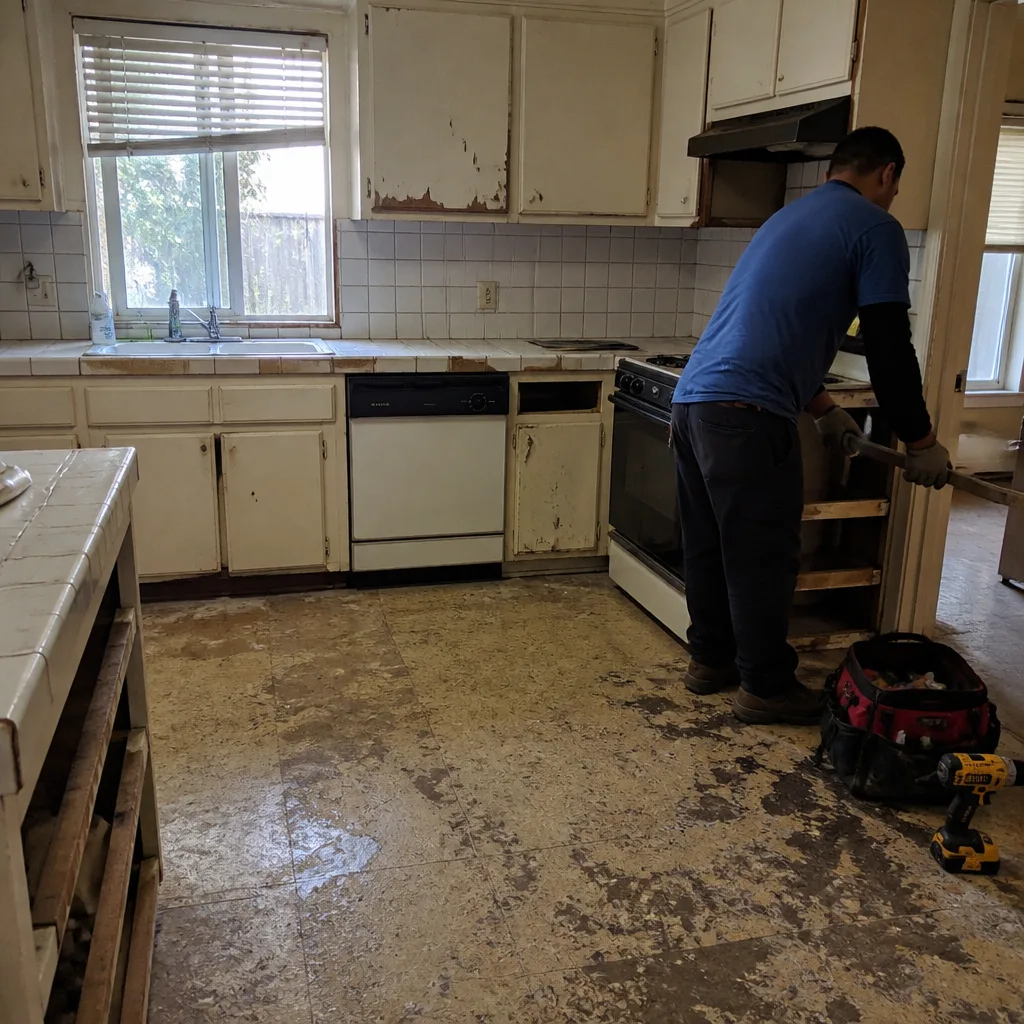 Before
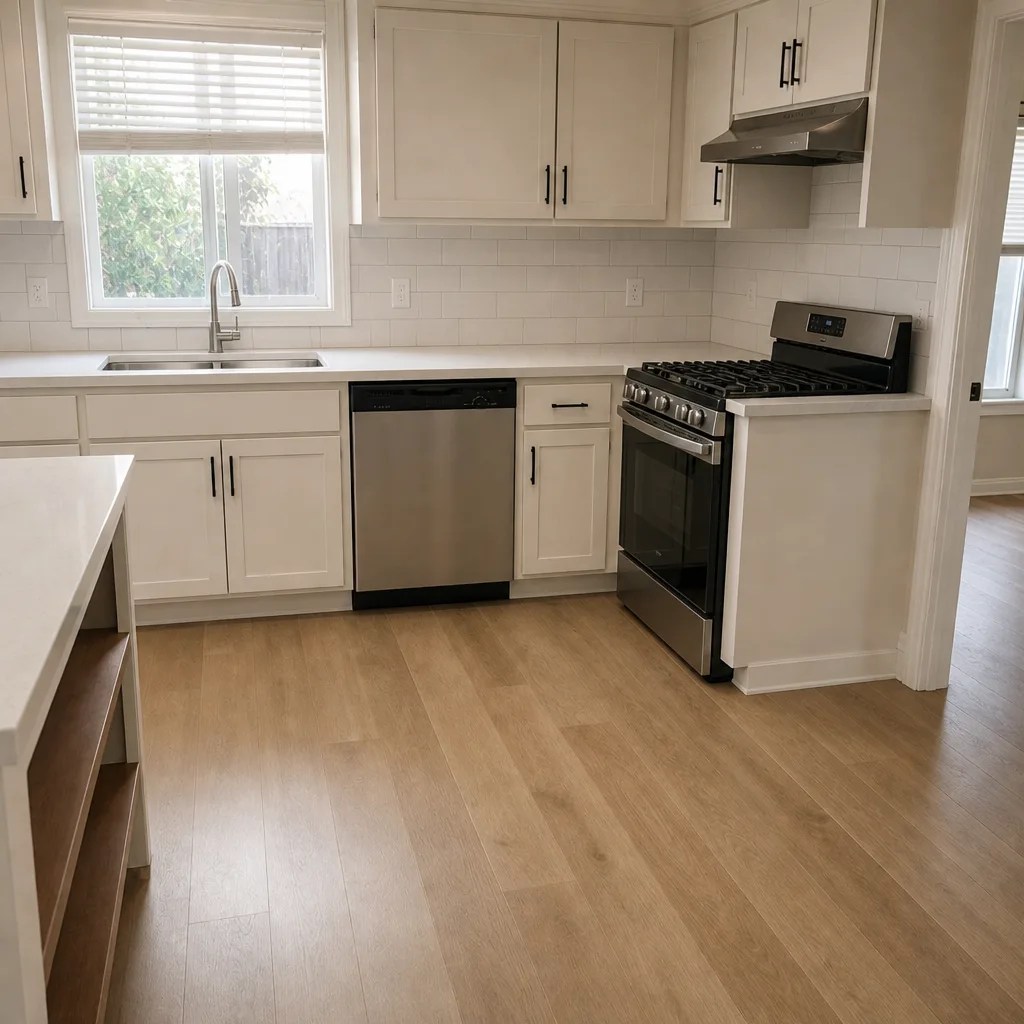 After
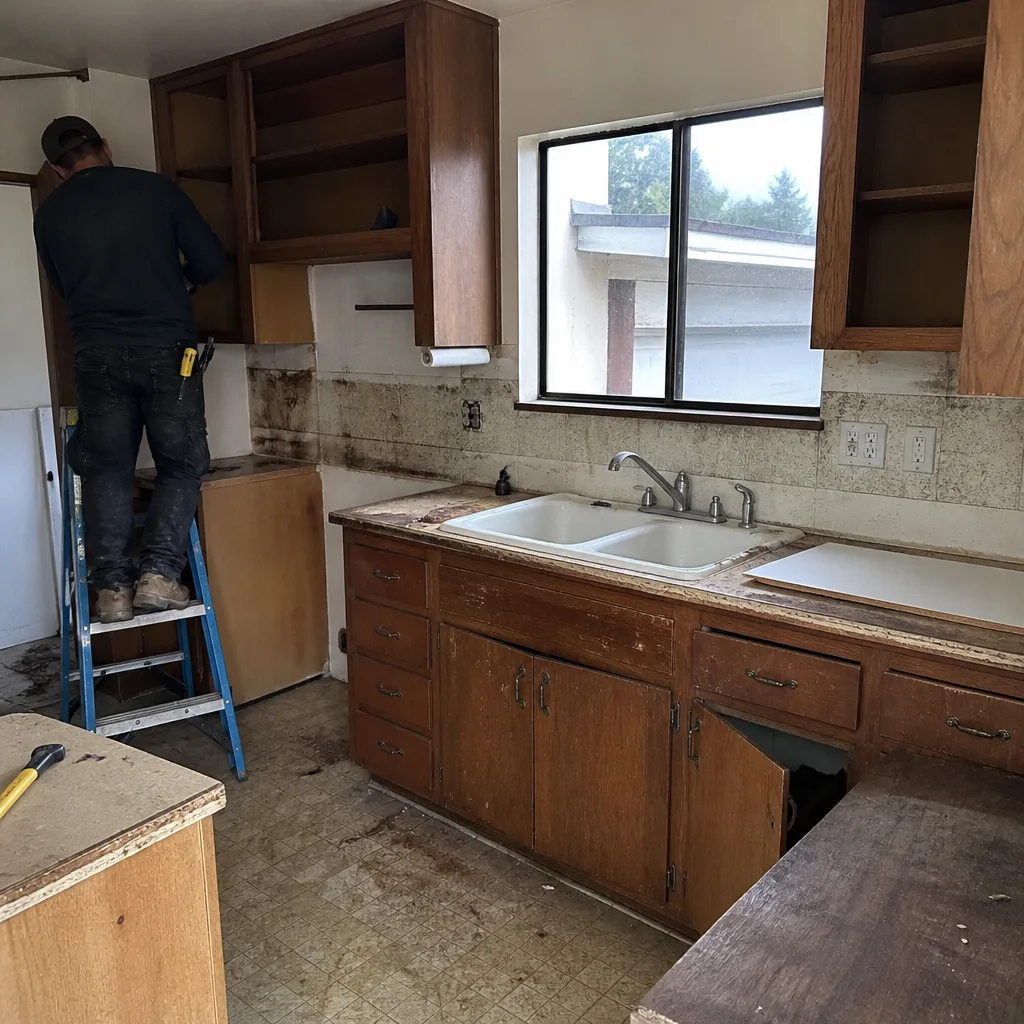 Before
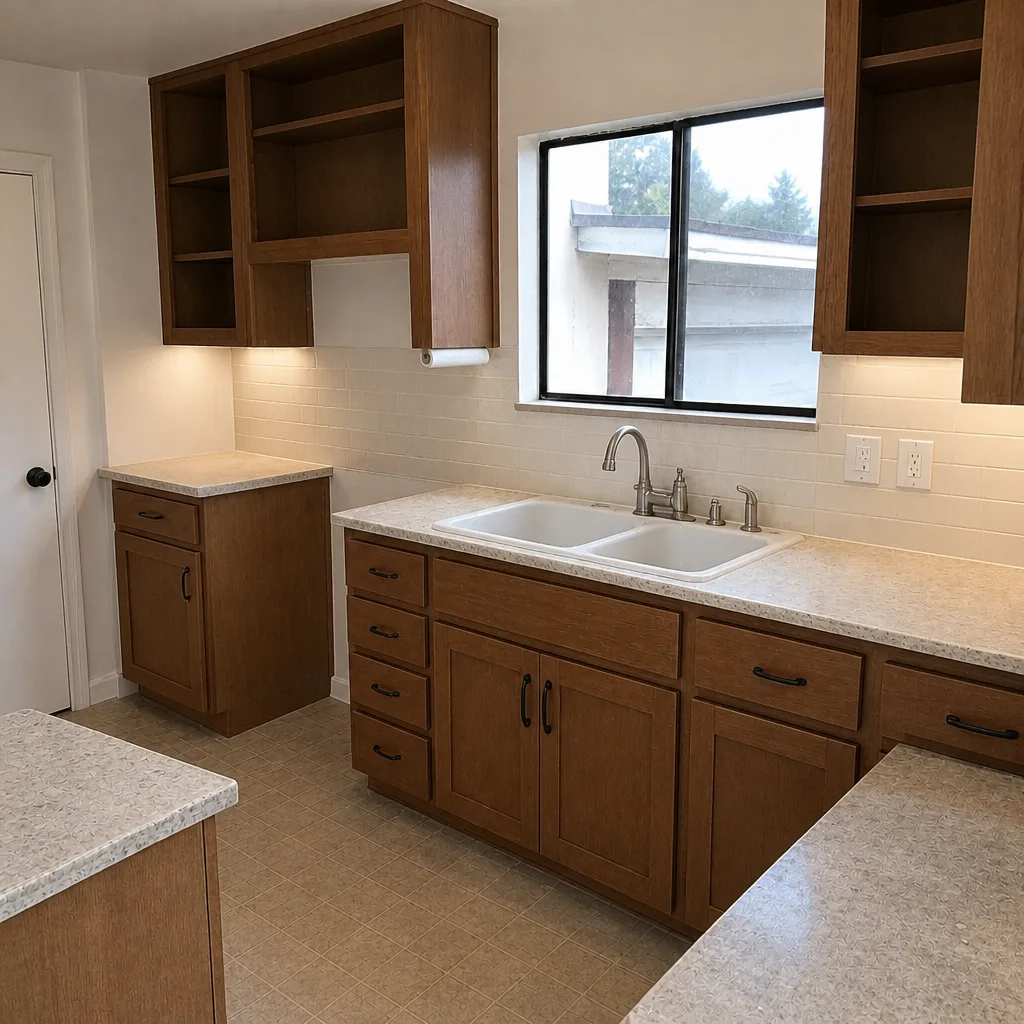 After
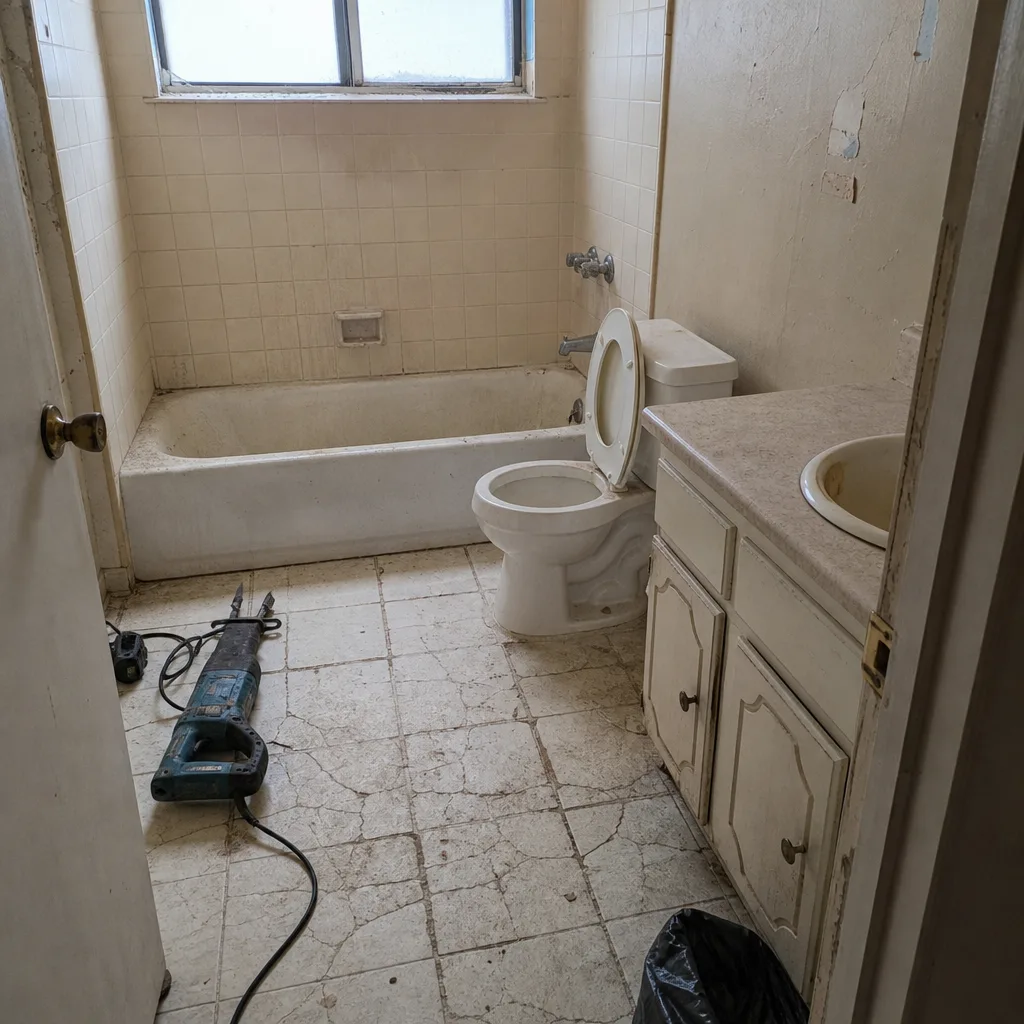 Before
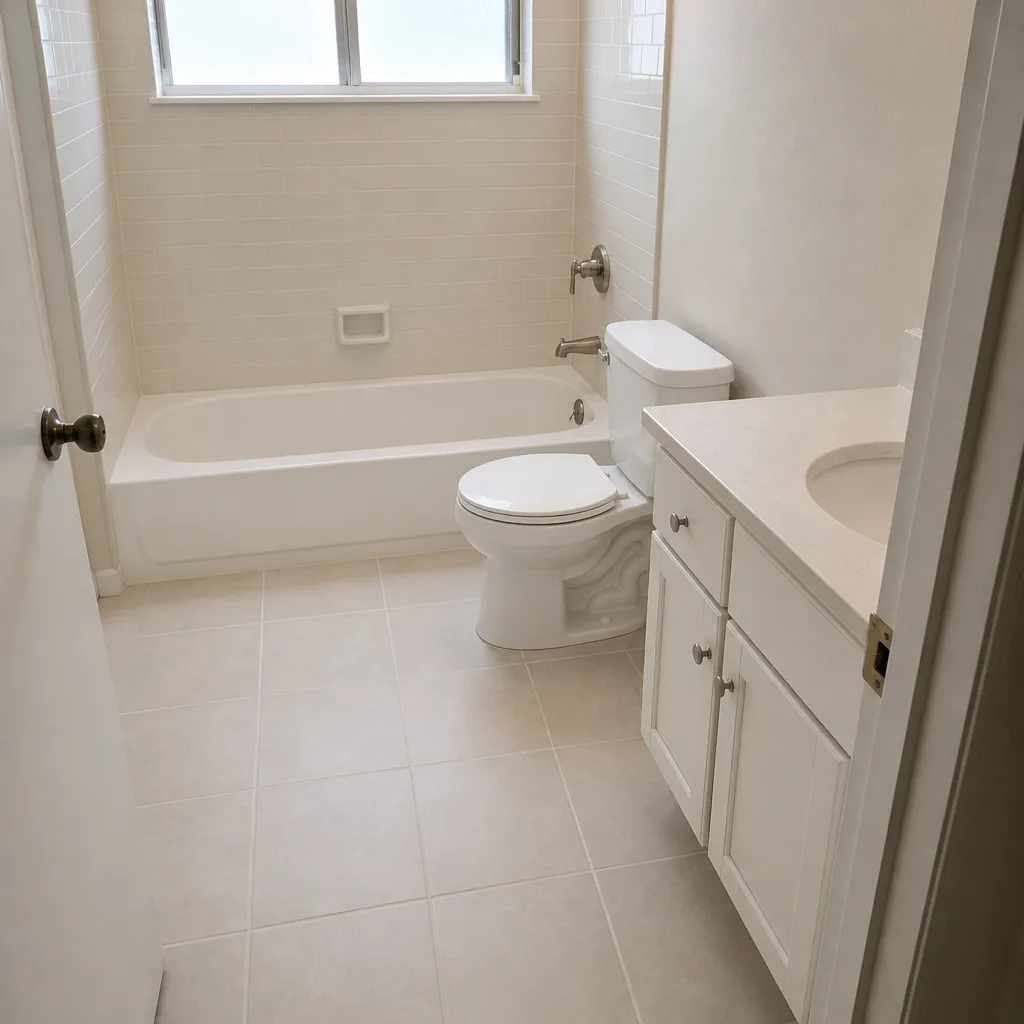 After
When to Call a Professional
A few fence situations look like DIY jobs and aren’t. Anything that involves deep post setting on a sloped or clay-heavy lot, long runs that have to survive Santa Ana winds, or fence work tied to a property line and setback rule is a call-a-professional situation. Fence installation looks simple because it’s a straight line. The failure modes underneath it aren’t. Post depth, concrete spec, drainage, gate hardware, and permit requirements all need to be right before the first post goes in, and a homeowner can’t verify any of those after the crew leaves.
If your existing fence is leaning after a wind event, if you’re unsure whether a prior install was permitted, or if you’re planning a new fence and don’t have a written spec yet, a professional estimate is the fastest way to get clarity. Groundwork Construction Co. of Lake Forest offers free estimates in Lake Forest. Call (855) 532-8973 to schedule yours, and we’ll walk the property, check the permit history, and give you an upfront price you can compare side by side with any other bid.
We also handle related exterior work if the fence is part of a bigger project. If you’re redoing the front approach at the same time, our Driveway & Pavers in Lake Forest page covers how the fence line meets pavement and drainage. If you’re planning an addition or an ADU that changes the property layout, Home Additions & ADU in Lake Forest walks through how fence lines and setbacks get planned around new structures. And if you want the full picture of how we approach projects across every trade, our Groundwork Construction Co. of Lake Forest home page is the place to start.
Frequently Asked Questions
The biggest warning signs are a verbal-only timeline with no written scope, no pulled permit, vague “standard materials” language, cash deposits without a contract, and a contractor who can’t tell you the specific post depth and concrete spec being used. Any one of those is a reason to slow down. Two or more is a reason to walk. Call (855) 532-8973 for a written, line-item estimate you can compare against the other bids – estimates are free.
Ask for the permit number in writing before work starts, then look it up through the City of Lake Forest permit portal or by calling the planning counter. Confirm the permit matches the actual scope (footage, height, materials, location), and confirm the contractor is the one calling for the final inspection. If there’s no permit number, the permit wasn’t pulled, and the liability is on your property record. Call (855) 532-8973 and we’ll check the permit file before we quote.
The honest answer is that price depends on footage, material, gate count, slope, and permit fees, so any flat number on a website should be treated with suspicion. What matters more is that your estimate is broken out line by line: fence run by run, posts, concrete, hardware, disposal, and permits. That’s how you catch a “cheap” bid that’s actually missing half the job. Call (855) 532-8973 for a written estimate with upfront pricing, no surprises.
Fences fail early for four reasons: shallow posts, skipped or thinned concrete, inadequate gate hardware, and no drainage or expansion clearance at the base. Each of those is invisible on day one and obvious within one or two seasons, especially on clay-heavy soil and in high-wind areas. In Lake Forest, shallow posts plus Santa Ana winds is the most common combination we correct. Call (855) 532-8973 to get a spec that fixes all four before installation.
A real fence contract should name the permit-pulling party, the materials by brand and product line, the post depth and concrete spec, the gate hardware, the start and completion window, the cleanup scope, the payment schedule tied to milestones, and the workmanship warranty term. If any of those are missing, the contract doesn’t protect you. Call (855) 532-8973 and we’ll send you a sample spec so you know what to ask every bidder.
Yes. We handle the permit process as part of the fence installation, and we walk away with the permit finaled on the property record so it’s clean for resale. Every project is covered by our 730-Day Done Right Promise, and our technicians are background-checked and arrive in uniform. We’ve been in business since 2014, and we pull permits the same way on every job. Call (855) 532-8973 for your free estimate.
The Bottom Line
The fence contractors who cause the most damage aren’t the ones with obvious red flags. They’re the ones with the lowest bid and a good handshake, and their problems show up two years after the check clears. The warning signs worth watching are the ones that leave you no protection: a verbal timeline, no pulled permit, “standard materials” language, no written contract, and a crew that can’t tell you post depth or concrete spec. Verify the permit. Get the materials in writing. Walk the job the day the crew leaves and hold the final payment until it passes. If you want a written, line-item estimate on a Lake Forest fence, call Groundwork Construction Co. of Lake Forest at (855) 532-8973. Estimates are free, and the 730-Day Done Right Promise means if it’s not done right, we make it right.
Written by the team at Groundwork Construction Co. of Lake Forest.