
Bathroom Remodeling: Repair or Replace? How Lake Forest Homeowners Decide
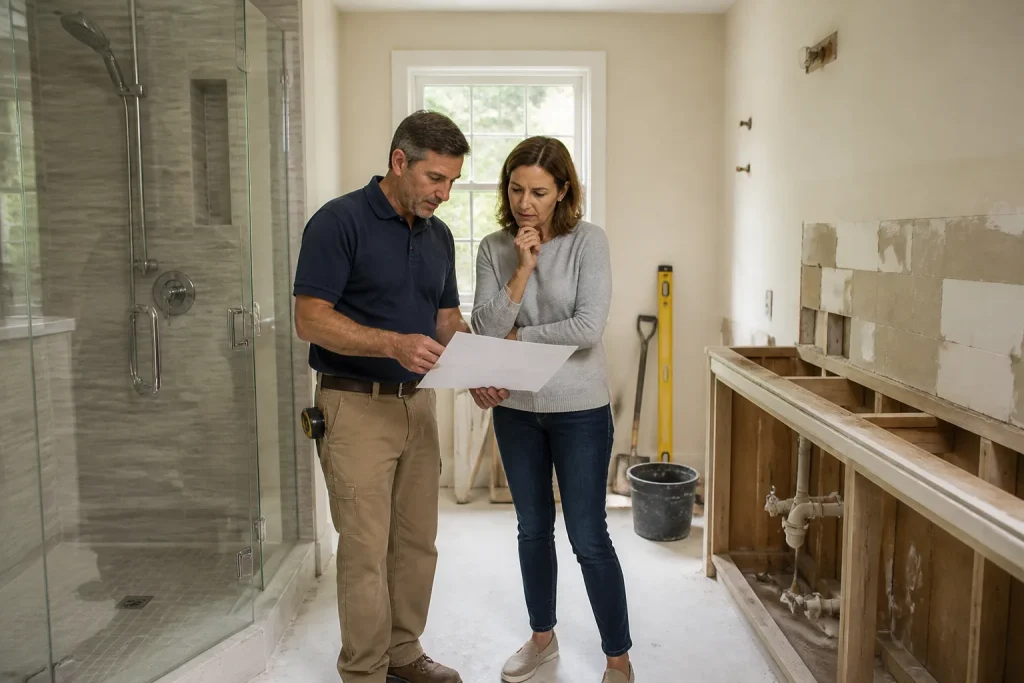
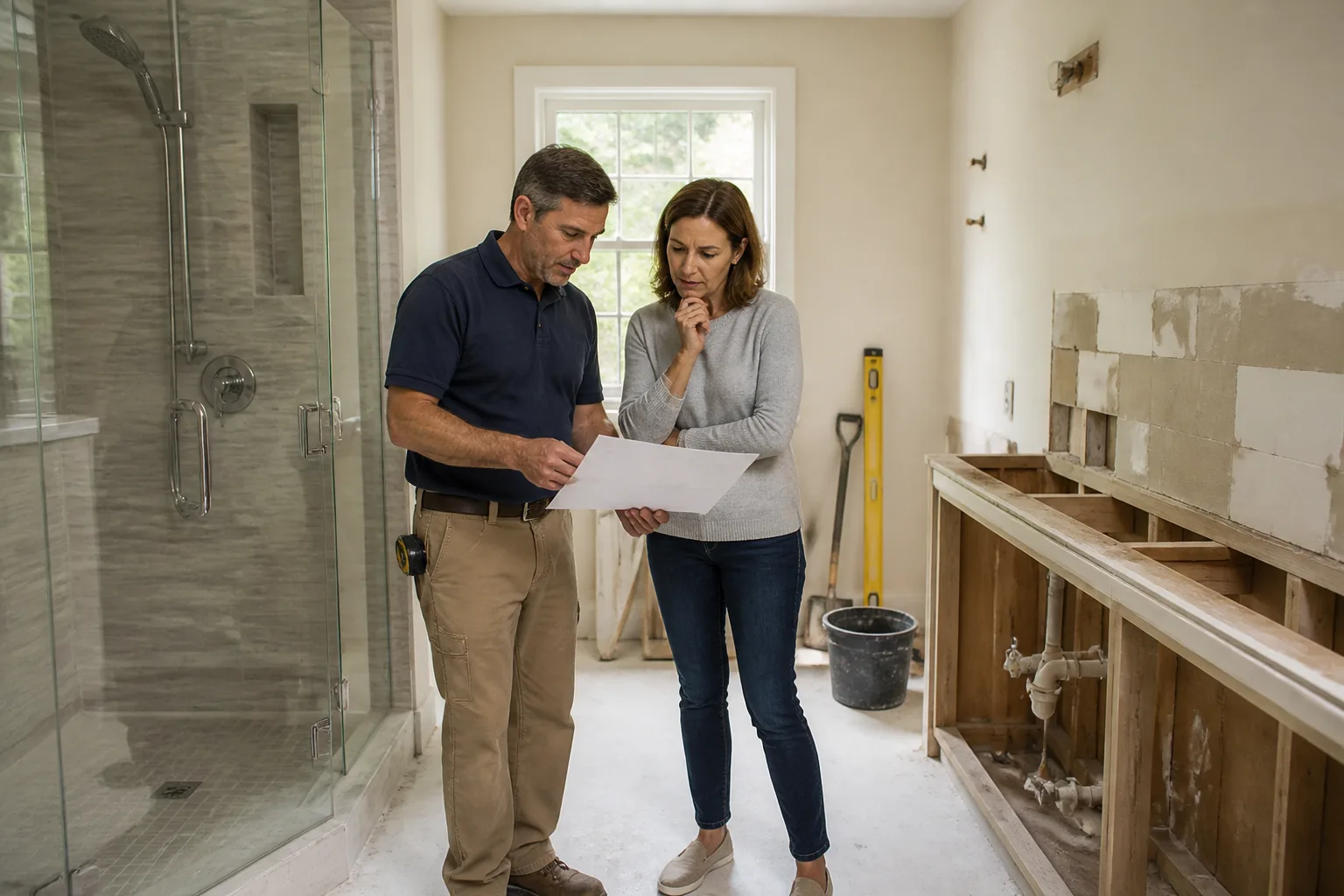
The decision almost never comes down to how the tile looks. In Lake Forest bathrooms, especially those built before 2000, it comes down to what’s behind the tile: substrate, framing, pan liner, supply lines. Repair wins when the structure underneath is sound and dry. Replace wins when moisture has already compromised it. We’ve watched a lot of homeowners start out planning a $2,800 regrout and end up writing a check for a full remodel because nobody pulled a test tile first. If you’d rather have someone diagnose it properly instead of guessing, call (855) 532-8973 and we’ll take a look.
Here’s the part that catches people in Lake Forest specifically: the housing stock in neighborhoods like Foothill Ranch, Portola Hills, and the older tracts off El Toro Road was built during a long stretch when pan liners were either hot-mopped at the edges or installed without pre-slope. That’s a failure pattern that hides until the day it doesn’t. A shower that passes the eye test can be wicking water into the subfloor for a decade.
Why Lake Forest Bathrooms Fail Behind the Tile
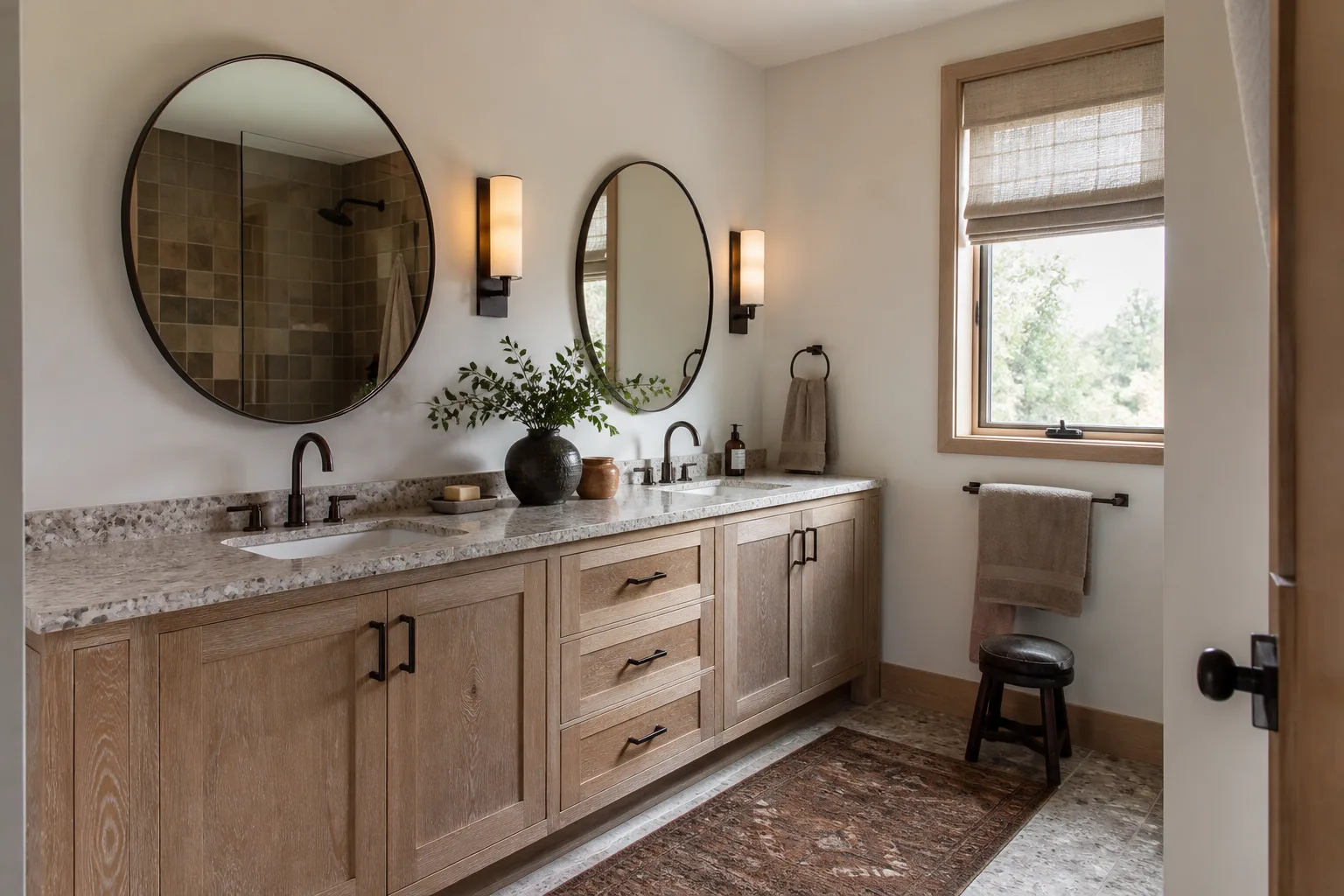
Water doesn’t announce itself. It travels down the backer, along the framing, and out through whatever’s lower. By the time you see the soft grout line or the loose caulk at the base, the damage is usually 12 to 18 inches higher and several inches deeper than it looks. This is why we don’t quote a bathroom remodel in Lake Forest from a photograph.
Three failure patterns show up again and again:
- Pan liner failure in pre-2000 showers. The liner cracks, water reaches the curb and the subfloor, and the shower essentially becomes a slow-motion leak. Regrouting over it is a bandage on a wound that keeps bleeding.
- Green board where cement board belonged. Older bathrooms sometimes used moisture-resistant drywall in wet zones. It resists humidity but not direct water contact, and it fails quietly.
- Failed caulk at the shower-to-floor transition and around the tub deck. Small, cheap, and almost always ignored until it has fed water into the framing for years.
In our experience across Lake Forest, the percentage of pull-a-tile inspections that reveal actual substrate damage is high enough that we treat it as the default assumption on any shower older than 25 years. Sometimes we’re wrong and it’s fine. That’s a good day.
The Five-Minute Tile Tap Test (Do This Before You Call Anyone)
You can learn a lot about a shower’s health in five minutes with a screwdriver handle or a coin. No tools, no risk, no cost. Tap the tile in a grid pattern, every 12 inches or so, across the field and especially along the seams and the bottom row.
What you’re listening for:
- Sharp, ringing tap. Tile is bonded to solid substrate. Good sign.
- Dull, hollow thud. The tile has debonded from what’s behind it. Water has probably been getting in.
- Loose tile under finger pressure. Stop. The substrate is compromised and any cosmetic fix will fail.
- Crunching or squishing when you press the shower floor. That’s water trapped in the pan assembly. This is the one that almost always means a rebuild.
Do the same test on the wall behind the vanity after you remove the mirror. And run a finger along every caulk joint in the room. If caulk pulls away clean from the tile, that gap has been open and taking water.
A homeowner in Portola Hills ran this exact test on a Sunday, found six hollow tiles clustered near the shower valve, and called us Monday. That five-minute tap saved her from authorizing a decorative tile job that would have failed inside 18 months. She needed a shower rebuild, not a cosmetic refresh, and she found out before spending money on the wrong thing.
How to Check Your Plumbing Before You Commit
Behind the vanity, under the sink, and at the toilet supply are where you’ll find the second big repair-or-replace decision. If the plumbing is original to a Lake Forest home from the 1980s or 1990s, it’s worth a close look even if it’s not leaking today. Often it’s polybutylene or early PEX, sometimes galvanized, and sometimes copper that’s 30 years past its best years.
Here’s what to check without tearing anything out:
- Shutoff valves. Turn them off and back on. If they’re seized, weeping, or don’t fully stop flow, they’re on their way out. Replacing them while the wall is open costs little. Replacing them after you’ve just finished a remodel costs a lot.
- Supply lines. Look for green or white crust at the fittings. That’s mineral buildup around a slow leak.
- Drain line. If the sink drains slowly even after a snaking, the trap arm or the line behind the wall may be partially blocked or corroded internally.
- Water pressure. Low hot-water pressure at one fixture but not others points to a valve or a line-specific issue, not a whole-house problem. That’s manageable. Low pressure at every hot fixture points to the water heater or the main.
If the supply and drain look reasonably sound and the shutoffs operate cleanly, keeping them is often the right call. If you’re looking at rusty shutoffs, corrosion at three or more fittings, and a drain that sighs instead of drains, that’s the moment to price replacement into the remodel scope. Doing it once, with the wall open, is dramatically cheaper than doing it later.
The 50% Rule: When Repairs Outrun a Full Remodel
We use a working rule that cuts through most of the ambiguity: if the total cost of targeted repairs reaches 50% or more of what a full remodel would run, replace the bathroom rather than repair it. That threshold exists because repair costs don’t include the risk premium – the chance that opening one wall reveals three problems. A full remodel prices that risk in from the start.
In Lake Forest’s current labor market, a full bathroom remodel runs roughly $550 to $750 per square foot depending on finish level. That’s a $35,000 to $60,000 project for a typical hall bath, and $60,000 to $90,000 for a primary. Against those numbers, here’s the sort of math we walk through with homeowners:
| Repair Scope | Typical Lake Forest Cost | Verdict |
|---|---|---|
| Regrout entire shower + recaulk | $1,200 – $2,200 | Repair, if tap test is clean |
| Retile shower walls only (substrate sound) | $6,000 – $9,500 | Repair, if pan and valves check out |
| Shower pan rebuild + retile walls | $11,000 – $16,000 | Borderline. Price the full remodel side-by-side |
| Shower rebuild + vanity + supply line replacement | $18,000 – $26,000 | Replace. You’re at or past 50% of a full remodel |
One real job last spring off Bake Parkway was a $17,400 shower rebuild quote that turned into a full remodel at $48,000 when the pan came out and the subfloor was spongy. The homeowner had asked us to price both, so the jump was planned rather than a surprise. That’s exactly why the 50% threshold matters. When you’re at that line, get both numbers in writing before you sign.
Why Ventilation Decides Whether the Next Remodel Lasts
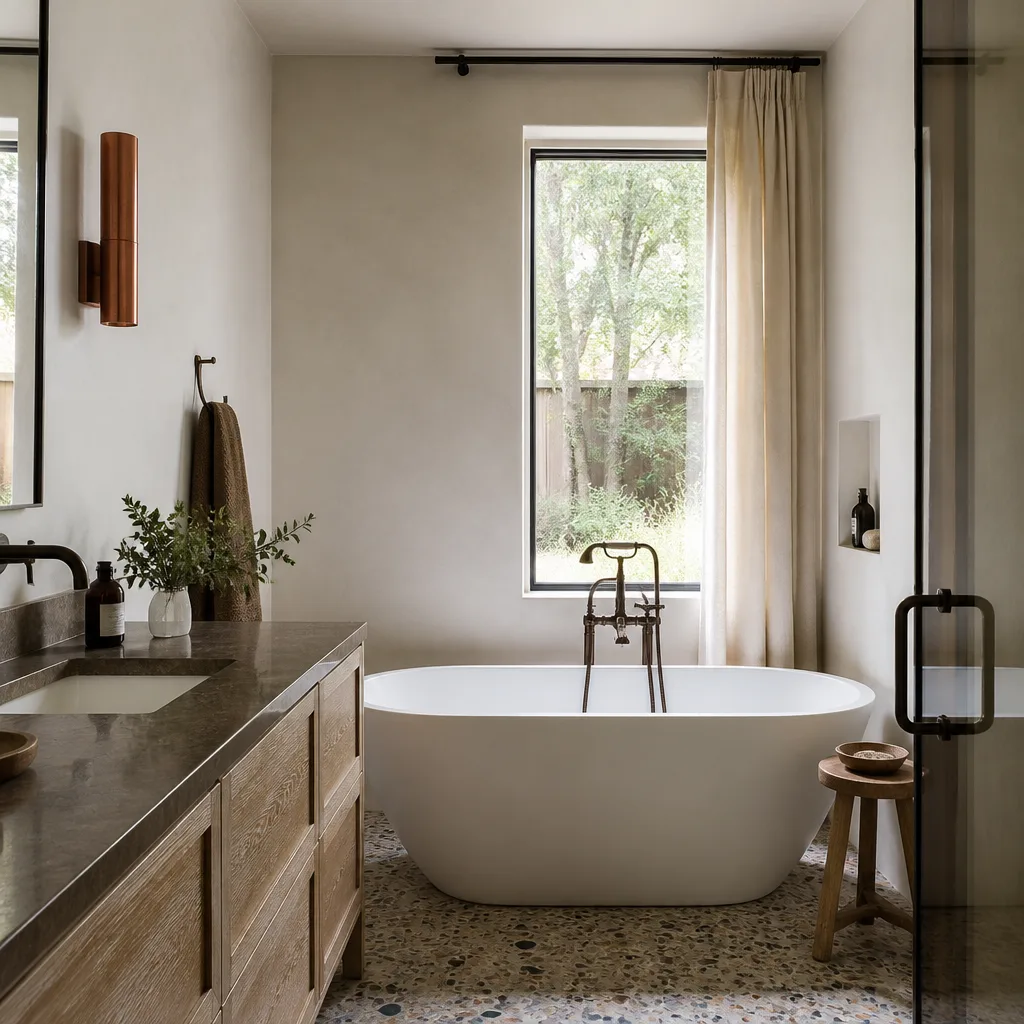
Lake Forest’s inland foothill climate puts substantial heat and humidity swings on a bathroom through the year. A bathroom without adequate exhaust accumulates far more moisture inside the room than a bathroom with a properly sized fan. Every remodel we scope in Lake Forest includes a review of the existing ventilation, even if the fan wasn’t on the homeowner’s list.
What we check and why:
- Fan CFM vs. room volume. Undersized fans run continuously and still lose the battle. We size to the square footage and the wet fixture count.
- Fan ducting. A fan that dumps into the attic instead of venting to the exterior moves humidity from the shower into the framing. We’ve found this in a couple of El Toro corridor homes where the “ventilation” had been quietly soaking the roof deck for years.
- Runtime controls. A 5-minute fan run doesn’t clear the room. Timer switches that run 20 to 30 minutes let the moisture escape the way it’s supposed to.
- Window-only ventilation. Relying on an opening window in an inland Lake Forest summer is not ventilation. It’s an opening window.
If you remodel the bathroom without fixing the ventilation, you’ve installed brand-new materials into the same humidity problem that failed the last set. We mention this in every bathroom consultation because the alternative is spending a lot of money to reseed the exact problem you just paid to solve.
Phased Remodeling Costs More Than Doing It Once
The phrase we hear most often is “can we fix the shower now and do the rest later?” The honest answer is yes, and it usually costs more than doing the whole thing in one pass. Not because contractors pad phased jobs, but because demo, materials, and mobilization get paid for twice.
Here’s where real math lands in Lake Forest right now:
- One full bathroom remodel: roughly $35,000 to $60,000 for a standard hall bath, including permit, demo, rough-in changes, tile, and finishes.
- Phase 1 (shower rebuild only): $11,000 to $16,000.
- Phase 2 (rest of bath, two years later): $30,000 to $50,000, because you’re paying for a second mobilization, second permit, second dumpster, and price-increase of materials at the later date.
- Total phased: $41,000 to $66,000, or $6,000 to $16,000 more than a single-pass remodel.
Airmen in Foothill Ranch who’d planned a phased unit-by-unit timeline over four years discovered the phased approach was going to cost them roughly $9,000 more per bath than doing both in one go. They compressed the timeline and finished at once. That’s not an up-sell; that’s arithmetic.
The one exception: if the underlying damage is small and a true cosmetic repair genuinely resolves the problem, fixing now and remodeling in three to five years is a reasonable path. Just get that answer in writing from whoever is looking at it.
When to Call a Pro
Some signs mean DIY is over. If you found loose tile, spongy floor, a shower-valve leak, or corrosion at multiple plumbing fittings, you’re dealing with a job that needs a permitted rebuild. Somebody needs to open it up, do a proper substrate inspection, repair any framing that’s been wet, and pull the right permits to close it correctly. This isn’t a tile job; it’s a construction project.
We’ve walked into Lake Forest bathrooms where a homeowner had already applied a $400 epoxy coating over a shower floor that had failed from below. It held for a week. That money is gone, and the underlying issue is untouched. The tap test above is free and safe. Anything past that stage is where a trained eye saves you more than it costs.
If you want to pressure-test the repair-versus-replace decision before committing to either, a free estimate and design consult is the right next step. We answer the phone with a real person 24/7, and every quote is line-item and written.
The Bottom Line
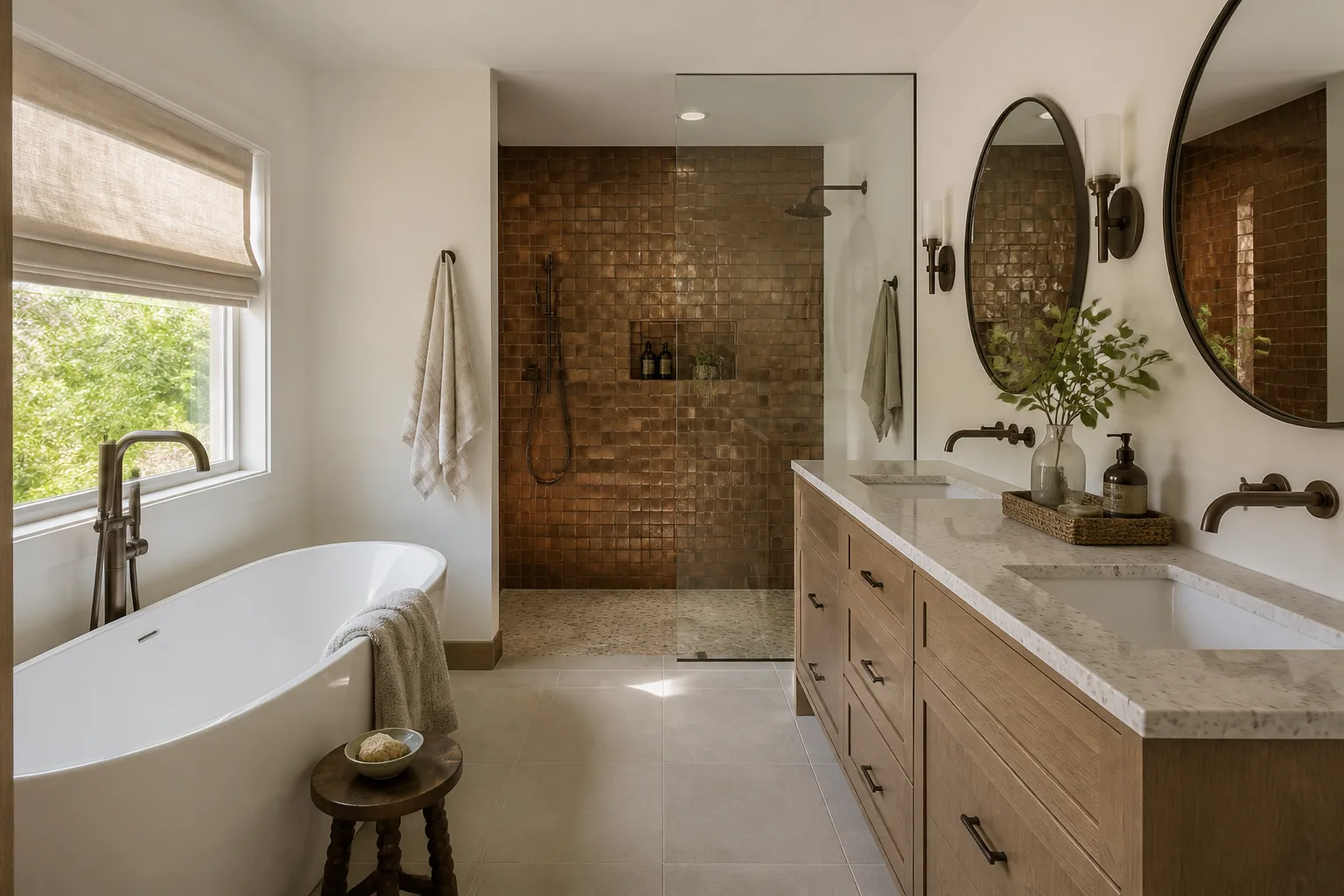
After looking at hundreds of Lake Forest bathrooms, the pattern is clear: the surface tells you almost nothing, the substrate tells you almost everything. Run the tap test. Check the shutoffs and the fittings. Price the full remodel alongside any repair over $11,000. And if the repair number lands at 50% of a full remodel, replace it. Doing it once, done right, is almost always the cheaper path, even when it doesn’t feel like it up front.
When you’re ready to price the work with real numbers behind it, we pull permits, provide line-item quotes with no change orders, and back every job with our 730-Day Done Right Promise. Our technicians are background-checked, arrive in uniform, and have up to 12 years of experience. We also work with brand partners like Therma-Tru and Kohler when a door or fixture needs replacing in the same scope. From foundation to finish line, we own the whole picture.
If you’re in Lake Forest and need help, Groundwork Construction Co. of Lake Forest offers free estimates – call (855) 532-8973. We also offer 0% financing for 18 months and $1,000 off projects over $10,000, which can move a full remodel from “later” into “this year.”
Related services in Lake Forest: our full Groundwork Construction Co. of Lake Forest home page has everything we do, and if the project grows to include a bigger scope, see Home Additions & ADU in Lake Forest. If the bathroom opens onto a paver walkway, our Driveway & Pavers in Lake Forest team can finish the exterior side, and a new Fence Installation in Lake Forest is worth considering if you’re redoing the exterior at the same time.
Frequently Asked Questions
Replace if the tap test reveals three or more hollow tiles, the shower floor is spongy, or repairs reach 50% of a full remodel cost. Repair only when the substrate is sound, the pan holds, and plumbing shutoffs work cleanly.
A full bathroom remodel in Lake Forest typically runs $35,000 to $60,000 for a hall bath and $60,000 to $90,000 for a primary, depending on finish level. Repair-only scopes start around $1,200 for regrout and go up. Call (855) 532-8973 for an exact line-item quote – estimates are free.
A sharp tap sounds like solid substrate. A dull thud means the tile has debonded and water is likely getting in. A spongy floor underfoot is the strongest signal of pan failure and almost always requires a rebuild, not a repair.
No. In Lake Forest labor and material markets, phased remodeling typically costs $6,000 to $16,000 more than doing it in one pass because you pay for two mobilizations, two permits, and two rounds of material pricing. Call (855) 532-8973 to compare both options in writing before you decide.
Written by the team at Groundwork Construction Co. of Lake Forest.
Need Construction Help?
Call Groundwork Construction Co. of Lake Forest - licensed & insured, here with fast after-hours help in Lake Forest.
(855) 532-8973