
5 Mistakes to Avoid With Driveway & Pavers
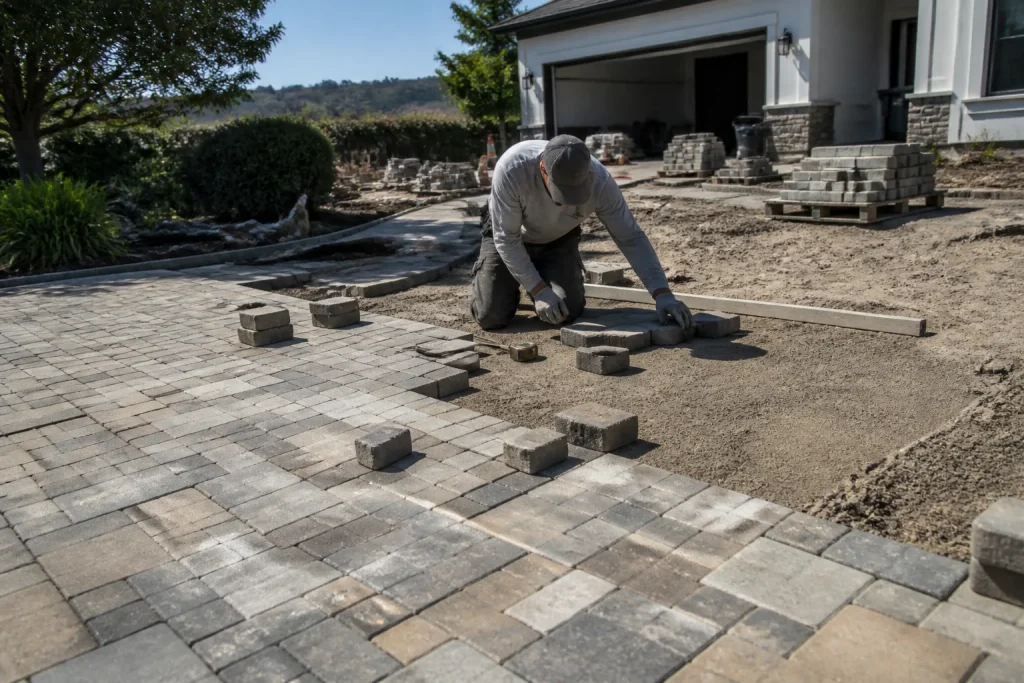
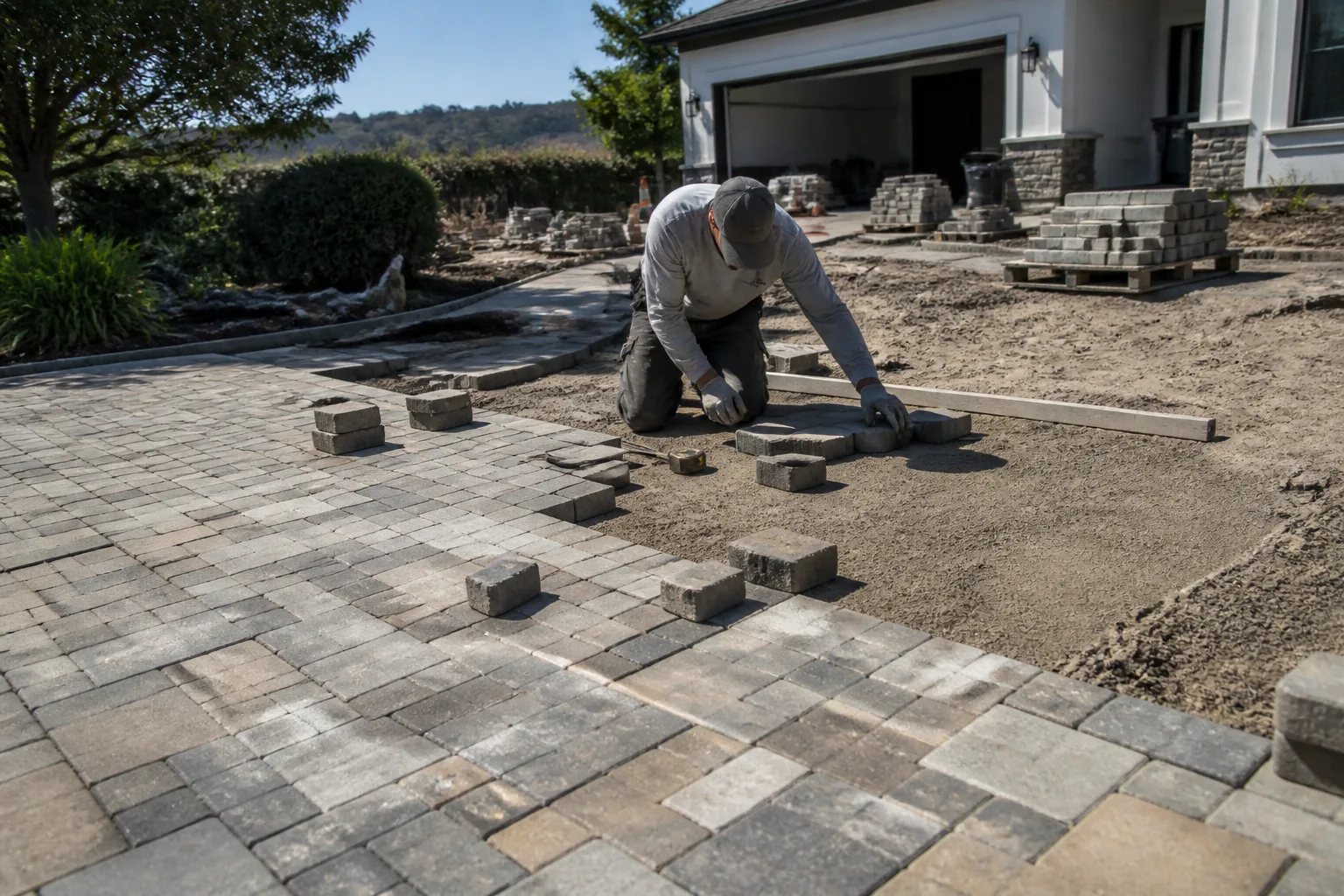
The five most expensive driveway paver mistakes in Lake Forest all happen before the first paver gets laid. They live in the planning week: the thickness you sign off on, the drainage plan nobody drew, the contractor who skips the permit, the quote with no base depth, and the warranty treated as a safety net instead of a signal. Get those five right and the installation takes care of itself. Get them wrong and you’ll pay for it for years. If you’d rather have a pro walk your driveway and spec it correctly, call (855) 532-8973 and we’ll set up a free estimate.
Mistake #1: Choosing Paver Thickness by Looks Instead of Load Rating
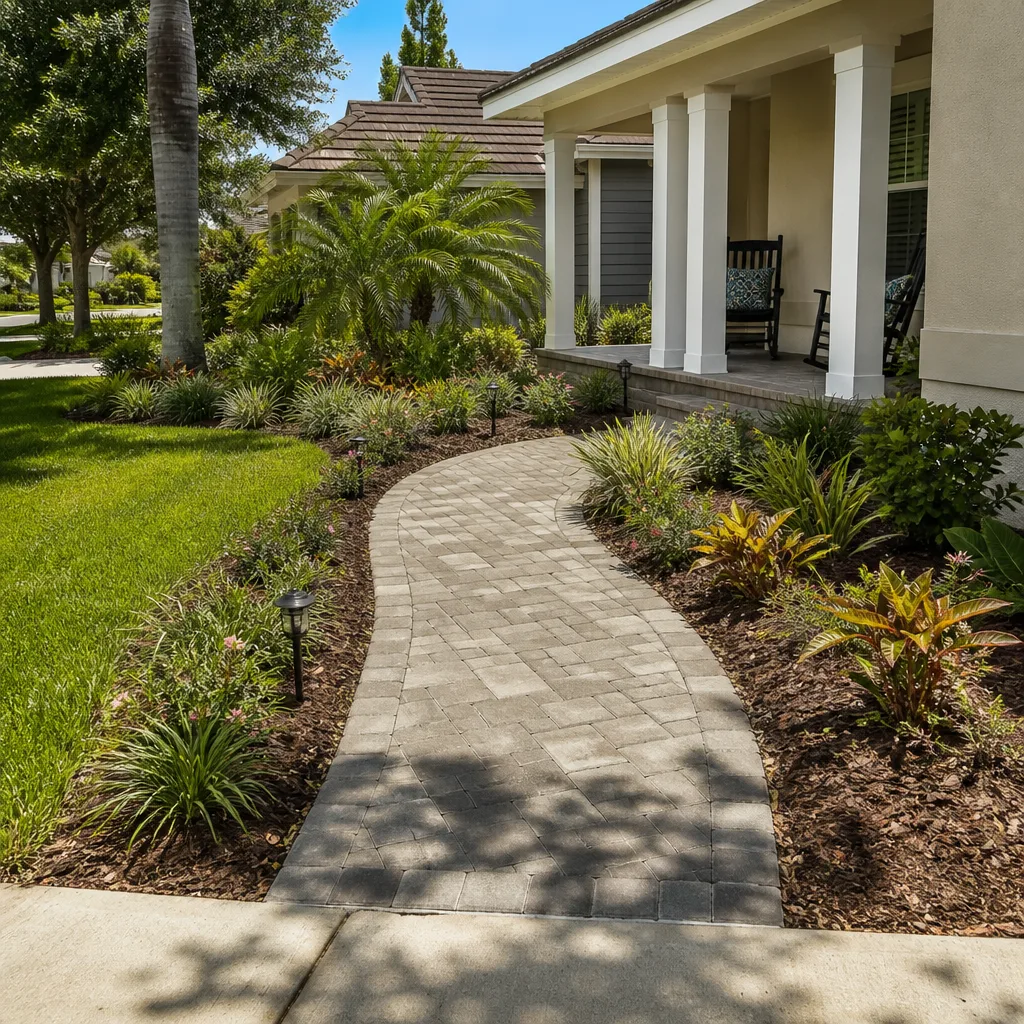
This is the mistake we see most often, and it’s the one that fails first. Pavers come in two common thicknesses for residential work: 60mm (about 2 3/8 inches) and 80mm (about 3 1/8 inches). A 60mm paver is built for foot traffic, patios, and walkways. An 80mm paver is built to carry vehicles. They look nearly identical in a showroom sample, which is exactly why homeowners get talked into the thinner product on a driveway.
Why does this matter more in Orange County than most places? Heat and load. A Lake Forest driveway bakes in summer sun, then takes a two-ton SUV parking on it every night. Thin pavers over an undersized base flex under that cycle, and flexing is what cracks and shifts them. We’ve seen 60mm driveways in Foothill Ranch that looked perfect for two summers and then started showing hairline cracks within a year, because the wrong product was specified on day one.
How to check your spec
- Ask for the paver thickness in writing on the quote. If it isn’t there, that’s a problem (more on that in Mistake #4).
- For any surface a car will park on, insist on 80mm, full stop. No exceptions for “it’ll be fine, nobody parks there.”
- Match the base to the paver. An 80mm paver on a thin base is still a failing driveway – the two work together.
- Ask what brand and line the pavers come from. A named product like Belgard is traceable and rated; “pavers” alone tells you nothing.
A quality installer will bring up thickness before you do. If you have to drag it out of them, keep shopping.
Mistake #2: Skipping the Drainage and Slope Plan
Improper slope on a Lake Forest driveway is two failures in one: a performance failure and a permit failure. Orange County grading rules care about where stormwater goes, and a driveway is a big, hard, impermeable surface that pushes water somewhere. If that “somewhere” is your garage, your neighbor’s property, or the foundation of your house, you’ve got a problem that shows up on the first real rain and gets worse every year after.
The right plan handles three things at once. It sets a slope that sheds water away from the structure (typically around a 2% grade away from the house, worked out on site, not guessed). It manages the runoff at the driveway apron so the street doesn’t send water back at you. And it accounts for Lake Forest’s actual terrain – the hills and the way water moves through neighborhoods like Portola Hills and Baker Ranch means a plan that works flat won’t necessarily work on your lot.
What a real drainage plan looks like
- A stated slope direction and target grade, in the plan, not just “we’ll pitch it right.”
- A decision on where runoff terminates – a channel drain, a dry well, or sheet flow to a defined low point.
- Permit documentation that matches the drainage plan, because grading is reviewed.
- Paver base that drains – compacted aggregate, not a solid slab that traps water underneath.
Ask any contractor to explain the drainage in plain English before you sign. If the answer is “don’t worry about it,” worry about it.
Mistake #3: Hiring a Contractor Who Doesn’t Pull Permits
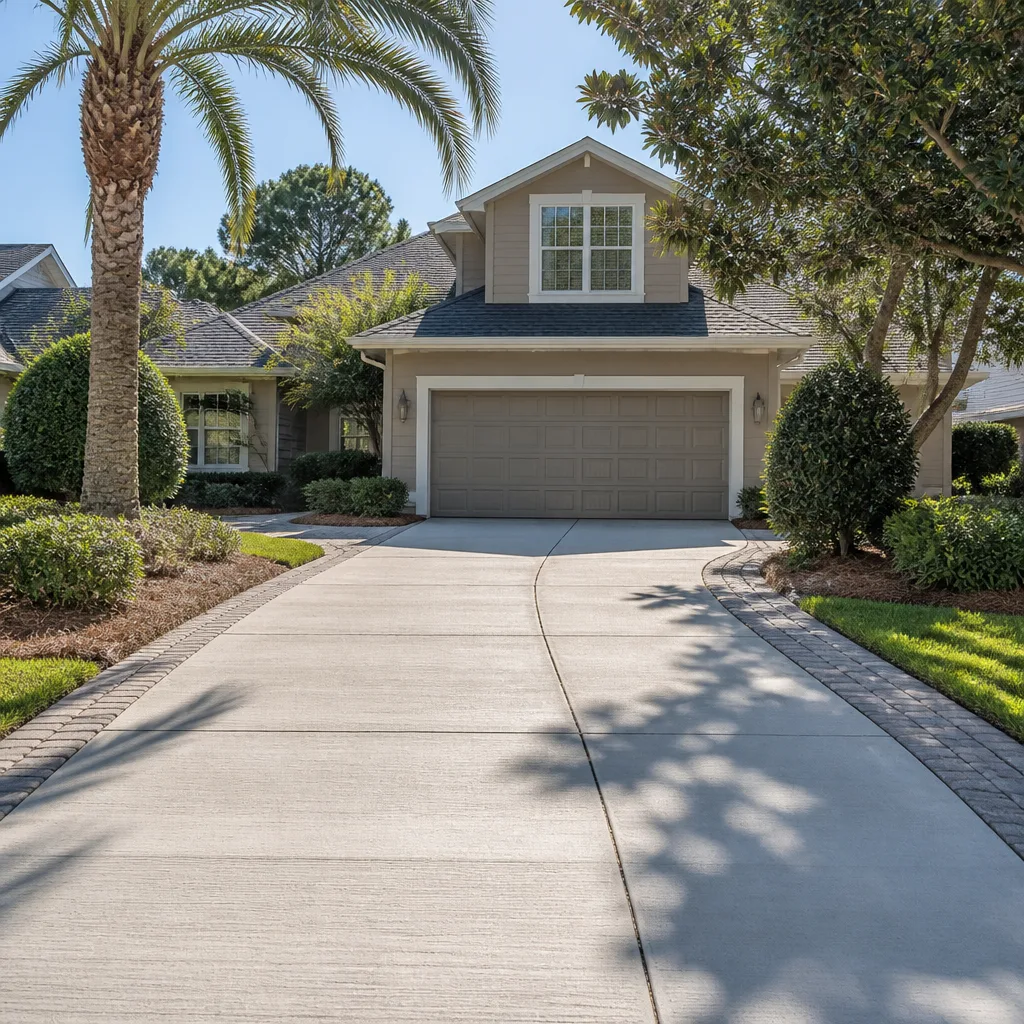
Driveway replacement and grading work generally needs permits in Lake Forest, and this is where unlicensed or shortcut-taking contractors save money at your expense. No permit means no inspection. No inspection means nobody independent ever confirmed the base, the slope, or the drainage before the pavers went down. You won’t feel it for a couple of years – and then you will.
The bigger hit shows up when you sell. In California, a buyer’s inspector looks at a driveway and asks a simple question: is this permitted? An unpermitted driveway replacement, a grading change with no record, work that doesn’t match any file at the city – that becomes a disclosure item, a negotiation chip, or a repair demand at the worst possible moment. We’ve watched sellers knock thousands off closing because they couldn’t produce documentation for a driveway they’d paid for in cash five years earlier.
The permits conversation, in short
- Ask who pulls the permit and whose name is on it. Vague answers are a red flag.
- Confirm the contractor will meet the inspector and pass the inspection, not hand you a folder and wish you luck.
- Keep the permit and inspection records with your home documents. Future-you, and your buyer, will want them.
- Verify licensing and insurance before work starts. A legitimate contractor expects you to ask.
Permits and inspections are how a driveway becomes a documented asset instead of a liability.
Mistake #4: Accepting a Quote With No Base Depth Specification
This is the single most common way cost-cutting hides in writing. A driveway’s performance lives in the base – the compacted aggregate under the pavers – and a quote that says “prepare base and install pavers” without a depth number is telling you they’ll do whatever’s cheapest on the day. The paver is the part you see. The base is the part that determines whether you see it in the same place in ten years.
For a residential driveway carrying cars, a properly compacted base is typically around 4 to 6 inches of graded aggregate, compacted in lifts, over a stable subgrade. On soft or previously disturbed soil, it can need more. Skip or shortcut that, and the pavers above it don’t have a fighting chance – they settle, they rock, they crack at the joints, and no paver brand in the world rescues a bad base.
What a quote should spell out
- Excavation depth and base aggregate depth, in inches.
- Compaction method and how many lifts.
- Paver thickness and the specific product line.
- Edge restraint and joint sand, since both keep a driveway locked together.
- Drainage plan reference and permit responsibility.
We put numbers on every line not because it looks impressive but because it’s the difference between a bid and a wish. If two quotes differ wildly and neither shows a base depth, you’re not comparing prices – you’re comparing guesses.
Mistake #5: Treating the Warranty as a Safety Net Instead of a Signal
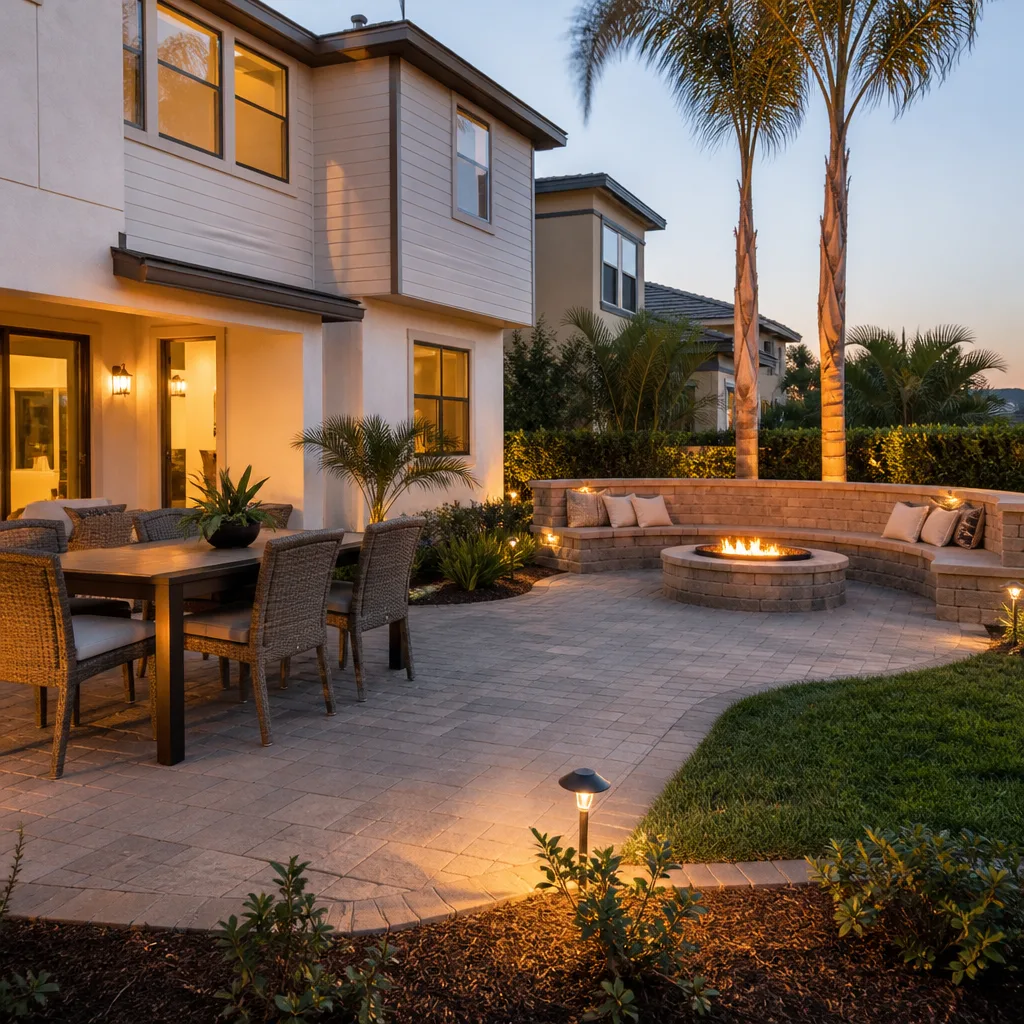
A warranty isn’t a promise that something will go wrong. It’s a signal of how confident the contractor is that it won’t. A one-year labor warranty on a driveway tells you the contractor’s own belief in the base, the drainage, and the install tops out at about twelve months. A long workmanship guarantee tells you the opposite: someone built this expecting it to still be right in two years, and is willing to put that in writing.
This is why we lead with our 730-Day Done Right Promise – if it isn’t done right, we make it right. It’s not a marketing badge. It’s the standard we hold the install to. When you’re comparing driveway contractors in Lake Forest, read the warranty language carefully and ask what it actually covers. Labor and workmanship is the part that matters; a materials warranty that covers only the pavers themselves doesn’t help you if they settle because the base was thin.
How to read a driveway warranty
- Find out what’s covered: workmanship, materials, or both.
- Check the length against the failure timeline – a driveway that fails at 18 months is a warning, not a blessing.
- Ask how a claim is handled: who comes out, how fast, and who pays.
- Compare it to the warranty on the rest of your home improvement work – a contractor who backs the driveway the same way they back a roof or a fence is a contractor who builds everything the same way.
When to Call a Pro (and Related Services in Lake Forest)
Some of these mistakes you can catch yourself with the checklist above – reading a quote, asking about thickness, demanding a base depth. But drainage and grading, permit work, and anything that involves excavation and compaction are not DIY territory. Getting the base wrong on a driveway is a five-figure mistake, and a wheelbarrow and a rented plate compactor won’t tell you if your subgrade is stable. That’s when to call a pro.
If your driveway project turns into a full front-yard plan, we handle the connected work too – from Driveway & Pavers in Lake Forest to Fence Installation in Lake Forest and Home Additions & ADU in Lake Forest when a new garage or entry changes the layout. You can see the full scope of what we do on our Groundwork Construction Co. of Lake Forest home page. All of it is covered by the same 730-Day Done Right Promise.
We’ve pulled plenty of bad driveways out of Lake Forest neighborhoods – one came out of a home near Foothill Ranch recently where the pavers sat on maybe two inches of base over bare dirt. It had looked fine in the listing photos. It didn’t survive its first real summer. That’s exactly the failure the checklist above is designed to catch before you spend a dime.
What happens when you call
- 1
A real person answersNo phone trees – you reach a local pro.
- 2
You get an upfront price rangeHonest numbers before anyone is dispatched.
- 3
A background-checked tech heads outLicensed & insured, dispatched right away.
- 4
You approve before work beginsNothing starts until you say go.
The Bottom Line
Every driveway paver failure we’ve seen in Lake Forest traces back to one of these five decisions: the paver thickness, the drainage plan, the permits, the base depth, and the warranty. None of them happen during install. All of them get locked in during the planning week, which means you have real control over the outcome if you ask the right questions up front. Write down the thickness (80mm for driveways). Demand a base depth in inches. Confirm who pulls the permit. Read the warranty language. Put it all in writing before anyone swings a shovel.
If you’re in Lake Forest and need help getting the spec right, Groundwork Construction Co. of Lake Forest offers free estimates – call (855) 532-8973. We’ll walk your driveway, spec the base and the drainage honestly, put every number on the quote, and back the work with our 730-Day Done Right Promise. Upfront pricing, no surprises, and permits pulled and inspections passed.
Our technicians have up to 12 years of experience, all of them background-checked and in uniform, and our calls are answered by a live person 24/7 – no voicemail black hole, no waiting until Monday. If you’re ready to plan your driveway the right way, call (855) 532-8973 for a free Project Estimate & Design Consult.
Frequently Asked Questions
The most common mistake is specifying 60mm pavers on a driveway because they look the same as 80mm in a sample. Driveways that carry cars need the thicker, load-rated paver over a properly compacted base. Choosing on looks alone is what cracks and shifts driveways a couple of summers in. Call (855) 532-8973 and we’ll help you spec the right product for your driveway.
In most cases, yes – driveway replacement and any grading work generally needs permits in Lake Forest, and grading is reviewed for drainage. A legitimate contractor pulls the permit and passes the inspection, and you keep the records for resale. Unpermitted work can become a disclosure issue when you sell. Call (855) 532-8973 to talk through the permit requirements for your project – estimates are free.
For a residential driveway carrying cars, a properly compacted base is typically around 4 to 6 inches of graded aggregate over a stable subgrade, sometimes more on soft soil. The exact depth depends on your site, and it should be written on the quote in inches. A quote with no base depth is the most common way shoddy work hides. Call (855) 532-8973 for an exact quote – estimates are free.
A workmanship warranty should run long enough to cover real failure timelines, not just the first year. A strong warranty – like our 730-Day Done Right Promise – signals that the contractor built the base and drainage to last, not just to pass inspection. Read the language to confirm it covers workmanship, not just materials. Call (855) 532-8973 for a free estimate and we’ll put the warranty in writing.
Written by the team at Groundwork Construction Co. of Lake Forest.
Need Construction Help?
Call Groundwork Construction Co. of Lake Forest - licensed & insured, here with fast after-hours help in Lake Forest.
(855) 532-8973