Last updated November 18, 2026
Free written scope consultation - allowances, timeline, and change-order rules on paper before a single trade is scheduled
The Complete Driveway & Pavers Guide for Lake Forest Homeowners
Most driveway paver failures in Southern California aren’t material failures. They’re base failures, caused by installers who brought specs written for Nevada desert heat or Pacific Northwest rain and applied them to Orange County’s very different soil. Here in Lake Forest, that mistake shows up as settling, rocking pavers, and joint sand washing out within three or four winters. The clay under many Saddleback Valley properties expands when it’s wet and shrinks when it dries, and a base built to a generic six-inch rule won’t survive that cycle. This guide covers what actually holds up in Lake Forest: how deep the base needs to go, which materials resist our UV load, how to clear HOA approval before you break ground, and how to tell a legitimate bid from the low-ball one that costs you double later.
Quick Answer
A driveway in Lake Forest needs a compacted aggregate base built deeper than standard SoCal recommendations because of the expansive clay soil common in the Saddleback Valley, plus a slope-to-drain plan that accounts for our occasional heavy rain events. Expect a full-scope paver driveway in Lake Forest to run roughly $14 to $26 per square foot installed, with base prep, drainage, and permits included. Cutting the base depth to save money is the single most common reason pavers fail here inside five years.
Styles & brands we work with
- Kitchen remodeling
- Bathroom remodeling
- Home additions & ADU
- Roofing
- Windows & doors
- Driveway & pavers
- Fence
Table of Contents
- Why Lake Forest Clay Changes Everything
- How Deep Does the Base Need to Be?
- Which Paver Materials Survive Lake Forest Sun?
- HOA Approvals in Lake Forest Planned Communities
- Slope, Drainage, and Heavy Rain
- What a Legitimate Bid Includes
- What Pavers Cost in Lake Forest
- Maintenance That Actually Matters
Why Lake Forest Clay Changes Everything
The soil is the part of a driveway nobody sees and the part that determines whether it lasts seven years or thirty. Much of Lake Forest sits on soils with a meaningful clay fraction, and clay does two things that sand and gravel don’t: it holds water, and it changes volume as that water content shifts. Through a wet winter and a dry summer, the ground under a driveway can move several times. A base layer that’s too thin transfers that movement straight up into the pavers.
We’ve seen this repeatedly in established Lake Forest neighborhoods where a previous owner had pavers installed in the 1990s or early 2000s to a “one size fits all” spec. The pavers themselves are often fine. The problem is underneath: ruts, a settled apron at the garage, or joints that won’t hold sand. What contractors from drier inland markets miss is that Lake Forest sits in a marine-influenced band. We get coastal moisture that Riverside and the high desert don’t, so our clay cycles more often.
Three things follow from that:
- Drainage has to move water away from the base, not into it. A driveway graded to pond at the garage apron will saturate the clay beneath it.
- Compaction has to be measured, not eyeballed. A plate compactor run once over loose gravel isn’t compaction.
- Base depth has to be site-specific. A flat lot on sandy soil and a sloped lot on clay are two different jobs, even with the same square footage.
If you’re also planning to replace fencing or add a structure at the same time, the sequencing matters, and we cover that in our guide to Fence Installation in Lake Forest. Digging footings near a finished driveway is a good way to disturb the base you just paid for.
How Deep Does the Base Need to Be?
Generic Southern California guidance often calls for four to six inches of compacted aggregate base. For much of Lake Forest’s clay soil, that’s not enough. On the expansive soils we encounter in the Saddleback Valley corridor, a full-scope driveway typically needs eight to twelve inches of compacted base, placed in lifts and graded to a plan, with a geotextile separation fabric between the native soil and the aggregate. The fabric keeps clay fines from pumping up into the gravel and destroying drainage over time.
Here’s the step-by-step a proper installation follows, in order:
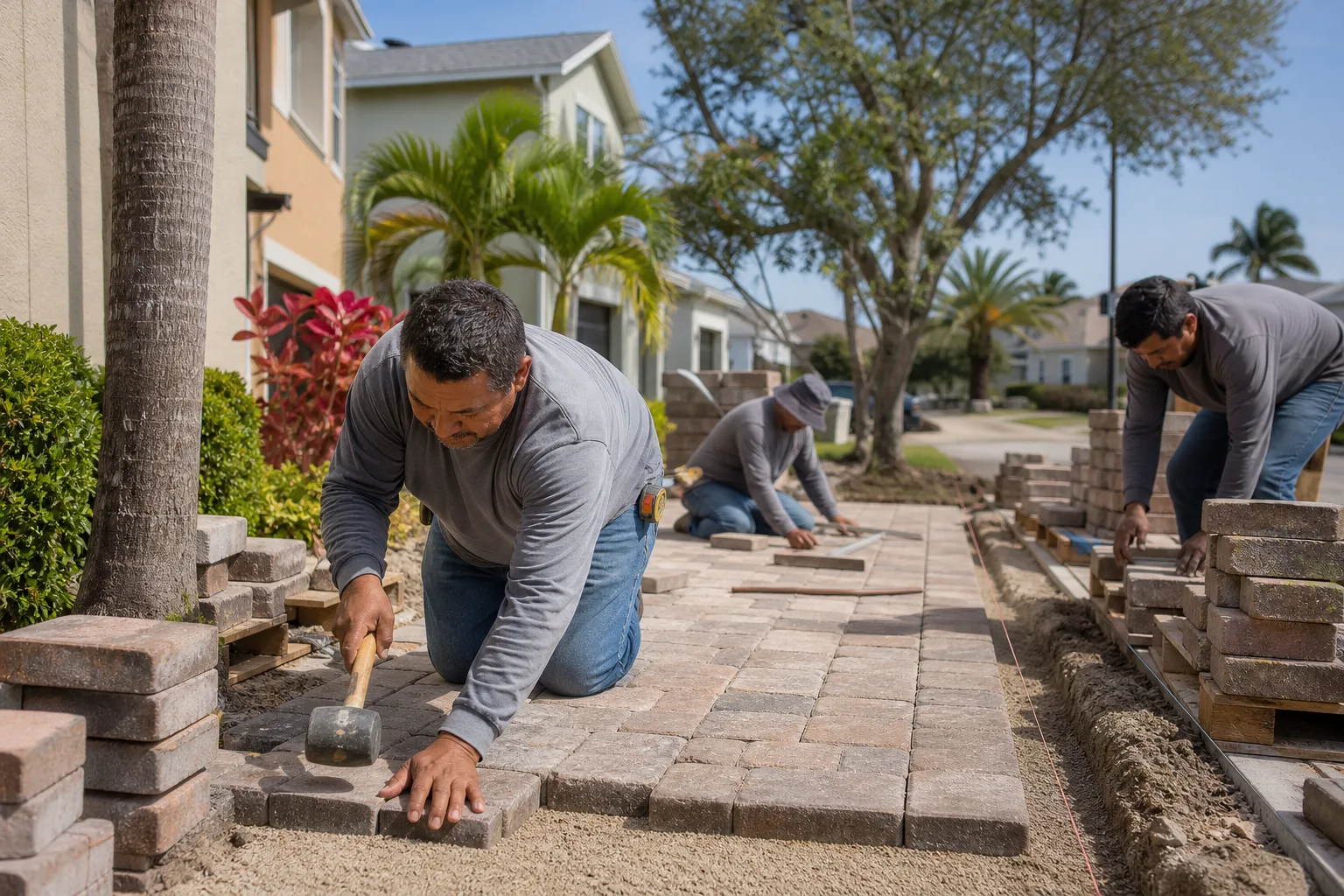
- Excavate to the right depth. That means native soil removed to accommodate the full base plus the paver thickness, not just skimmed.
- Grade the subgrade. The native soil is shaped to a slope that directs water away from the house and garage before anything goes on top.
- Lay geotextile fabric. This separates clay from aggregate and protects the drainage path.
- Place aggregate in lifts. Usually three to four inches at a time.
- Compact each lift. Plate or roller compaction between lifts, not one pass at the end.
- Set the bedding layer. A thin, screeded layer of coarse sand or fine aggregate.
- Lay and cut pavers. With proper edge restraints screwed or pinned to the base.
- Sweep in joint sand and compact again. Then a final pass over the whole surface.
The bids that come in unusually low almost always skip steps two, three, four, or five. Those are the steps that keep the pavers flat through ten wet winters. They’re also invisible in the finished job, which is exactly why they get cut.
Base depth also interacts with grading. If your lot slopes toward the street, the subgrade has to be shaped to shed water toward a defined outlet rather than letting it pool at the low corner. On a flat lot, that often means a slight crown and a channel drain at the apron.
Which Paver Materials Survive Lake Forest Sun?
Lake Forest’s UV load is real. Inland Orange County gets hundreds of clear, high-intensity days a year, and a paver that fades or spalls in year three is a paver you’ll be looking at for the next twenty. The differences that matter are in the color pigmentation method and the density of the concrete.
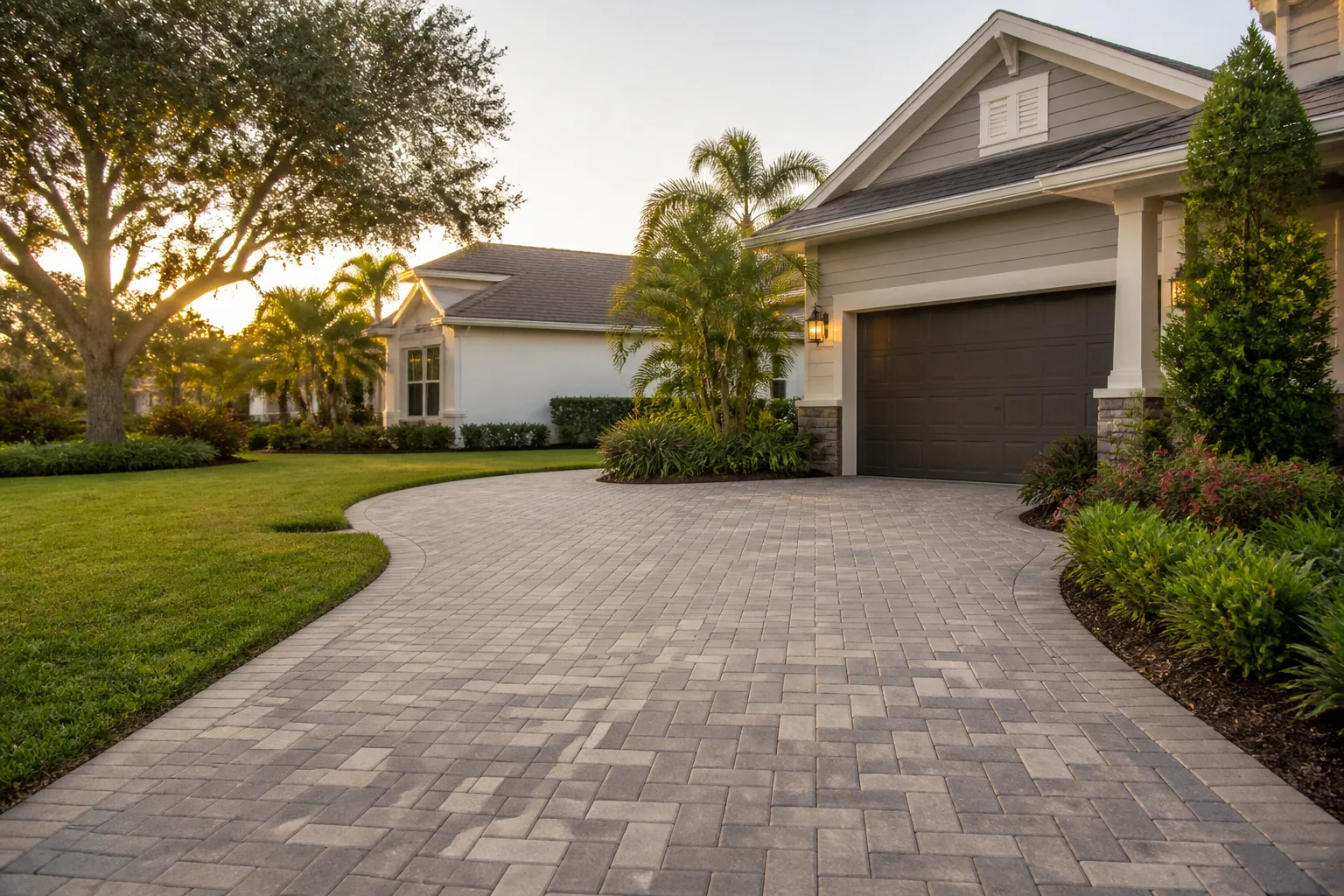
Through-body or “color through” pigments hold their color much longer than surface-applied colors. When you see a five-year-old driveway with worn, dusty patches on the traffic lanes, that’s likely a surface colorant that has abraded away. Through-body pigment goes all the way through the paver, so wear doesn’t change the color. Brands like Tremron and Techo-Bloc put a substantial emphasis on through-body color in their product lines, which is why we use them for Lake Forest projects.
Compressive strength and density determine whether a paver resists surface spalling, meaning the top layer flaking off. Spalling can happen from freeze-thaw, but in Lake Forest it more commonly comes from de-icing salts or from a paver that absorbed too much water and then was subjected to thermal cycling. Denser pavers absorb less water.
What actually holds up in Lake Forest:
- Interlocking concrete pavers with through-body pigment from a manufacturer that publishes freeze-thaw and abrasion resistance data.
- Tumbled or texturized surfaces that hide the scuffs from tires better than polished finishes.
- Permeable paver systems where drainage is a concern, though these need a base designed for storage, not just load.
What doesn’t hold up: thin overlay stamp products applied over existing concrete. They look good for two seasons and then delaminate where the concrete underneath has any movement. In a clay-soil neighborhood, that concrete is moving.
We work with Tremron, Techo-Bloc, and Cambridge Pavers across Lake Forest projects, and the right choice depends on your sun exposure, your slope, and how the driveway meets the garage apron. A driveway facing south will show color wear faster than one shaded by mature trees, so the pigment specification should reflect the orientation.
HOA Approvals in Lake Forest Planned Communities
A significant share of Lake Forest homes sit inside planned communities with architectural review committees. Breaking ground before approval is a mistake that can get expensive, because the remedy for unapproved work is usually removal. Approval bodies typically want specific information before they sign off, and a contractor who’s worked in Lake Forest will know to prepare the submittal.
The package usually includes:
- Site plan showing the driveway footprint and how it relates to the lot lines and any shared easements.
- Paver sample and color. Some associations have an approved palette, and you can’t pick a color outside it.
- Bordering or edging detail if the association has standards for how the driveway meets landscaping.
- Drainage plan showing that water won’t be redirected onto a neighbor’s lot or a shared slope.
- Contractor licensing and insurance documentation before work begins.
Two Lake Forest-specific considerations worth knowing. First, associations in this area often have setback rules for how close hardscape can sit to a property line, and those rules can shrink your usable driveway width more than you’d expect. Second, some communities restrict the percentage of the front yard that can be hardscape, which affects whether you can extend pavers beyond the driveway into a parking pad or walkway.
Get the approval in writing and keep a copy. If a future buyer’s agent or a new board asks questions years later, you’ll have the documentation. Groundwork Construction Co. of Lake Forest can put together the submittal materials as part of project planning.
Slope, Drainage, and Heavy Rain
Lake Forest doesn’t get a lot of rain, but the rain it does get often arrives in short, heavy events. That pattern is harder on a driveway than steady drizzle, because the volume overwhelms poorly planned drainage all at once. A driveway that drains fine in a light shower can pond at the apron when two inches fall in a few hours.
The slope-to-drain calculation is what most homeowners never see and most contractors skip. Here’s what it involves:
A driveway needs a minimum slope away from the garage of about one to two percent, which is roughly one-eighth to one-quarter inch of fall per foot. That sounds small, but over a twenty-foot driveway it’s two and a half to five inches of drop, and it has to be built into the subgrade, not just the top surface. If the driveway meets a flat apron or a curb with no outlet, water has nowhere to go.
That’s where the drainage plan earns its keep:
- Channel drain at the garage apron if the grade can’t shed fast enough, tied into a defined outlet.
- Crown or cross-slope on wide driveways so water sheds to both sides instead of pooling in the middle.
- Outlet location that doesn’t dump onto a neighbor’s property or erode a slope.
In neighborhoods with hillside lots, drainage design overlaps with retaining structures and grading, and that’s the kind of scope that needs to be planned together rather than piecemeal. If you’re adding a structure that changes the drainage pattern of a larger portion of the lot, the work should be coordinated with the broader project. Our guide to Home Additions & ADU in Lake Forest covers how sitework and structures get sequenced.
The rain pattern also means your paver joints matter. Joint sand is the first line of defense against water getting under the surface. It needs to be swept in and compacted properly at installation, and it needs to be replenished as it works its way down over the years.
What a Legitimate Bid Includes
The lowest bid is the one most likely to cost the most over ten years, because low bids are almost always low because of what’s missing. Here’s what a real full-scope bid should list line by line, so you can compare apples to apples when you get multiple proposals.
What a legitimate bid includes:
- Demolition and disposal of the existing surface, with haul-away costs stated.
- Excavation depth, in inches, stated explicitly, along with how much native soil gets removed.
- Base aggregate type, depth, and lift schedule, not just a total number.
- Geotextile separation fabric if your soil calls for it, which in Lake Forest it often does.
- Compaction method, stated as measurement or method.
- Bedding sand or aggregate layer.
- Paver brand, product line, and color, named specifically, not “concrete pavers.”
- Edge restraints with the anchoring method stated.
- Joint sand type, including whether it’s a stabilized or polymeric product.
- Drainage provisions, with outlet locations described.
- Permits and HOA submittal, stated as included or excluded.
- Warranty terms, in writing.
What a low-ball bid omits: base depth stated as “as needed,” no mention of compaction method, generic paver description, “we’ll coordinate directly with your HOA” with no submittal, and a warranty that’s verbal. When you see those, you’re comparing a real job against a job that will need to be redone in a few years.
The all-in price also matters less than the all-in price after change orders. A bid where the number you see is the number you pay, with no surprises later, is worth more than a bid that starts low and drifts upward once the excavation starts. Groundwork Construction Co. of Lake Forest provides no-hassle upfront pricing plus a free project estimate and design consult. Our projects are covered by the 730-Day Done Right Promise, so if something’s not right, we make it right.
What Pavers Cost in Lake Forest
Pricing in Lake Forest runs higher than inland markets because of the base prep and drainage requirements the local soil demands. Here are realistic line-item ranges for a full-scope project in this market.
| Item | Typical Range (Lake Forest) |
|---|---|
| Paver surface, materials and installation | $8 to $14 per sq ft |
| Base prep, deeper on local clay | $4 to $8 per sq ft |
| Demolition and haul-away of old surface | $2 to $4 per sq ft |
| Drainage (channel drain, outlet, grading) | $600 to $2,400 depending on scope |
| Permits and HOA submittal (where required) | $200 to $900 |
| Total installed, full scope | $14 to $26 per sq ft |
For a typical two-car driveway of 500 to 600 square feet, that works out to somewhere between $7,000 and $15,000 for a full-scope installation. The variance is driven by slope, existing demolition, drainage outlet distance, and whether your HOA requires submittal.
Financing makes these projects easier to fit into a budget. Groundwork Construction Co. of Lake Forest offers 0% financing for 18 months and $1,000 off projects over $10,000, which is exactly the range most Lake Forest driveways fall into. The larger the driveway and the more sitework involved, the more that $1,000 off helps offset the added base cost.
The single biggest factor moving you toward the high end of the range is drainage. A flat lot that needs a channel drain tied into a long outlet is more sitework than a sloped lot that sheds naturally. The single biggest factor moving you toward the low end is keeping your existing surface where you can and having a straightforward lot. The number you see is the number you pay; we don’t do change-order creep.
If you’re comparing a driveway project against other improvements on your list, it’s worth seeing how the numbers line up across the categories. Our overview at Groundwork Construction Co. of Lake Forest home covers the full range of services, and our dedicated page on Driveway & Pavers in Lake Forest goes deeper on the specifics of paver installation.
Maintenance That Actually Matters
Paver maintenance isn’t complicated, but the things worth doing are not the things most people do. Sealing is often oversold, and joint sand is often ignored. Here’s what actually extends the life of a Lake Forest driveway.
Replenish joint sand. This is the single most useful maintenance task. As sand works its way down and washes out, water gets under the pavers and the interlock loosens. Sweep fresh sand into the joints every couple of years, more often on driveways with heavy traffic.
Keep the drainage clear. Channel drains, grates, and outlets collect leaves and debris. Clear them before the rainy season starts, roughly October in Lake Forest. A clogged drain is worse than no drain, because it concentrates water in one spot.
Address efflorescence promptly. The white film that sometimes appears on concrete pavers is efflorescence, a salt deposit brought up by moisture. It’s cosmetic and reversible, but a proper cleaner is needed, not a pressure washer at high pressure.
Go easy on the pressure washer. High-pressure washing blasts out joint sand and can pit the paver surface. If you wash, use low pressure and plan to re-sand afterward.
Don’t seal a new driveway too soon. Sealing traps moisture if applied before the pavers have cured and dried. Give the driveway a full dry season, and if you seal at all, use a breathable product.
What doesn’t help: vinegar or acid cleaners (they can etch), parking on the pavers while joints are open, or re-sanding without compacting the sand in afterward. Compaction after re-sanding is what drives the sand to the bottom of the joint and locks it in place.
Common Mistakes to Avoid
- Accepting a base depth sized for inland California. The four-to-six-inch rule from drier markets doesn’t account for Lake Forest’s clay cycles. The longer-term cost of that shortcut shows up as settling in years three through five.
- Skipping the HOA submittal before breaking ground. A significant share of Lake Forest homes sit in planned communities with architectural review. Unapproved work often means removal, and that’s an expensive correction to a project you’ve already paid for.
- Choosing pavers for color without checking pigment method. A through-body pigment paver in Lake Forest’s summer sun will look different five years later than a surface-colored one. Ask specifically how the color is applied.
- Not planning the water outlet. A driveway that sheds water onto the street is fine; one that dumps it on a downhill neighbor’s lot is a lawsuit waiting to happen. The drain has to go somewhere specific, and the plan should show where.
- Skipping the geotextile separation fabric. On clay soil, without fabric, clay fines migrate up into the aggregate over time and destroy drainage. It’s a small line item and it’s the one most often dropped from bids.
- Comparing bids by total price alone. Two bids at very different prices are rarely the same scope. Compare base depth, paver brand, compaction method, and whether permits and HOA submittal are included.
- Pressure-washing aggressively. High-pressure washing strips joint sand, which is the layer that keeps water out. Re-sanding afterward is required, and it’s easy to damage the pavers in the process.
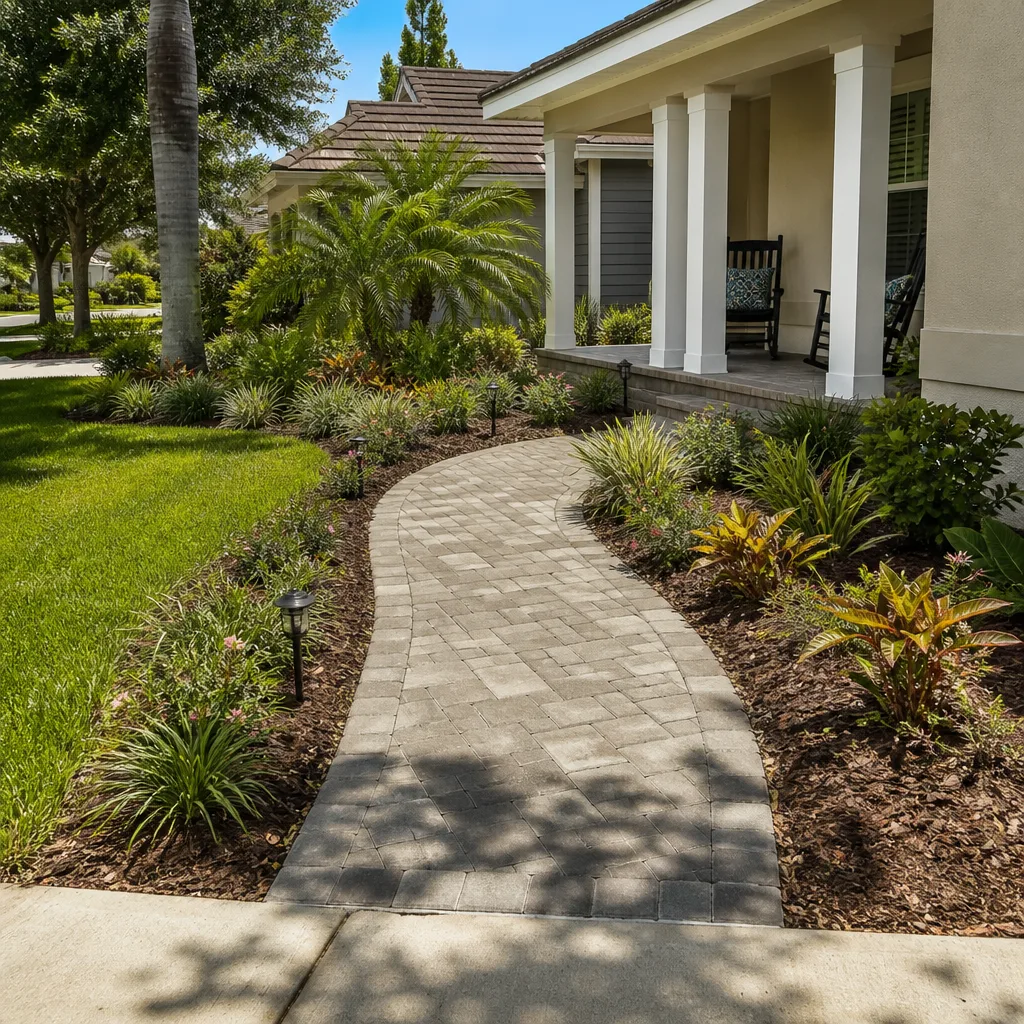
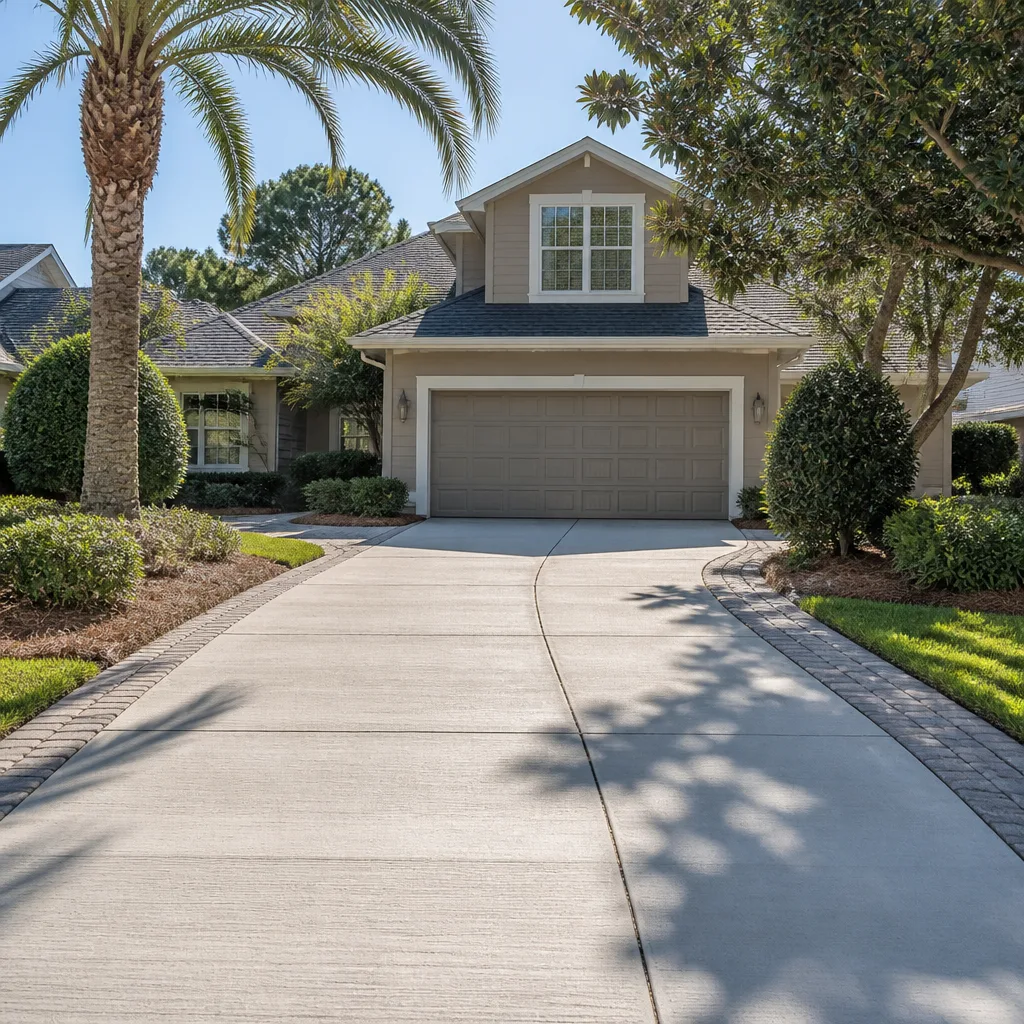
See the difference
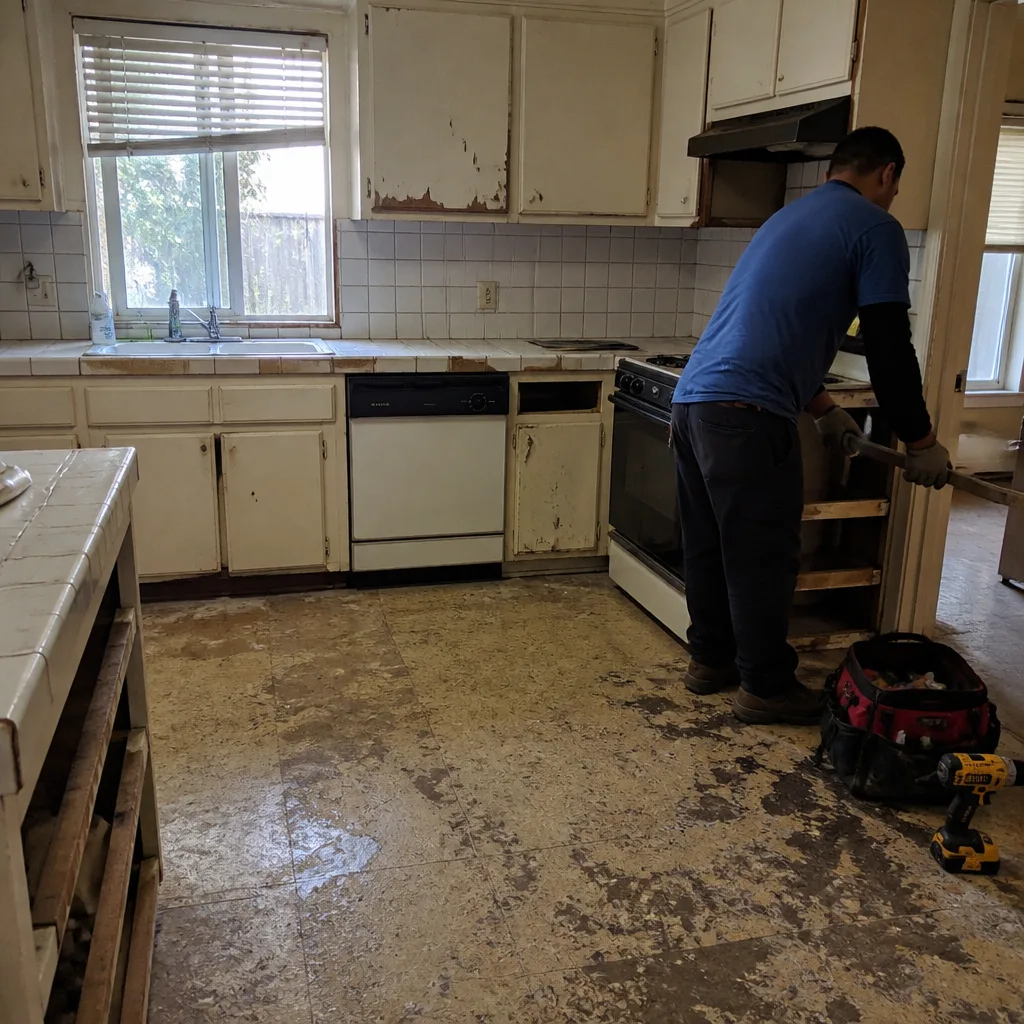 Before
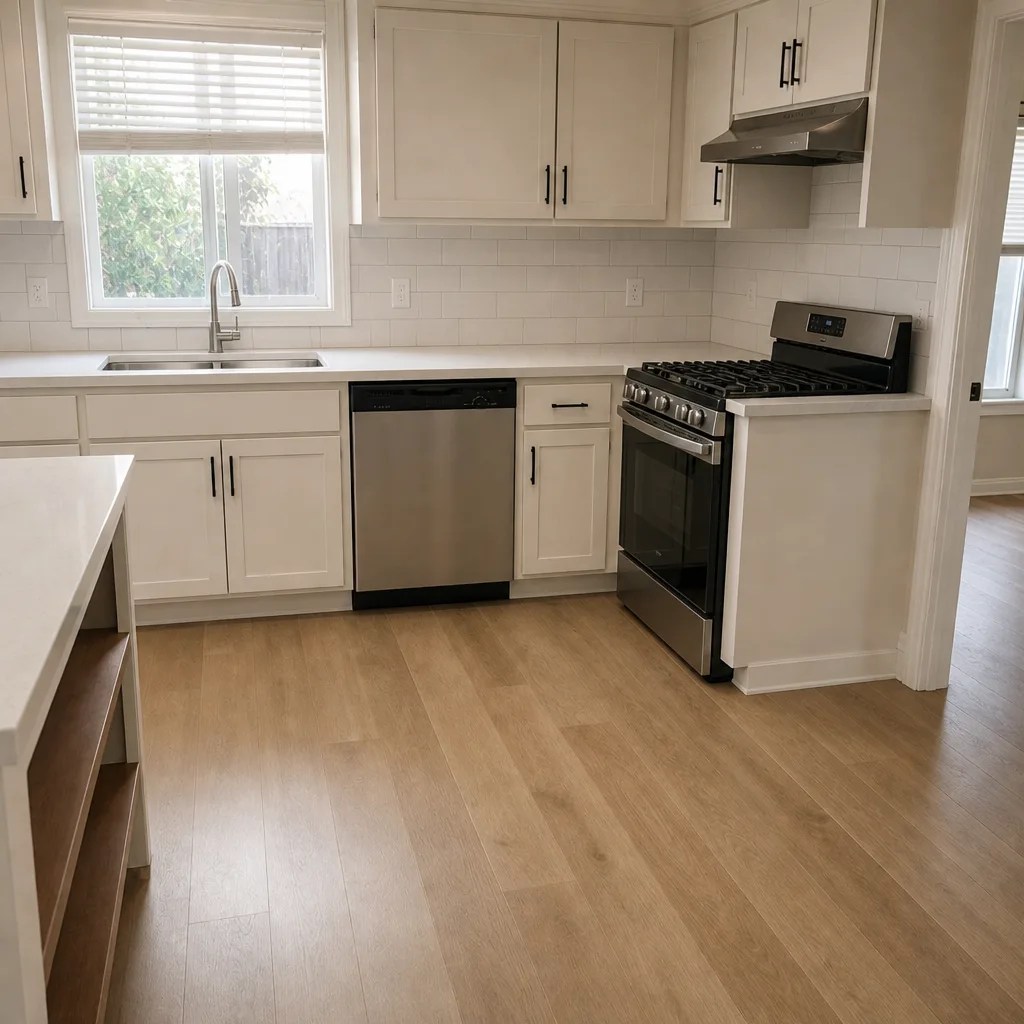 After
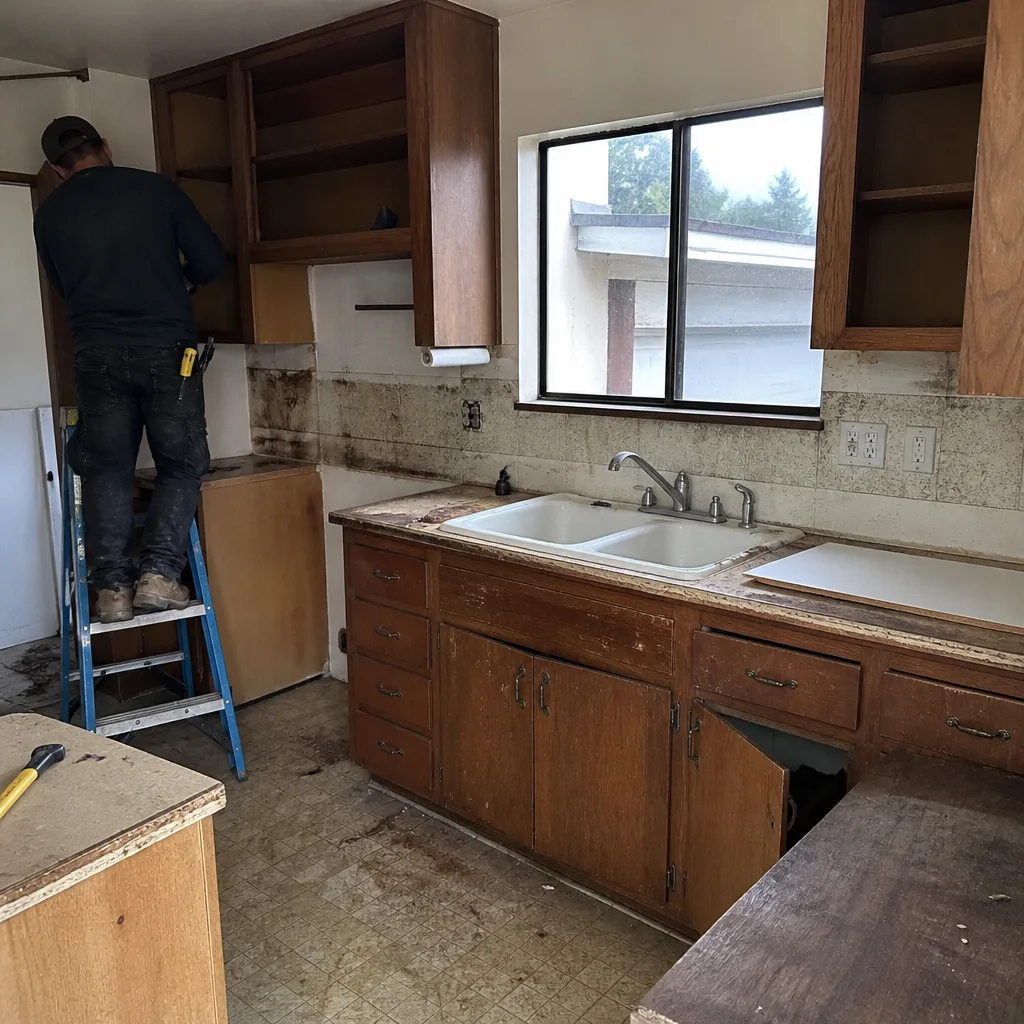 Before
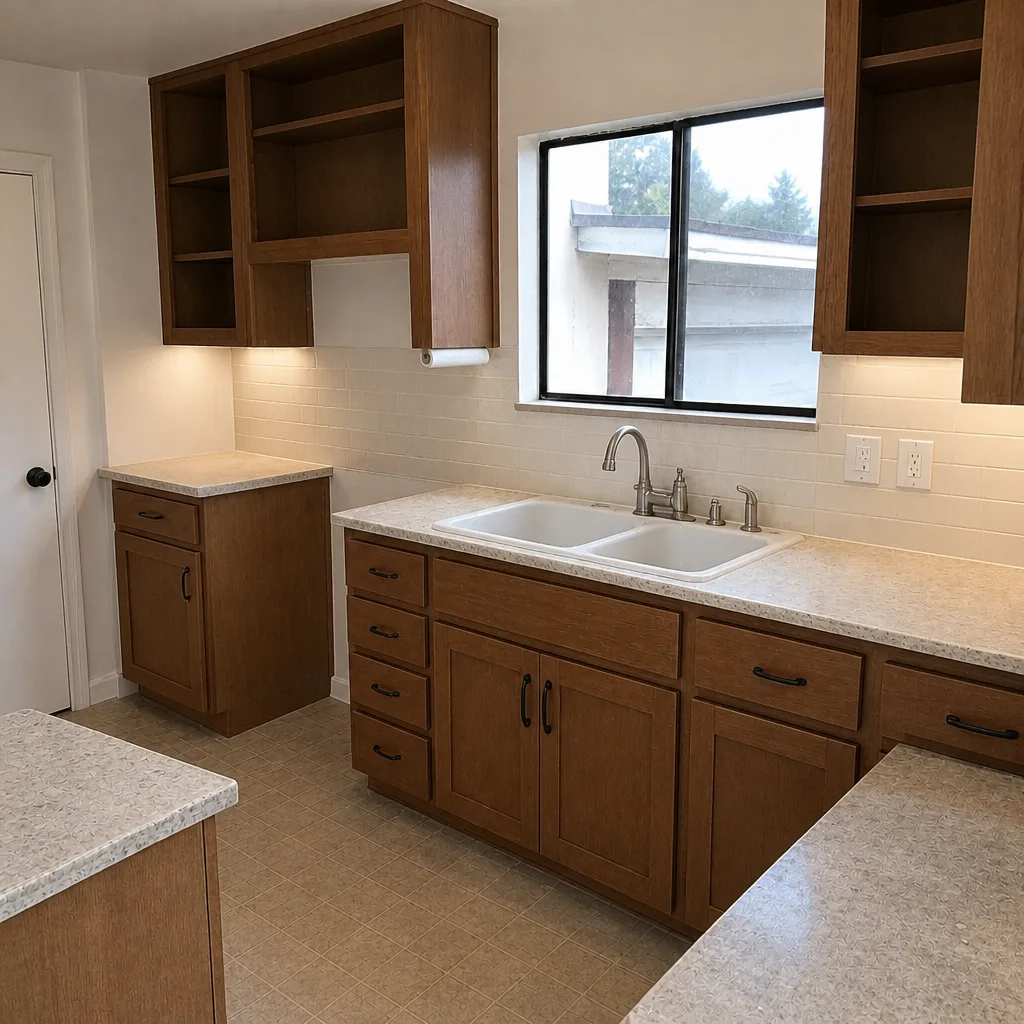 After
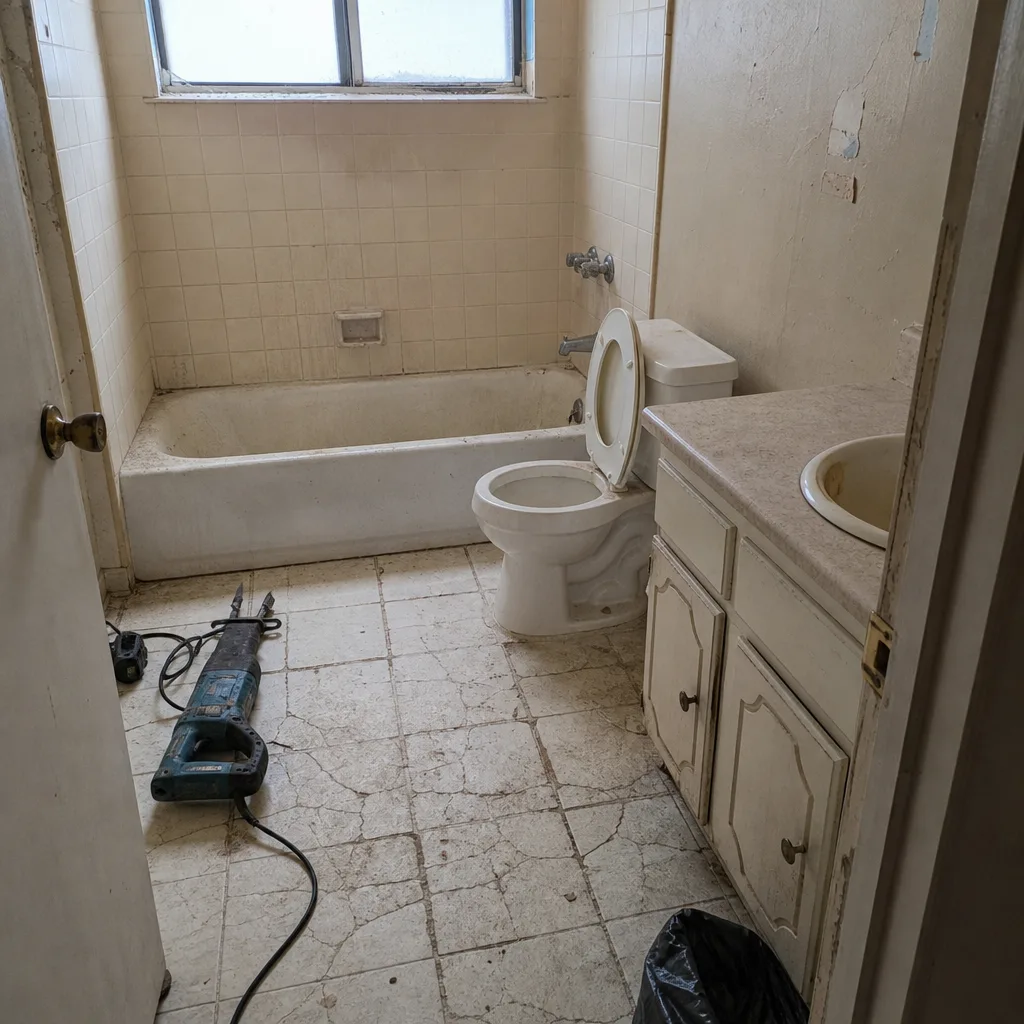 Before
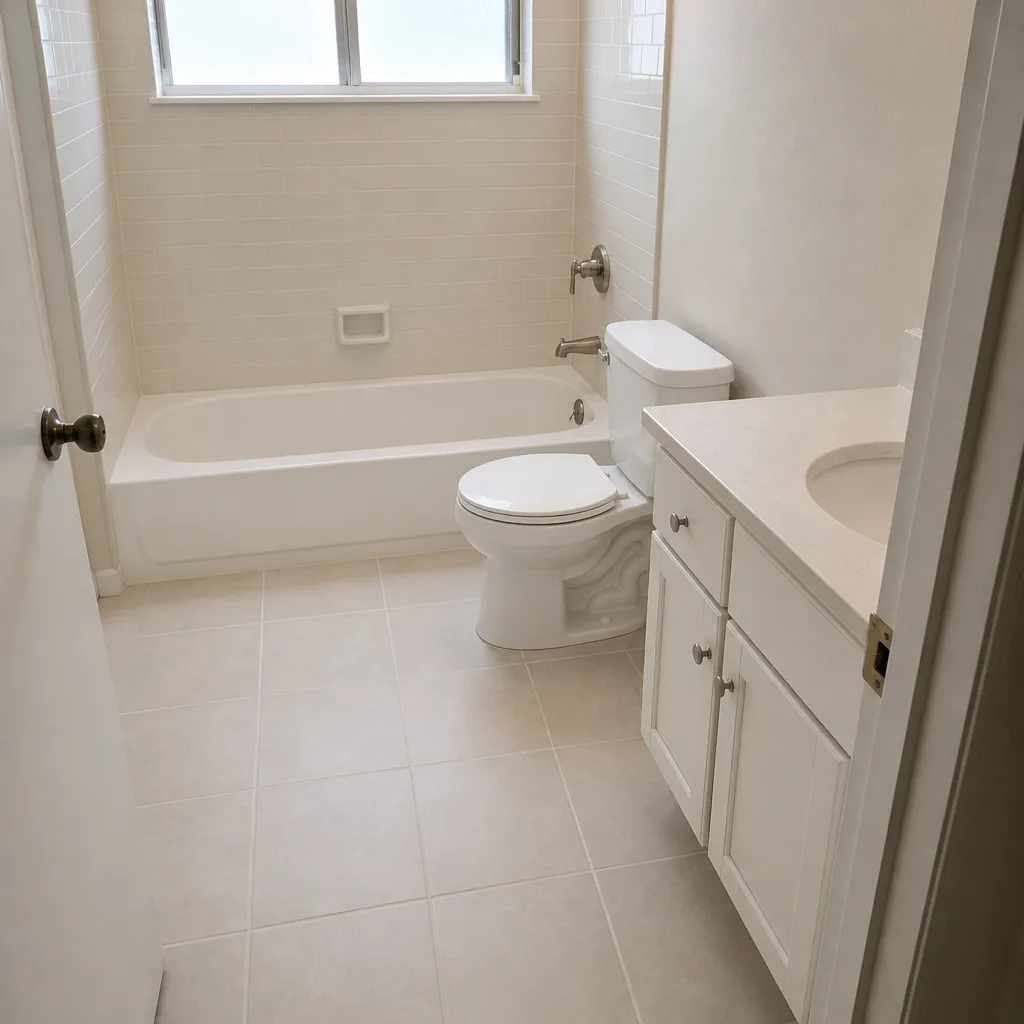 After
When to Call a Professional
Many driveway repairs are DIY-friendly: sweeping in joint sand, clearing a channel drain, cleaning efflorescence. But base failures, drainage corrections, and full installations are not. Once pavers are rocking, sinking, or holding water at the garage apron, the fix is underground and requires excavation, compaction, and drainage design. Likewise, any driveway replacement that touches your home’s drainage pattern affects the foundation and should be planned by someone who understands how the site drains. A driveway project that requires a permit or an HOA submittal also needs a contractor who can provide the documentation. Groundwork Construction Co. of Lake Forest offers free estimates in Lake Forest. Call (855) 532-8973 to schedule yours. Our technicians have up to 12 years of experience, arrive in uniform, and are background-checked. Calls are answered by a live person, 24/7.
Frequently Asked Questions
A full-scope paver driveway in Lake Forest typically runs $14 to $26 per square foot installed, which puts a 500 to 600 square foot two-car driveway somewhere between $7,000 and $15,000. The range is driven by base depth, slope, demolition, and drainage requirements. Call (855) 532-8973 for an exact quote, and estimates are free.
Most failures here come from the base, not the pavers. Lake Forest’s expansive clay soil cycles in volume with wet and dry seasons, and a base built to a shallower spec from a drier market can’t absorb that movement. Add poor joint sand maintenance or a drainage plan that concentrates water at the apron, and pavers in a Lake Forest neighborhood can start rocking within three or four years.
On the expansive soils common in the Saddleback Valley, plan on eight to twelve inches of compacted aggregate base, placed in lifts, with a geotextile separation fabric. The generic four-to-six-inch recommendation from drier parts of Southern California is a common cause of early failure in Lake Forest. A contractor who’s worked in this area will size the base to your specific lot.
If you’re in a planned community with an architectural review committee, yes. Most Lake Forest HOA submittals require a site plan, a paver sample, an edging detail, and a drainage plan, and some associations restrict color palettes or cap the percentage of the front yard that can be hardscape. Get the approval in writing before work begins. Call (855) 532-8973 if you need help assembling the submittal.
Not with us. Groundwork Construction Co. of Lake Forest provides upfront pricing: the number you see is the number you pay. A full-scope bid that includes base prep, drainage, permits, and disposal won’t grow because of hidden scope. The one time a price legitimately changes is if the subgrade encounters something a site visit couldn’t reasonably detect, and that should be discussed before work starts. Call (855) 532-8973 to schedule a free estimate.
Pavers with through-body pigment, meaning the color goes all the way through, resist fade far better than surface-colored pavers. A through-body paver from Tremron, Techo-Bloc, or Cambridge Pavers will hold its color through many summers, while a surface-colored paver can wear and fade in high-traffic lanes within a few years. Confirm the pigment method before you pick a color.
A typical two-car driveway runs about three to six working days from demolition to the final joint sand pass, depending on base depth and drainage scope. Deeper excavation and heavier drainage work push the schedule longer. The base work and the compaction between lifts are the slow parts, and they’re not the parts to rush.
The Bottom Line
Lake Forest’s clay soil and marine-influenced temperature swings create paver failure conditions that generic Southern California guidance doesn’t account for. The paver itself is the visible part, but the base, the geotextile fabric, the compaction, and the drainage plan are where a driveway either holds up for twenty years or fails in five. Get the base depth right, choose through-body pigment, secure HOA approval before breaking ground, plan where the water goes, and insist on a line-item bid. Then compare bids on scope, not total. And when you’re ready, call a contractor who knows what this specific soil does. Groundwork Construction Co. of Lake Forest offers free estimates, upfront pricing with no surprises, and the 730-Day Done Right Promise. Call (855) 532-8973 to schedule yours.
Let’s Look at Your Driveway
Every Lake Forest driveway sits on specific ground, and the right plan depends on your slope, soil, HOA, and how much of the base actually needs to go deeper. Groundwork Construction Co. of Lake Forest provides a free project estimate and design consult, and we’ll put the numbers in writing with line items you can compare. Call (855) 532-8973 to schedule. We offer 0% financing for 18 months and $1,000 off projects over $10,000, and our work is covered by the 730-Day Done Right Promise. Built to last, backed in writing.
Written by the team at Groundwork Construction Co. of Lake Forest.