
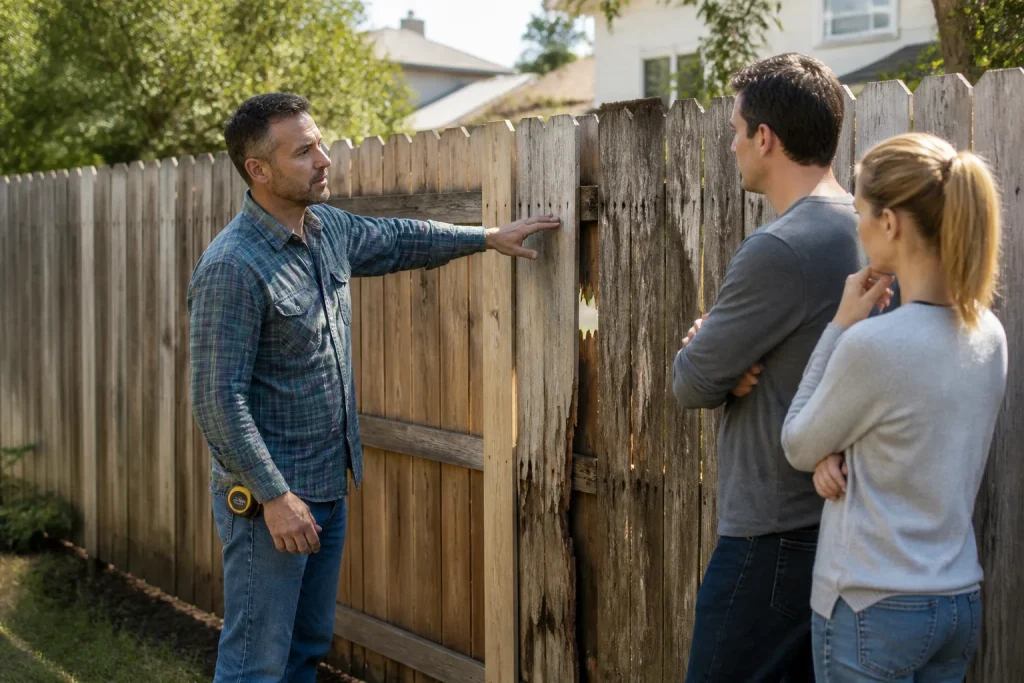
Fence Installation: Repair or Replace? How Lake Forest Homeowners Decide
Here’s the short answer we give every Lake Forest homeowner who calls us: if the posts are sound, repair the fence. If the posts are compromised, replace it. Sounds simple, but a fence can look 80% fine and be two Santa Ana wind events away from coming apart. Every year those dry, gusting winds rip panels clean out of posts that “seemed okay” the week before. This guide gives you a field-tested way to read your fence before anyone tries to sell you a new one.
If you’d rather not climb around testing lumber yourself, call (855) 532-8973 and we’ll take a look. Free estimate, no pressure, straight answers.
Key Takeaways
- The post system, not the pickets, decides repair vs. replace. Test the posts before you judge the fence.
- Surface rot on a wood post means very little. Depth of rot is what matters, and Lake Forest’s dry-summer soil moisture swings make the depth hard to predict.
- Once repair quotes hit roughly 40% of replacement cost, replacement is usually the smarter money.
- HOA standards in Lake Forest communities can force replacement even on a structurally decent fence – check your CC&Rs first.
- Material choice at replacement time is a 15-year cost decision, not a cosmetic one.
What’s the first thing to check? Start with the post-pull test
Before you look at a single cracked board, put your hands on the posts. Our technicians have up to 12 years of experience, and the first thing any of them does on a fence call is grab a post and try to move it. You can do this too.
Here’s how the post-pull test works:
- Grab a corner post at shoulder height and push it firmly away from you, then pull it back toward you.
- Watch the base where the post meets the soil. A sound post shouldn’t budge more than a fraction of an inch. If the whole post rocks in the ground, the footing is gone.
- Repeat on the gate posts and any post that supports a long panel run. These take the most load.
- Walk the whole line and test every post, not just the worst-looking one. Fences fail as a system, not a single section.
If more than a couple of posts move, you’re looking at replacement. If the posts are solid and it’s just boards, pickets or a sagging gate, repair is on the table. In our experience, about half the fences we get called out to in Lake Forest for “full replacement” only need repairs. The other half are exactly what the homeowner feared.
Why does surface rot lie to you in Lake Forest?
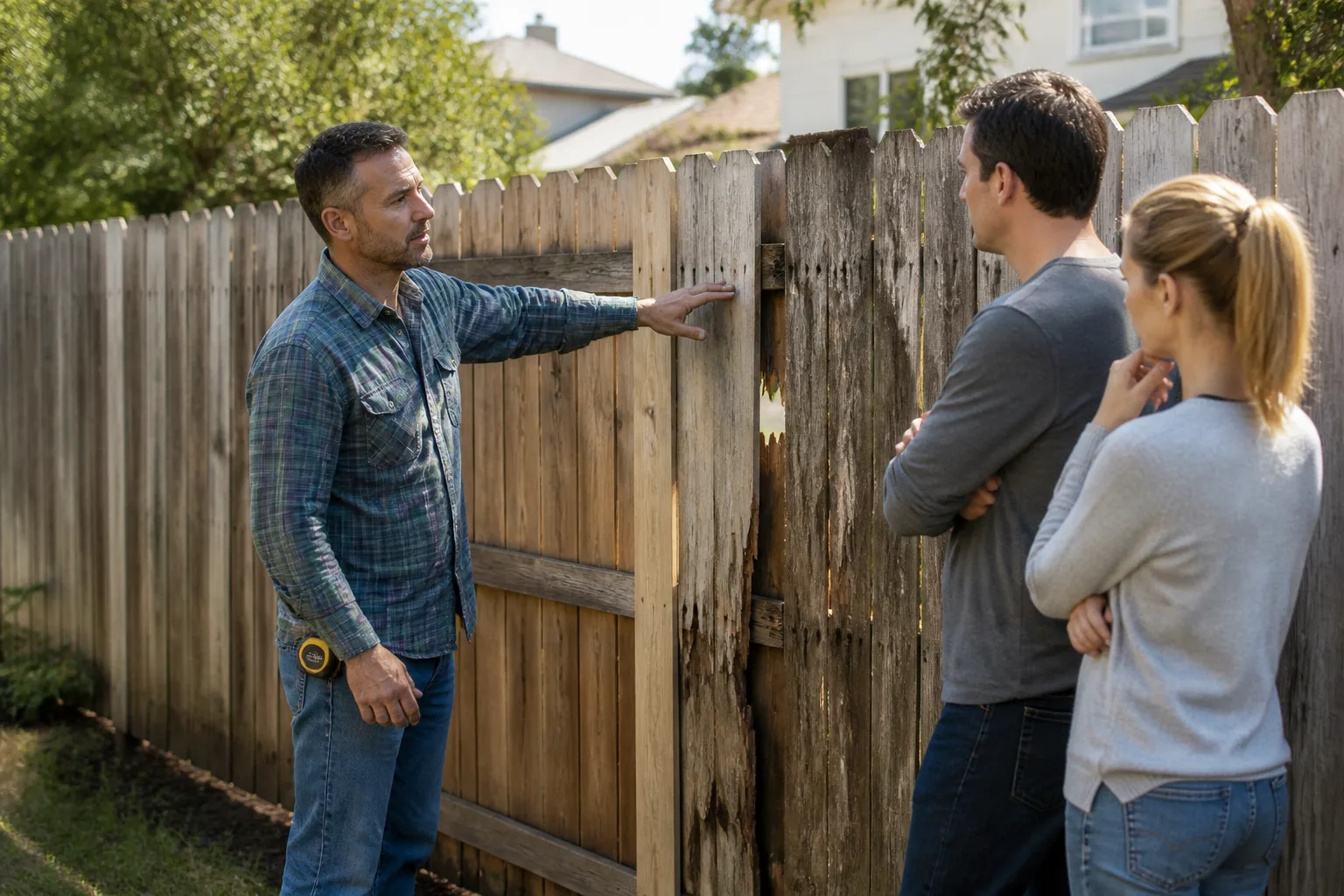
Wood post rot is a depth problem, and depth is a guessing game that Lake Forest’s climate makes worse. Our summers bake the soil dry, then winter rains saturate it. The groundwater level around a post swings more than it would in a wetter, steadier climate. That wet-dry cycle lets rot creep down from the top of the post – where water pools in the grain – and up from the soil line where moisture lingers.
What this means for you:
- The soft, crumbly wood you see near the ground might be the tip of the iceberg or a shallow surface patch. You can’t tell by looking.
- Poke the post with a screwdriver near the base and about 6 inches up the side facing the soil. If it sinks more than a quarter inch, the rot is inside the post, not just on it.
- A post that’s solid on three sides and mush on the fourth is still a failed post. Water got in somewhere.
- Pressure-treated lumber resists rot, but the cut ends and post tops are where it starts. If the installer didn’t seal them, rot usually starts there.
We pulled a post out of a yard over in Foothill Ranch last spring that looked completely intact above grade. The bottom two feet came out like wet cardboard. The homeowner had already ordered new pickets. She saved herself the cost of a full rebuild she didn’t need – and the cost of the ones she was about to buy.
When does a fence repair cost more than it’s worth?
The crossover point we use is simple: if the repair quote reaches about 40% of what a full replacement would cost, replacement usually wins. That threshold isn’t arbitrary. It’s the point where you’re paying a big share of new-fence money to extend the life of a fence that’s already near the end of its useful run.
Why 40% matters in Lake Forest:
- Repair only fixes what failed. A fence with five rotted posts and a dozen broken pickets is usually a symptom of age, not bad luck. More failures follow.
- Labor adds up fast. Pulling and resetting posts, matching old pickets to new ones, dealing with a gate that won’t hang square – a repair that touches more than a third of the fence line rarely stays cheap.
- Old materials limit the fix. You can’t perfectly color-match sun-faded wood, and vinyl or composite repairs get awkward once the fence is past its prime.
- Warranty value resets. A repair buys you months. A replacement with a real workmanship guarantee buys you years.
Under 40%, repair often makes sense – especially on a fence that’s otherwise in decent shape. Above 40%, you’re paying new-fence money for old-fence problems. If you’re unsure which side of the line you’re on, a free estimate settles it fast.
What do HOA fence standards have to do with it?
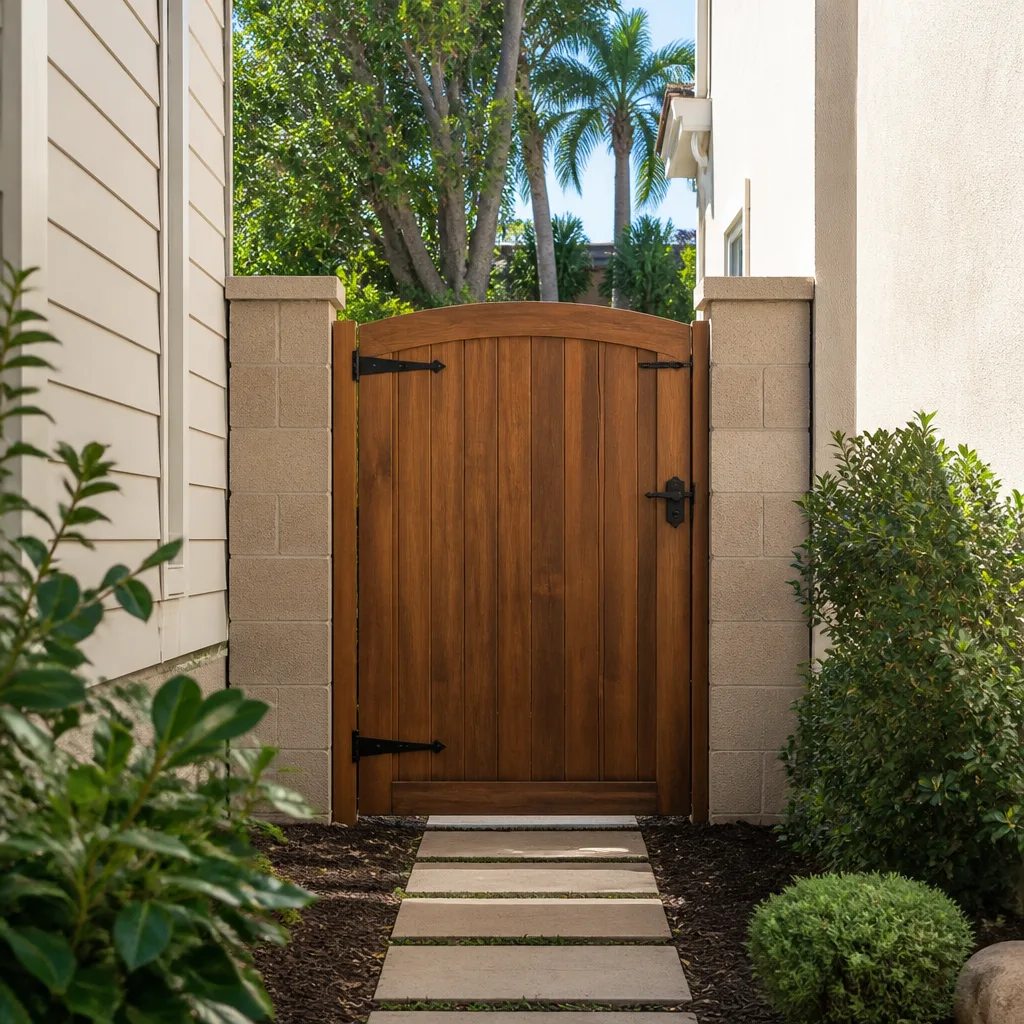
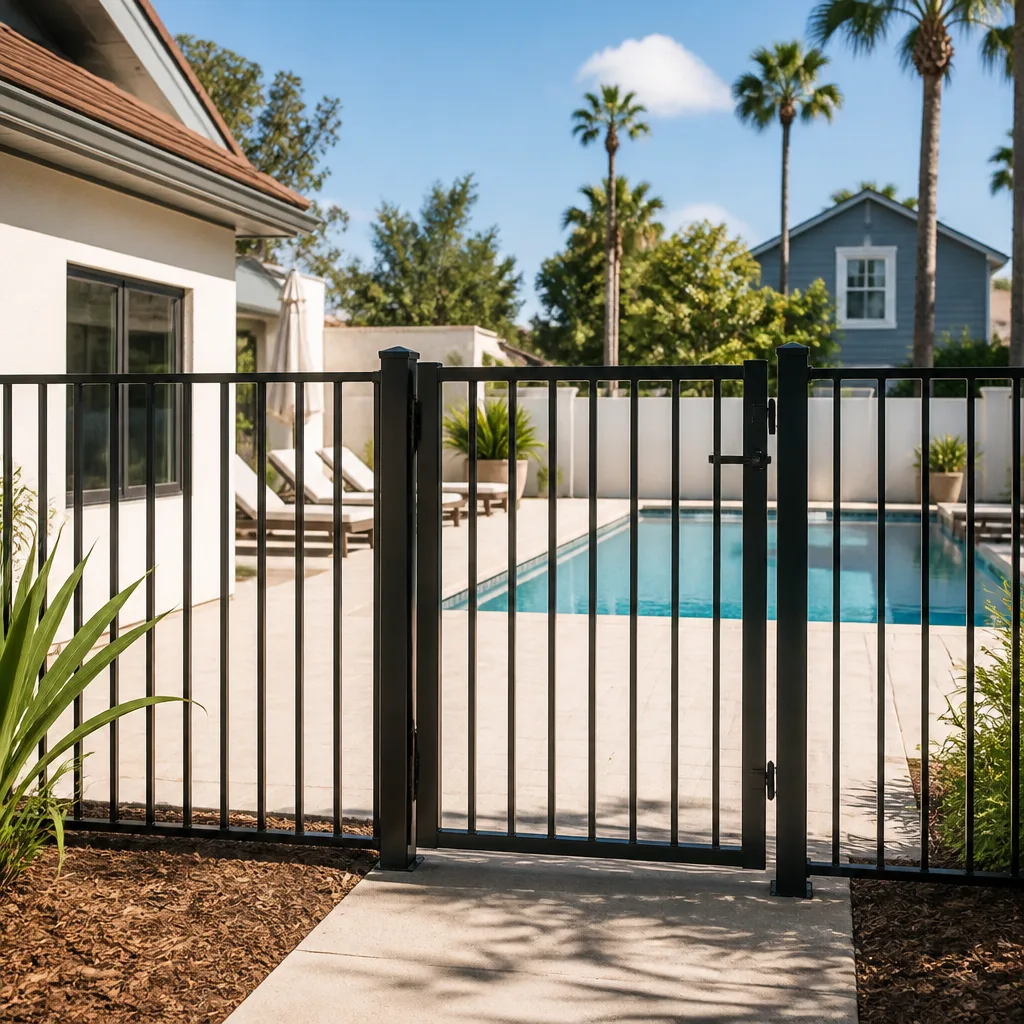
Plenty. Many Lake Forest communities sit inside HOAs with specific rules about fence height, style, material, and color, and some require architectural approval before any fence work happens. What most homeowners don’t realize: those rules can force the replace decision even when the wood is structurally fine.
Here’s where HOA rules bite:
- Matching requirements. If your HOA requires a uniform look and your neighbor replaces their side, an older mismatched fence may need to come down to keep the streetscape consistent.
- Material swaps. Some HOAs approve vinyl or composite repairs, some require full sections, and a few reject patchwork outright. Read the CC&Rs before you buy a single board.
- Setback and height limits. If a repair pushes the fence line or height past code or HOA standards, you’re fixing it and rebuilding it. Just replace.
- Architectural review. A repair might sail through without approval. A replacement often needs a submittal, and that timeline affects your budget and schedule.
One more thing specific to Lake Forest: several neighborhoods back onto open space and the ridges that funnel the Santa Ana winds. If your fence is one of the runs that takes that wind load, a spot repair on a wind-damaged fence often comes back to you after the next event. The fence isn’t failing because it’s old. It’s failing because the wind finds every weak spot.
Should you upgrade materials when you replace?
If you’re replacing, this is the one time you get to fix the material decision. Wood, vinyl and composite all have different 15-year cost curves in Lake Forest’s climate, and the cheap option up front isn’t always the cheap option over time.
What those 15-yeaars look like:
- Wood. Lowest sticker price. Highest maintenance – staining or sealing every couple of years, replacing cracked boards, and the constant rot watch in our dry-then-wet cycle. Over 15 years you’ll spend time and money keeping it standing.
- Vinyl. Higher up-front than wood, but it doesn’t rot, doesn’t need staining, and holds up well to sun. Our dry summers can make very cheap vinyl brittle over time, so quality matters. Repairs are straightforward if a panel or two gets damaged.
- Composite. The premium option, and the one most likely to look the same in year 15 as year one. No rot, no annual stain, and it handles our climate without the maintenance song and dance. Best total cost of ownership in most cases if you plan to stay put.
One homeowner in Portola Hills replaced a failing wood fence with composite and told us the biggest win wasn’t the look. It was not having to spend a weekend every other spring staining it. Whatever you pick, we work with trusted brands and stand behind the work – built to last, backed in writing. We can walk you through the options during your estimate.
When to call a pro
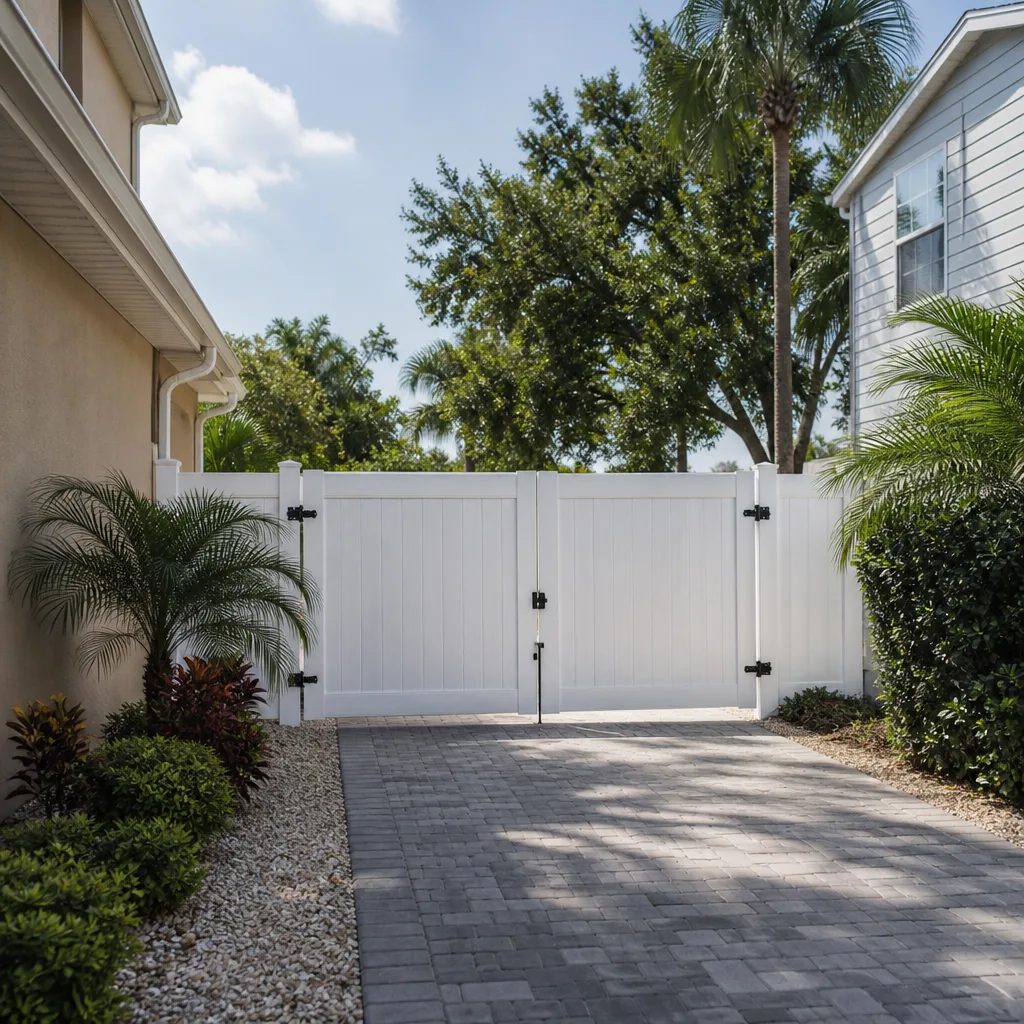
Call a professional when any of these are true:
- Posts are moving. A rocking post means footing damage and, on a tall fence, a real safety issue in wind. This isn’t a weekend-DIY fix.
- The fence is over 100 feet or has complex grading. Long runs and slopes multiply the labor and the margin for error.
- You’re near a property line, open space or a utility easement. Location rules bite here, and a pro knows what to check before work starts.
- It’s a full replacement. You’re making a long-horizon investment. A proper install with a real workmanship guarantee is worth it.
Related services in Lake Forest: if you’re updating the fence line, a new Fence Installation in Lake Forest goes in alongside a fresh Driveway & Pavers in Lake Forest project perfectly – we often handle both together.
The Bottom Line
Read the posts first, not the pickets. If they’re solid, repair the fence and save your money. If they’re rocking or rotted deep, replace it – cosmetic fixes on compromised posts are money paid to a countdown clock. Then check your HOA rules before you commit either way, and let the 40% crossover rule keep you honest on cost. And if you’re planning a bigger project around the same time, we handle Home Additions & ADU in Lake Forest and other work as one full-scope contractor – from foundation to finish line. You can learn more about our full range of services on the Groundwork Construction Co. of Lake Forest home page.
If you’re in Lake Forest and need help deciding, our team offers free estimates – call (855) 532-8973. We’re honest about what needs repairing and what doesn’t, and everything we do is covered by our 730-Day Done Right Promise. If it’s not done right, we make it right.
Frequently Asked Questions
Repairs typically run a few hundred dollars for small fixes like a few boards or a gate, and climb into the low thousands if several posts need resetting. A full replacement in Lake Forest usually starts in the mid-thousands for a standard run and goes up with length, material and grading. Call (855) 532-8973 for an exact quote – estimates are free.
No. We give you a written, line-item quote up front with no-hassle upfront pricing – the number you see is the number you pay. No change orders on a standard repair or replacement unless you ask us to add scope.
Often yes. Check your CC&Rs first – many Lake Forest HOAs require architectural approval for replacement and have rules on height, material and color. We can walk you through what your HOA requires during the estimate so nothing stalls your project.
Most standard fence runs are completed in a day or two depending on length, slope and material. Complex or long runs take longer. You’ll get a clear schedule before we start, not a vague “sometime this week.” Call (855) 532-8973 to get your free estimate scheduled.
Written by the team at Groundwork Construction Co. of Lake Forest.
Need Construction Help?
Call Groundwork Construction Co. of Lake Forest - licensed & insured, here with fast after-hours help in Lake Forest.
(855) 532-8973