
Last updated November 18, 2026







Free written scope consultation - allowances, timeline, and change-order rules on paper before a single trade is scheduled
Seasonal Construction Care for Lake Forest: Year-Round Homeowner’s Guide
Lake Forest gets roughly 280 sunny days a year, which sounds great until you realize UV degradation on exterior coatings is running 12 months straight with no seasonal break. That constant sun is doing quiet work on your roof, your deck, your driveway and your window seals whether you notice it or not. Then October brings the Santa Ana winds, and the rain lands in a compressed window that stresses every drainage path around your house at once. This guide is the maintenance calendar we’d hand to any Lake Forest homeowner: what fails, when it fails, and the exact checks to run before each season turns.
Quick Answer
Seasonal construction care in Lake Forest means running four targeted checklists: a September wind-readiness pass before Santa Ana season, a pre-rain drainage inspection in late fall, a spring vegetation-to-structure audit along the native landscape interface, and a summer UV and concrete check. Each season attacks a different part of the building envelope, and a rolling 12-month log ties the whole thing together for insurance and resale.
Styles & brands we work with
- Kitchen remodeling
- Bathroom remodeling
- Home additions & ADU
- Roofing
- Windows & doors
- Driveway & pavers
- Fence
Table of Contents
- Why Lake Forest Weather Is Harder on Homes Than It Looks
- Santa Ana Wind Season: The September Checklist
- The Compressed Rainy Season: Drainage Before and After
- Summer Heat, UV and Concrete Movement
- Spring at the Landscape Interface
- Building Your Rolling 12-Month Maintenance Log
- The Full Lake Forest Maintenance Calendar
- Common Mistakes to Avoid
Why Lake Forest Weather Is Harder on Homes Than It Looks
On paper, Lake Forest looks like an easy climate. Winters are mild, summers rarely break triple digits, and the region averages less than 14 inches of rain a year. But averages hide the actual damage patterns. Orange County delivers its rain in a handful of concentrated storms between December and March, which means each event drops more water per hour than a spread-out rainfall climate ever sees. Your gutters, downspouts, grading and sub-surface drainage have to move a large volume fast rather than a small volume steadily. That’s a different engineering problem, and it’s the reason we see drainage failures in Lake Forest homes that would never surface in, say, Portland or Seattle.
The sun is the other half of the story. Roughly 280 clear days means exterior paint, deck stain, driveway sealer and window gaskets never get a true seasonal rest. UV breaks down the chemical bonds in sealants faster than temperature does, and by the time you notice chalking or hairline crazing, the protective layer has already thinned. We’ve watched driveway seal coats in Foothill Ranch and Portola Hills fade noticeably within two summers when a re-seal was pushed to year four.
Layer in the Santa Ana winds, which funnel dry desert air through the canyons from roughly October through December, and you get a third stressor: low humidity plus gusts that pull moisture out of exposed wood and shake loose anything already compromised. Roof tiles lift, fence boards split, exterior caulk opens at joints. None of it is dramatic on its own. Together, the three cycles set the rhythm for everything in this guide.
Santa Ana Wind Season: The September Checklist
Santa Ana season catches homeowners off guard because the damage doesn’t show up until the first real gust. September is the month to walk the exterior while everything is still tight so you can find the weak points early. What the winds attack most is anything with a leading edge: roof tiles and ridge caps, fascia and soffit, exposed rafter tails, fence posts, and any exterior joint sealed with caulk that has already baked through a summer of UV.
Run this checklist in the first half of September:
- Walk the roof line from the ground with binoculars. Look for lifted, cracked or missing tiles and for granules piling up at the base of downspouts, which signals shingle wear.
- Test exterior caulk at window and door frames with a light fingernail press. Anything that crumbles or pulls away needs to be cut out and re-sealed before the wind finds it.
- Check fascia and soffit fasteners. Loose screws or popped nails at the eave line are the first thing a Santa Ana gust exploits.
- Inspect fence posts for movement by pushing firmly at the top rail. A post that rocks more than an inch has already lost its footing and will lean after the first wind event.
- Clear the roof of debris and trim any tree limbs within six feet of the structure. A dry limb in a 40 mph gust is a projectile.
- Check exterior wood for checking and splitting, especially on decks and pergolas. A penetrating oil or stain applied in September gives the wood a fighting chance through the wind season.
We’ve seen the same pattern repeat in Lake Forest neighborhoods on slopes and ridgelines, where wind exposure is highest. Homes backing to open space in Baker Ranch and The Woods take more wind load than homes tucked in interior tracts, and their fascia and roof edges need to be checked more aggressively. If any part of the roof inspection requires getting up on the surface, that’s a job for a trained professional. Steep-pitch roof work is one of the genuinely dangerous parts of home maintenance, and the fall risk is not worth the savings on a do-it-yourself look.
The Compressed Rainy Season: Drainage Before and After
Lake Forest’s rain arrives mostly between December and March, often in two or three-day storms that dump an inch or more at a time. That compressed pattern means drainage systems get tested all at once instead of easing into the season. The failures we see most often aren’t from a lack of drainage but from drainage that worked fine in October and gets overwhelmed in January because nobody cleared it.
Before the first storm (late November)
- Clear every gutter and downspout by hand. A single clogged downspout on a 2,000-square-foot roof can push hundreds of gallons back under the fascia and into the wall cavity.
- Check that downspouts discharge at least four feet from the foundation and that splash blocks are angled away from the house.
- Walk the perimeter and confirm soil slopes away from the foundation at roughly a quarter inch per foot for the first six feet. Settled soil after a dry summer often reverses that slope.
- Inspect any area drains, channel drains or French drains for debris. A driveway drain clogged with leaves sends water straight at the garage slab.
- Look at the base of exterior walls for staining or efflorescence, which signals water was already finding a path last season.
After each major storm
- Re-check downspout flow and clear any new debris.
- Look for puddles that persist more than 24 hours after rain stops, which point to grading or soil-compaction problems.
- Inspect the interior of the garage and any low slab areas for moisture at the base of walls.
- Check the attic and ceiling planes for new staining, especially near roof valleys and chimneys, where most Lake Forest leaks originate.
A driveway is part of this drainage picture, not separate from it. Water sheeting across a cracked or heaved driveway finds its way to the garage slab and the foundation. If your driveway has settled sections or open joints, that’s a job for Driveway & Pavers in Lake Forest, and it’s worth doing before the rainy season rather than after.
Summer Heat, UV and Concrete Movement
Summer in Lake Forest rarely gets punishing hot, but the sun is relentless. Two things happen at once: UV breaks down sealants and coatings, and concrete expands against fixed structures. Both are slow, and both create repair bills if you ignore them.
UV seal breakdown shows up first on horizontal surfaces. Decks, driveways, patio slabs and walkways take direct sun all day, and the sealer or stain on them degrades roughly twice as fast as vertical surfaces. A good rule of thumb for Lake Forest is to re-seal horizontal exterior surfaces every 18 to 24 months rather than every three years, and to inspect them each spring for chalking, water beading failure, or color fading. If water no longer beads on the surface, the sealer has failed and the material underneath is absorbing UV directly.
Concrete expansion is the other summer issue. Slabs expand slightly in heat and press against anything rigid: garage door frames, fence posts set in concrete, pool deck edges. That pressure shows up as hairline cracks radiating from corners or joints, and over time small cracks open to freeze-thaw-level damage. The fix in most cases is to keep control joints clean and filled with a flexible sealant, not to try to eliminate the movement.
Exterior penetrations are HVAC-adjacent and easy to miss. Every place a refrigerant line, dryer vent or electrical conduit exits the wall is a potential air and moisture leak. In summer, the gap around a poorly sealed penetration lets cool air escape and hot air enter, and it stresses the seal every time the system cycles. Check those penetrations each summer and re-seal with exterior-grade sealant rated for high-temperature exposure. As with roofing, anything involving the electrical or refrigerant side of those penetrations should be handled by a licensed trade professional, not a homeowner with a caulk gun.
Spring at the Landscape Interface
Lake Forest’s native landscaping interface is one of its best features and one of its quietest maintenance risks. Wherever vegetation meets a structure, whether that’s a fence line backing to open space, a planted bed against the stucco, or a tree canopy overhanging the roof, you get the same three problems: moisture trapped against the building, pest pathways, and eventual structural contact.
Spring is the right time to walk that interface because vegetation is growing fast and you can see what’s pushing where. Run this checklist:
- Trim vegetation at least 12 inches back from the exterior walls and stucco. Vines and shrubs against a wall hold moisture and give pests a covered route.
- Cut any tree limbs within six feet of the roof surface. Overhanging canopy drops debris into gutters and gives squirrels and rats a bridge to the attic.
- Clear landscape beds of leaf litter and mulch that has piled against the foundation. Mulch should sit 12 inches back from the wall, not banked against it.
- Inspect the base of the fence line for soil contact, rot, or evidence of termites or other pests. Wood fence posts set in soil at the landscape edge decay faster than posts in open lawn.
- Check irrigation heads and drip lines for leaks against the foundation. A slow drip against a stem wall is one of the most common sources of hidden moisture damage in Lake Forest.
- Walk the perimeter looking for any spot where accumulated soil, leaves or debris has bridged from the ground to the wood structure.
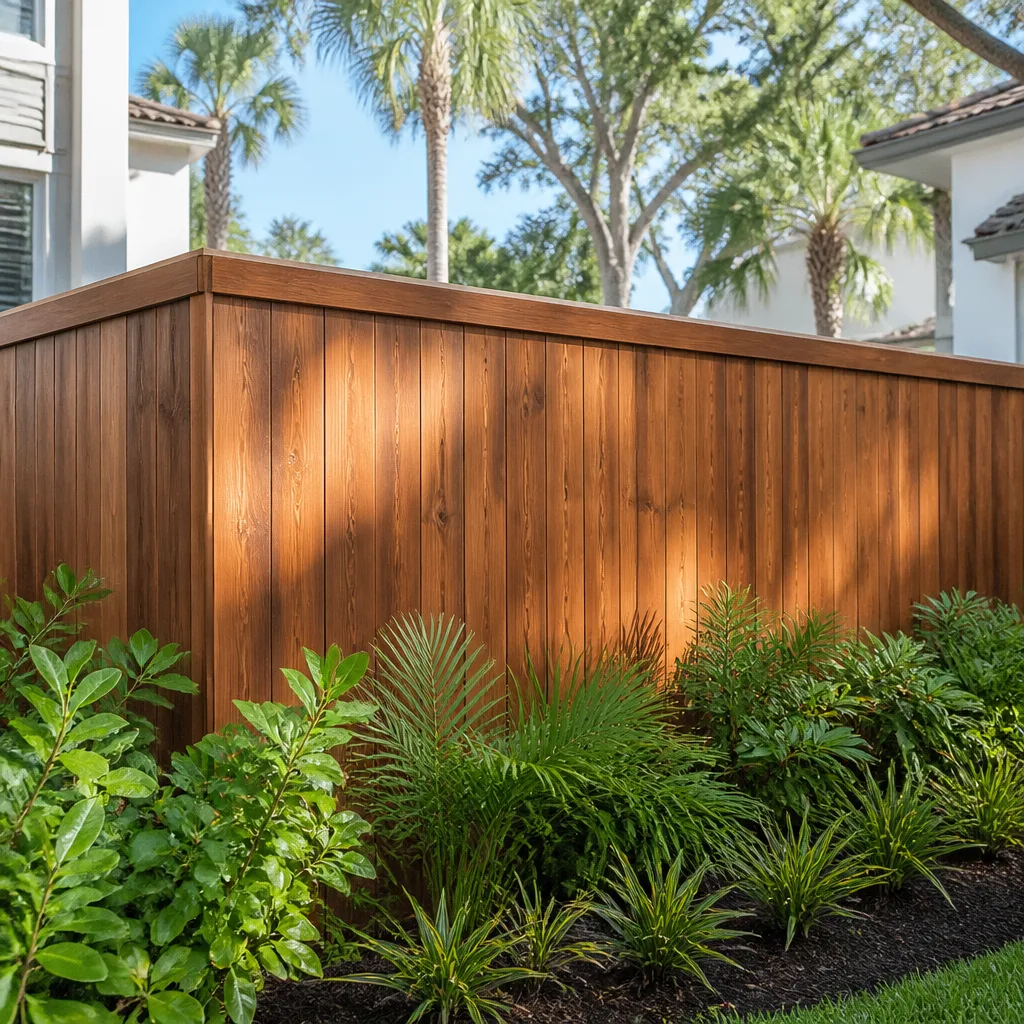
Fence decay is where this meets real repair. A wooden fence backing directly to open space sees more moisture and pest pressure than one in the middle of a lawn, and posts fail at the soil line first. When a section has started to lean or rot below grade, patching rarely holds. A proper replacement is a job for Fence Installation in Lake Forest.
Building Your Rolling 12-Month Maintenance Log
The maintenance itself is only half of seasonal care. The other half is documentation. A rolling log is a single notebook or spreadsheet that records what you checked, what you found, what was repaired, and when. It sounds mundane until you need it, and then it becomes one of the most valuable documents you own.
Here’s how to build one that actually gets used:
- One page per system. Roof, gutters, exterior caulk, deck, driveway, fence, windows, grading. Each gets its own running record.
- Date every entry. “Cleared gutters, found two loose fascia screws, tightened one, replaced one” is more useful than any memory.
- Photograph everything. A photo with a date stamp of a clean gutter and an intact roof line is documentation. A photo of a pre-existing crack before a storm is what stops an insurance dispute later.
- Log contractor visits. Every repair, the date, the scope, and the written warranty on it. This is what turns your maintenance log into a resale asset.
- Note weather events. A record of the storm date and what you found afterward ties your observations to specific insured events.
Why this matters in Lake Forest specifically: compressed winter storms make for concentrated insurance claims, and insurers increasingly ask for proof of maintenance when a water-damage claim shows a history of deferred repair. A documented log is the difference between a claim that gets paid and one that gets argued. On the resale side, a buyer walking through a home with a clear maintenance history is a buyer who negotiates less. We’ve seen the log alone change a listing conversation.
For larger improvements, additions or structural changes, the log also becomes the record that ties your Home Additions & ADU in Lake Forest work into the rest of the home’s maintenance timeline.
The Full Lake Forest Maintenance Calendar
Here’s the whole year in one view. Print it, tape it inside a cabinet, and run each block when its month comes around.
September – Wind Readiness
- Roof line inspection for lifted or missing tiles and granule loss
- Exterior caulk test and re-seal at all window and door frames
- Fascia and soffit fastener check
- Fence post stability push test
- Pre-winter deck and pergola wood inspection, sealing if needed
October through November – Pre-Rain Drainage
- Clear gutters and downspouts by hand
- Verify downspout discharge distance from foundation
- Confirm soil slope away from the building
- Inspect area drains and channel drains
- Check driveway for settled sections and open joints
December through March – Storm Response
- After each major storm, re-check drain flow
- Scan for interior stains at ceiling planes and garage slab base
- Record each weather event in the log
- Note any puddles that persist beyond 24 hours
March through May – Landscape Interface
- Trim vegetation 12 inches back from walls
- Cut tree limbs within six feet of the roof
- Clear mulch and leaf litter from the foundation
- Inspect fence bases for rot and pest evidence
- Check irrigation for leaks against walls
June through August – UV and Heat
- Inspect horizontal surfaces for sealer failure
- Re-seal decks, driveways and patio slabs on an 18 to 24-month cycle
- Fill concrete control joints with flexible sealant
- Re-seal exterior HVAC and utility penetrations
- Check window seals and gaskets for UV cracking
Common Mistakes to Avoid
- Treating the Santa Ana season like a November problem. By the time the first wind event arrives, there’s no time left to re-seal caulk or re-set a fence post. September is the deadline, not October.
- Clearing gutters once a year. Lake Forest’s concentrated storms push debris into downspouts between storms. Clear before the season opens and again after the first major rain.
- Letting mulch bank against the stucco. A permanent moisture layer at the base of a wall is the most common cause of hidden damage we see in Lake Forest homes. Twelve inches of clearance is not negotiable.
- Re-sealing horizontal surfaces on a fixed schedule. A three-year cycle sounds reasonable but ignores that Lake Forest UV degrades horizontal sealer much faster. Test for beading each spring and re-seal when water stops beading.
- Skipping the driveway in the drainage plan. Water that crosses a cracked driveway reaches the garage slab and foundation. A settled driveway is a drainage failure, not just an appearance problem.
- Ignoring roof tile lift after the first wind event. A single lifted tile lets water track under the field during rain. If you spot it after a storm, get it addressed before the next one.
- Keeping the maintenance log in your head. An undocumented repair is invisible to your insurer and to a future buyer. Write it down the day it happens.
See the difference
 Before
 After
 Before
 After
 Before
 After
When to Call a Professional
Plenty of seasonal care is well within reach for a homeowner with a ladder and a Saturday morning. But some of it genuinely isn’t. Call a professional when the work involves getting up on a roof, when caulk or sealant at a joint has failed so badly that the substrate behind it needs to be opened up, when a fascia or soffit section has pulled away from the wall, when a fence post has lost footing, when concrete has settled to the point of reversing drainage, or when you find any interior evidence of moisture you can’t trace. Any of those crossing into structural work, electrical penetrations, or gas lines is a hard stop for do-it-yourself.
Groundwork Construction Co. of Lake Forest offers free estimates in Lake Forest and the surrounding area. Our technicians have up to 12 years of experience, arrive background-checked and in uniform, and every project is backed by our 730-Day Done Right Promise: if it’s not done right, we make it right. Calls are answered by a live person, 24/7, and pricing is upfront with no surprises. Call (855) 532-8973 to schedule your free estimate.
Frequently Asked Questions
A full year of routine checks and small repairs typically runs $400 to $900 for a Lake Forest home, depending on square footage and how many systems need attention. Roof, gutter, caulk and sealant maintenance sits in the lower end; deck and driveway re-sealing, fence repair or settled-concrete work pushes it higher. Call (855) 532-8973 for an exact quote on any specific repair, estimates are free.
Schedule it in the first half of September, before winds typically pick up in October. That gives you a two to four week window to address lifted tiles, loose fasteners or worn flashing before the season starts. A roof inspection is not a do-it-yourself job on a steep pitch, and a fall is a much bigger cost than the inspection itself.
Re-seal horizontal exterior surfaces every 18 to 24 months in Lake Forest rather than the three-year cycle many homeowners use. The roughly 280 clear days a year break down UV sealer faster than in cooler climates, and water stops beading on a failing surface. Test it in spring: if water no longer beads, it needs re-sealing.
Yes, because the rain is compressed into a shorter window. Lake Forest receives less than 14 inches a year, but most of it lands between December and March in a handful of concentrated storms. That means your drainage has to move a large volume per event rather than a small volume steadily, which is why clogged gutters and settled driveways cause more water intrusion here than you’d expect from the annual total.
Check three things: vegetation clearance (12 inches back from walls, six feet from roof), mulch and leaf litter accumulation at the foundation, and irrigation leaks against the exterior wall. Any spot where plant material, soil or debris touches the structure is a moisture and pest pathway. Walk it each spring while growth is fast and easy to correct.
Simple maintenance like re-caulking, re-sealing or clearing gutters usually doesn’t require a permit. But structural repair, roof replacement, fence replacement, driveway replacement and additions do, and the requirements depend on the specific scope and jurisdiction. Groundwork pulls the applicable permits and confirms inspections pass on every project that needs them, so you’re covered from the first day. Call (855) 532-8973 and we’ll tell you exactly what your project needs.
The Bottom Line

Lake Forest’s mild climate is deceptive. UV runs year round, Santa Ana winds arrive on schedule, and the rain lands in a compressed window that punishes anything not cleared and sealed ahead of it. The fix isn’t heroic effort, it’s a rolling calendar: a September wind pass, a late fall drainage check, a spring landscape audit, a summer UV and concrete sweep. Do those four things and you turn seasonal damage into routine care. Skip them and the same four seasons quietly turn small maintenance into real repair bills. Groundwork Construction Co. of Lake Forest is here to handle the parts that are too high, too heavy or too structural for a ladder and a Saturday. Browse our Groundwork Construction Co. of Lake Forest home page for the full range of what we do, and call (855) 532-8973 for a free estimate on anything on this list.
Written by the team at Groundwork Construction Co. of Lake Forest.