Free written scope consultation - allowances, timeline, and change-order rules on paper before a single trade is scheduled
Chain Link Fence in Rancho Santa Margarita: Cost, Timeline, and What Actually Gets Built
A chain link fence in Rancho Santa Margarita typically runs $3,500 – $9,000 for a residential property line, with most homes landing in the $4,200 – $6,800 band for 150 – 220 linear feet of 4-foot or 5-foot galvanized fence. A standard run is a two- to three-day job: posts set in concrete on day one, fabric and gates hung on day two, final tensioning and cleanup on day three. Call (855) 532-8973 for a free on-site estimate.
From Stake-Out to Tensioned Fabric: How a Chain Link Fence Goes In
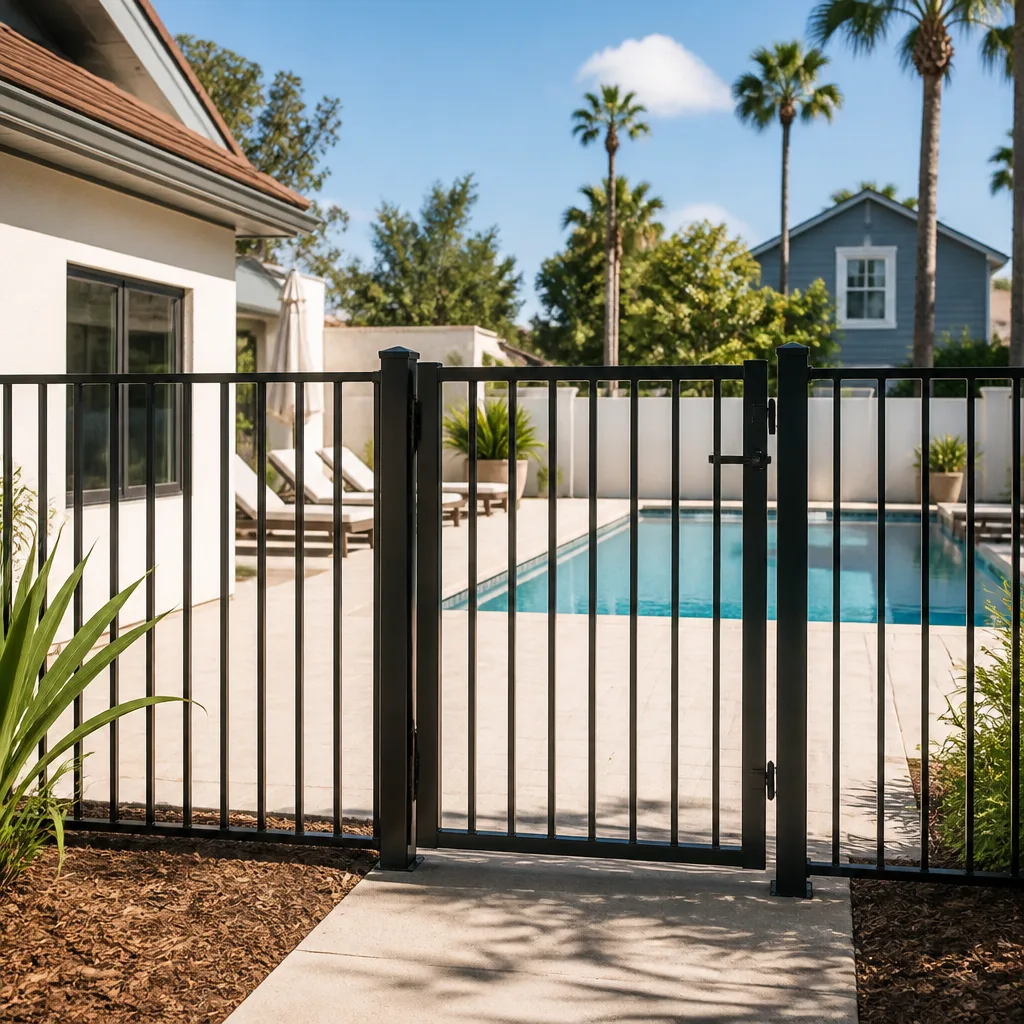
Chain link looks simple from the street. It isn’t. The difference between a fence that’s straight and tight in year ten and one that sags by year three is almost entirely in the layout and the concrete, and that’s where most of the labor time sits. Here’s the real sequence we run on a Rancho Santa Margarita property.
Stage 1: Property line verification and utility locate (day 1, half a day)
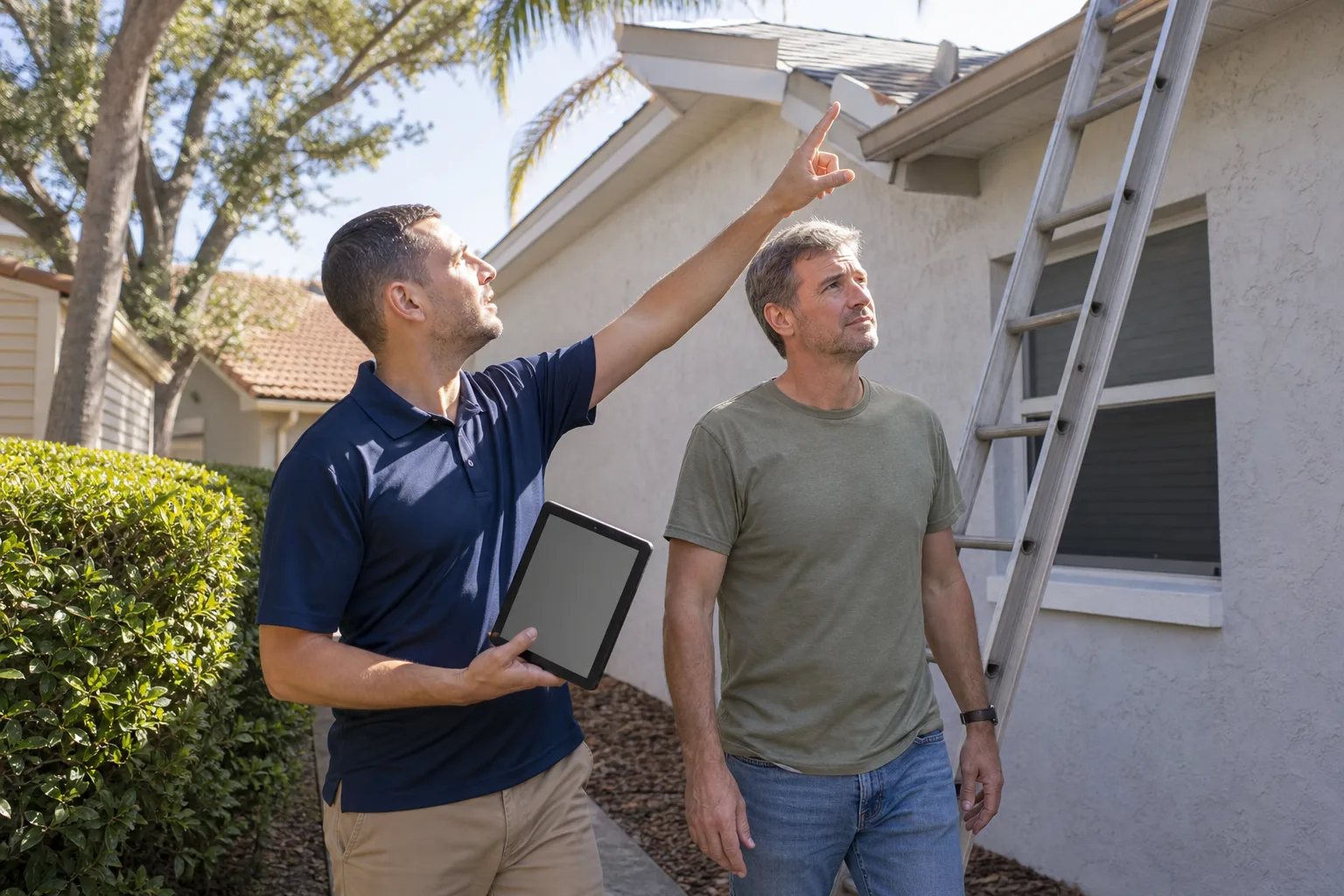
Before anyone digs, we confirm the actual property line against the plat map and verify no easement or setback issue will force a re-route. Then the 811 utility locate gets called in, which in this part of Orange County usually returns within two business days. You’ll need to have your plat or survey handy, and if the lot line is ambiguous, a survey is worth the money before a single post goes in. This is the stage where homeowners decide exactly where the fence sits and which side faces the neighbor.
Stage 2: Layout, corner stakes, and terminal posts (day 1 – 2)
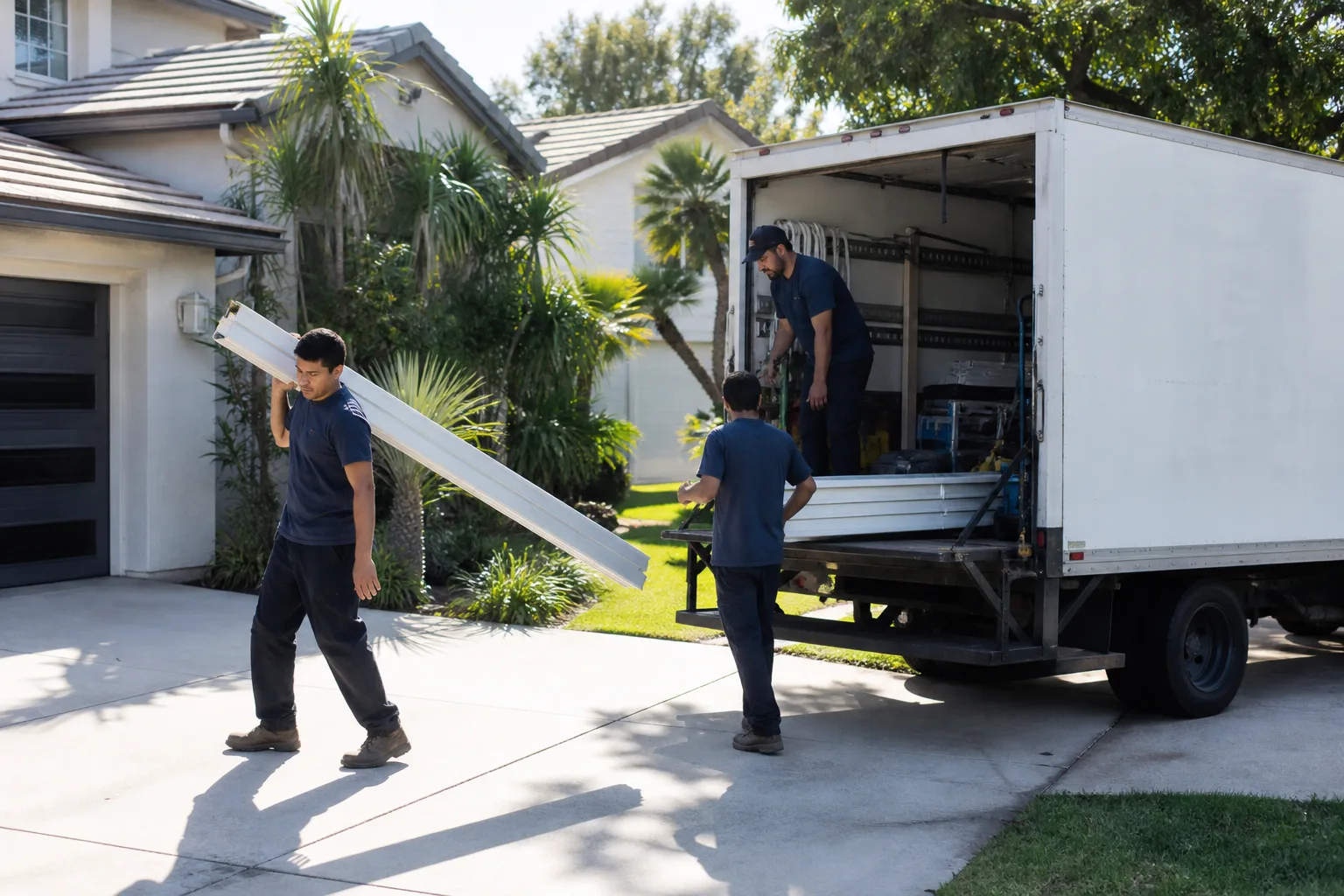
We string the line, set corner and end posts, and mark every line post at 8-foot or 10-foot spacing depending on fabric height. Terminal posts (corners, ends, and gate posts) get larger holes and larger concrete footings than line posts because they carry the tension. On Rancho Santa Margarita’s decomposed granite and clay mix, a 2-foot-deep footing with an 8- to 10-inch bell is standard for a 5-foot fence; taller runs and gate posts go deeper. Homeowners choose post spacing here, and it’s the call that most affects how rigid the finished fence feels.
Stage 3: Post setting and cure (day 2, then overnight)
Posts go in with rapid-set concrete and get plumbed and braced. The concrete needs to cure before any tension goes on the fabric, so we don’t pull chain the same afternoon. That overnight cure is the reason a proper chain link fence isn’t a one-day job, regardless of what a flyer promises.
Stage 4: Top rail, tension wire, fabric, and gates (day 3)
Top rail and tension wire go on first, then the fabric gets stretched from a terminal post with a stretcher bar so the mesh is uniformly taut. Gates get their frames hung and checked for swing and latch. If you want a self-closing or self-latching gate for a pool area, that decision happens now, not later, because the hardware and hinge spacing are different.
Stage 5: Cleanup, walkthrough, and the written scope
We haul out spoils, rake the trench line, and walk the fence with you: gate operation, tension, post plumb, and the boundary line. Anything wrong gets fixed before we leave. Your written quote itemizes footage, gauge, height, gate count, and concrete, so the final walkthrough is a check against paper, not a conversation.
Styles & brands we work with
- Kitchen remodeling
- Bathroom remodeling
- Home additions & ADU
- Roofing
- Windows & doors
- Driveway & pavers
- Fence
The Chain Link Fence Options You’ll Actually Choose Between
Most of the decision happens in the quote, not on the job site. Here’s the honest trade-off on each:
- Fabric gauge: 11.5-gauge is the residential baseline and the cheapest; 9-gauge costs roughly 20 – 30% more on the fabric line but resists dog and kid abuse far better. If you have a large dog, go 9-gauge.
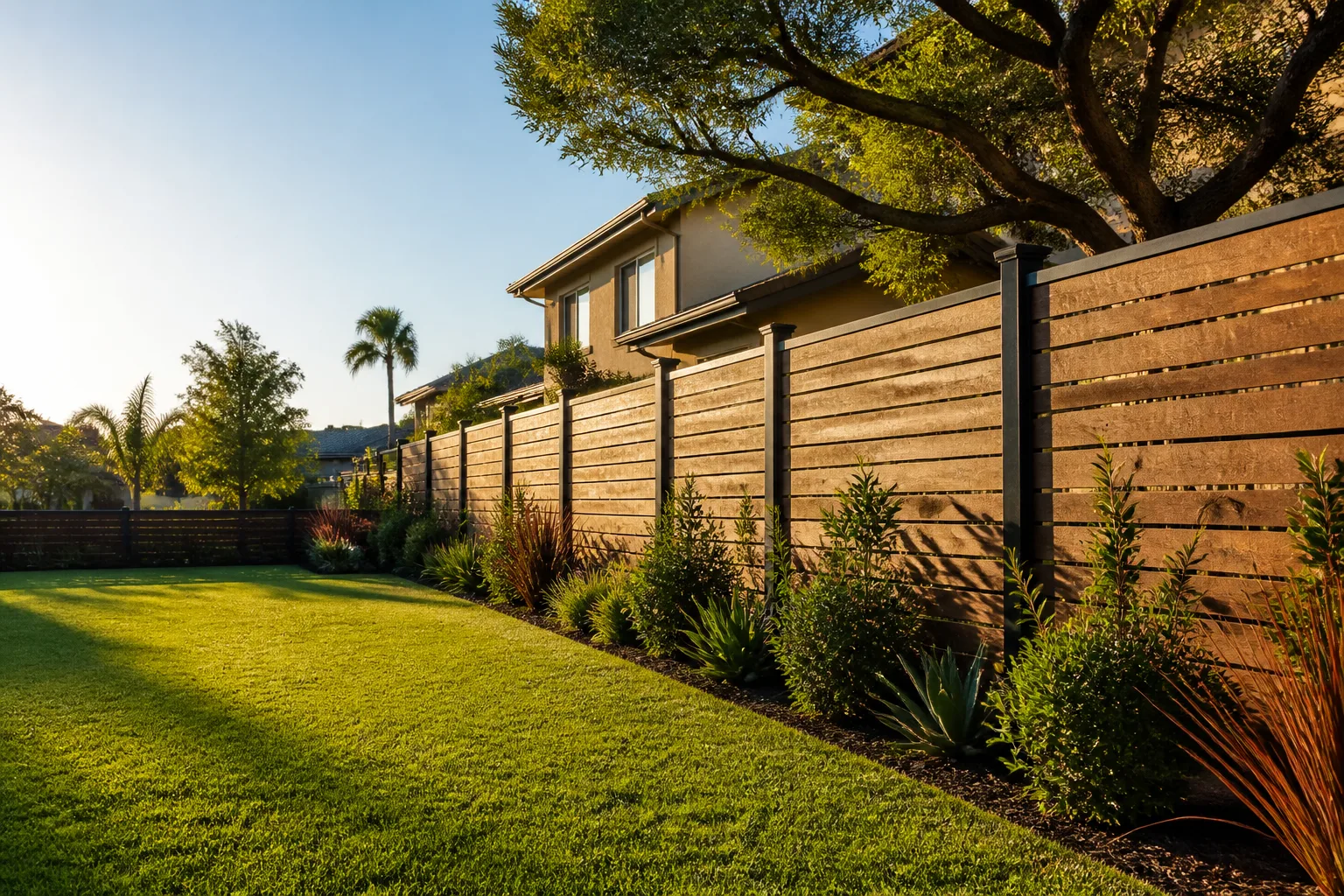
- Coating: Galvanized steel is the value pick and handles inland heat fine. Vinyl-coated (usually black or green) runs 15 – 25% higher but hides the industrial look and matches the darker exterior palette common on Rancho Santa Margarita homes.
- Height: 4-foot is the budget standard; 5-foot is the most common residential choice; 6-foot is the security/pool-code pick and adds cost through taller posts and deeper footings, not just more fabric.
- Posts and rail: 1⅝-inch line posts and 1⅜-inch top rail are standard; upsizing the top rail to 1⅝-inch noticeably stiffens a long run and is worth it on spans over about 80 feet.
- Gates: A walk gate is straightforward. A double drive gate needs heavier posts and a different footing, and a pool gate needs self-closing, self-latching hardware for code compliance. Budget accordingly.
- Tension wire and bottom rail: A tension wire keeps the bottom edge from lifting; a bottom rail is better for dogs and looks cleaner. It’s an add, not a default.
None of these are upgrades-for-their-own-sake. Each one changes how the fence behaves in ten years.
What Chain Link Fence Costs in Rancho Santa Margarita, CA
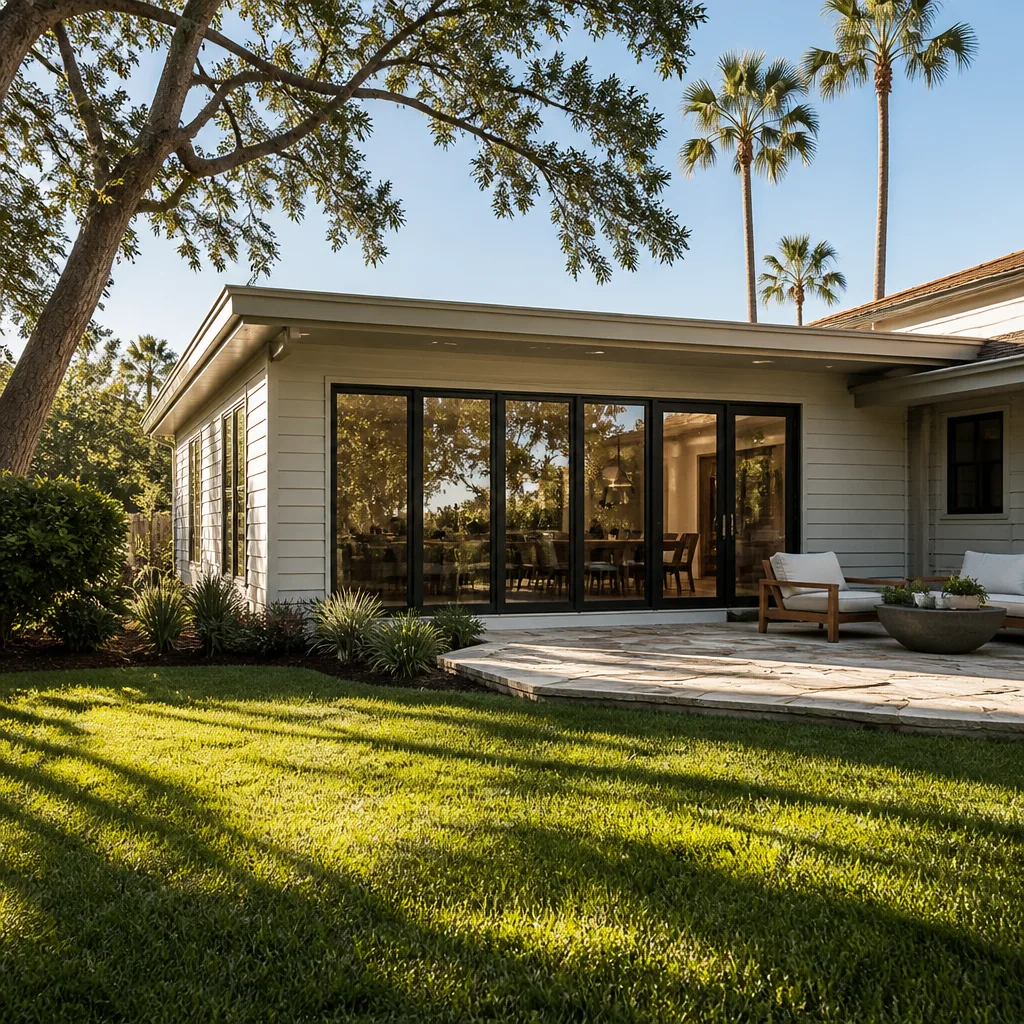
Expect $3,500 – $9,000 for a residential chain link fence in Rancho Santa Margarita, depending on footage, height, coating, and gate count. A straightforward 150-foot 5-foot galvanized run with one walk gate sits near the bottom of that band; a 250-foot vinyl-coated 6-foot run with a double drive gate and pool-compliant hardware pushes toward the top.
Four variables move the number most:
- Linear footage and terrain. Sloped lots on the foothill edges require stepped panels and more posts, which adds labor.
- Height and gauge. Going from 4-foot 11.5-gauge to 6-foot 9-gauge is the single largest jump in material cost.
- Gates. Every gate is a separate line item with its own hardware and heavier footings.
- Demo and obstructions. Removing an old fence, cutting through roots, or working around a block wall adds time and dump fees.
A written estimate from us covers posts, concrete, fabric, top rail, tension wire, gates, hardware, haul-away, and the 730-Day Done Right Promise. It does not cover a survey if one is needed, utility relocation, or HOA architectural review fees. Upfront pricing means the number you sign is the number you pay.
See the difference
 Before
 After
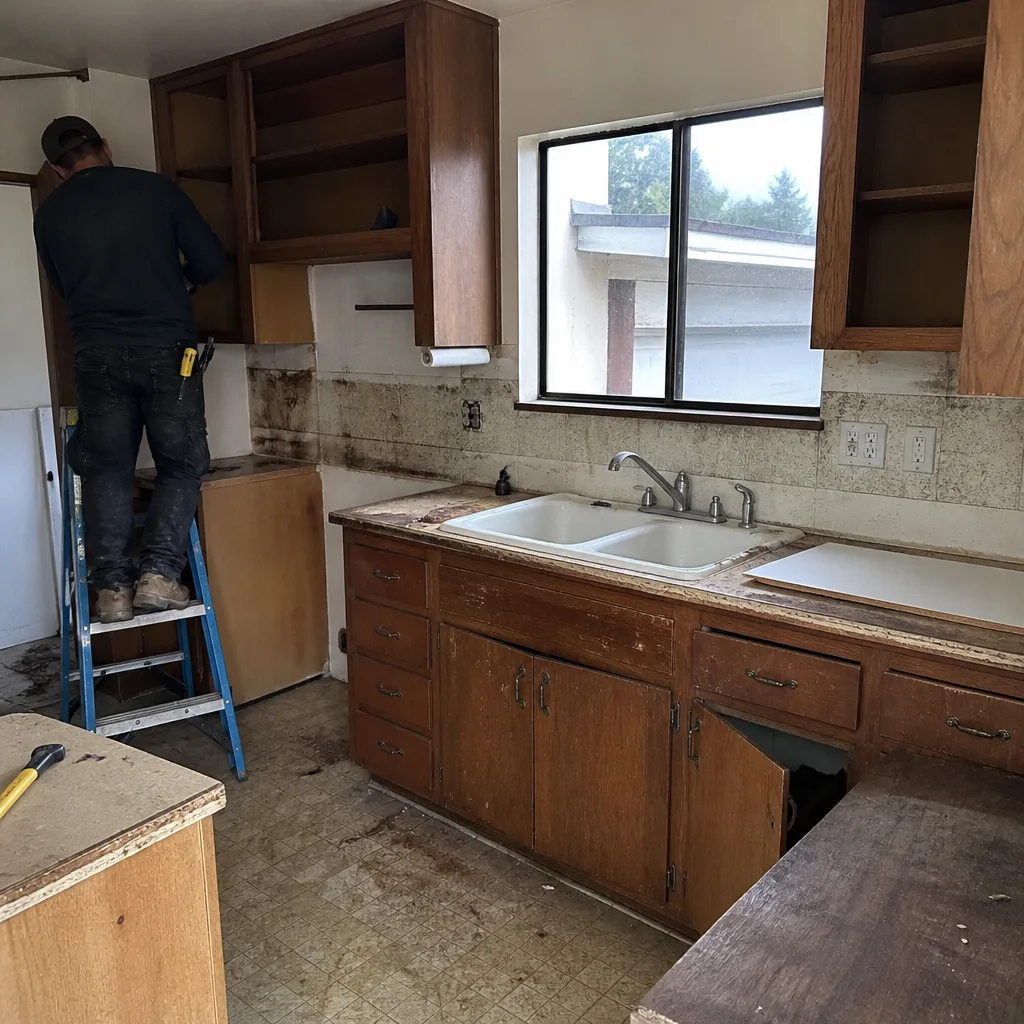 Before
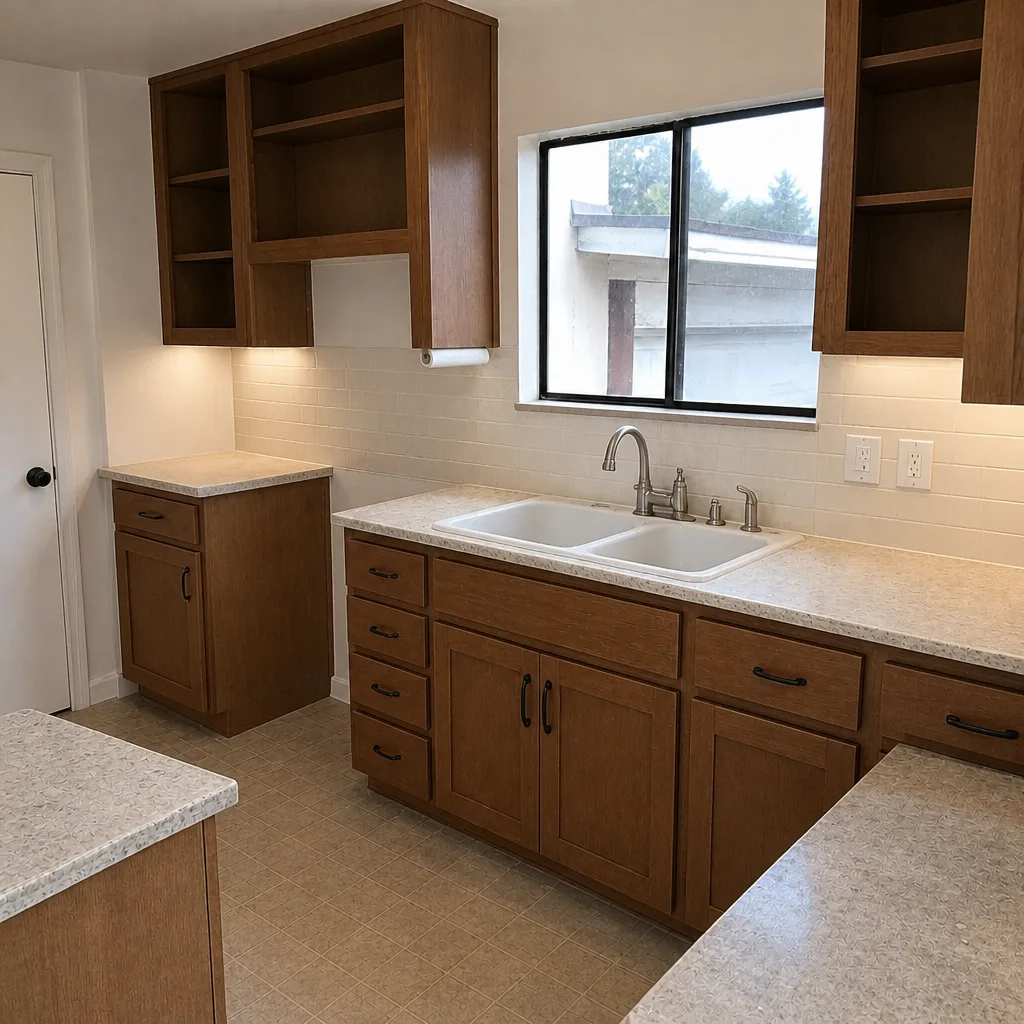 After
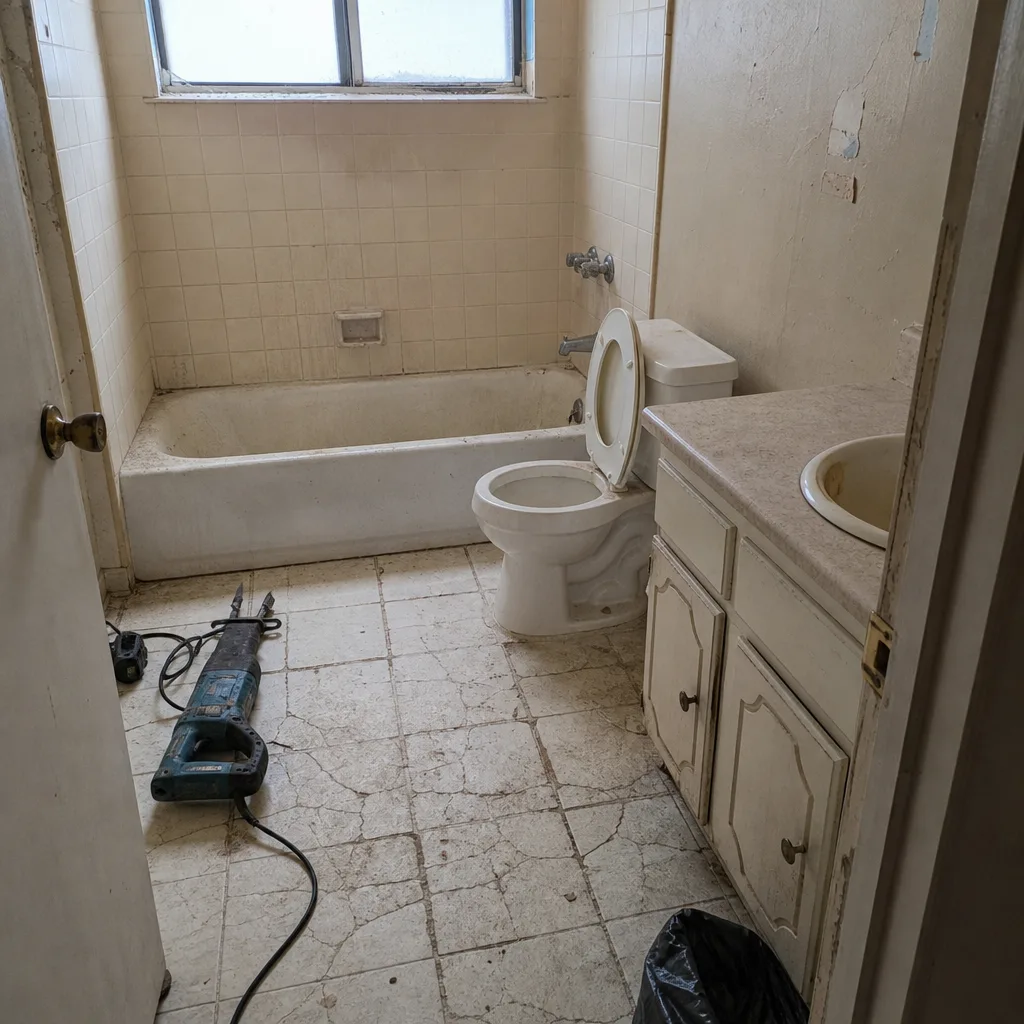 Before
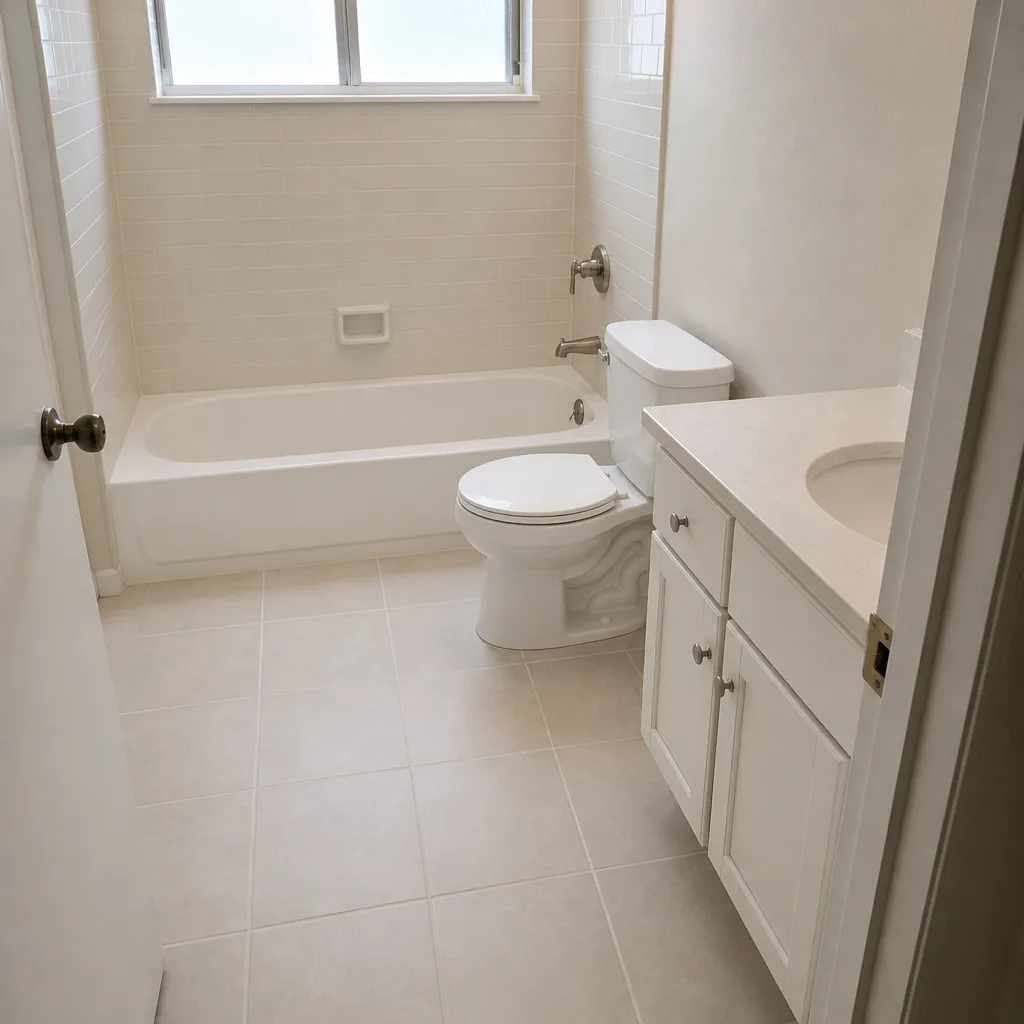 After
What Rancho Santa Margarita Homes Specifically Do to This Job
This is a master-planned city built out under a single set of architectural standards starting in the mid-1980s, and that changes fence work here. Nearly every property sits inside a village governed by the Rancho Santa Margarita Landscape and Recreation Corporation (SAMLARC), so any fence visible from a street, greenbelt, or trail needs architectural review approval before installation. That means submittals with fence height, coating color, and post style, and the review can hold a start date for a couple of weeks. We pre-package those submittals so the approval isn’t the bottleneck.
Build era matters too. Most homes here date to the 1980s – 2000s, stucco over wood frame with tile roofs and attached garages. Original rear yard fencing in Melinda Heights and Las Flores is often at end of life, and the failure mode we see is rusted post bottoms where irrigation and sprinkler runoff has kept the concrete saturated for decades. The inland foothill heat and Santa Ana wind events also work the tension out of older fabric. If your fence sits on a slope near the Trabuco Canyon edge, expect stepped posts and slightly more footage than a flat-lot neighbor. Property-wide work like this often pairs with ADU Site Prep & Utilities in Rancho Santa Margarita when a backyard is being reorganized, and if you’re also replacing an exterior door, our team handles Door Installation in Rancho Santa Margarita on the same visit schedule. For a fence that ties into a larger Fence Installation in Rancho Santa Margarita plan, or as part of our Fence Installation service, we coordinate the whole project through our Rancho Santa Margarita coverage.
Serving Rancho Santa Margarita, CA – Our Local Coverage Area
We serve Rancho Santa Margarita and nearby communities. Use the map below to see the area we cover. If you’re nearby, we can almost certainly help.
Frequently Asked – Chain Link Fence in Rancho Santa Margarita
Plan on two to three working days for a typical residential run, plus a one- to two-week SAMLARC review if the fence is visible from a common area. The cure time on post concrete is the reason it isn’t a single-day job. Call (855) 532-8973 to schedule your free estimate and we’ll give you a real start date.
SAMLARC architectural review is required for most fences visible from streets, greenbelts, or trails, even though a chain link fence under a certain height often doesn’t need a separate city building permit. We confirm both during the estimate and package the submittal for you. Call (855) 532-8973 to talk through your specific village.
Yes, in most cases. Chain link is a light-footprint install, and we route posts to avoid irrigation lines and mature tree roots. If a footing lands on a sprinkler main or a pool line, that’s a small repair, not a major project. Bring it up at the estimate so we can plan for it.
Most residential jobs land between $3,500 and $9,000, with the final number driven by footage, height, coating, and gate count. Vinyl-coated and 6-foot runs sit at the top; 4-foot galvanized runs sit at the bottom. Call (855) 532-8973 for an exact quote – estimates are free.
Every chain link fence we install is covered by the 730-Day Done Right Promise: if it isn’t done right, we make it right. The written quote states the scope and the guarantee in plain language. Call (855) 532-8973 and we’ll walk through it before you sign anything.
Get a Free Chain Link Fence Estimate in Rancho Santa Margarita
Schedule a free on-site estimate for your chain link fence in Rancho Santa Margarita by calling (855) 532-8973. On the call we’ll gather your property details, ask about footage, height, coating, and gate needs, and set a time for a technician to walk the lot and measure. You’ll get a written line-item quote with no change orders and a 730-Day Done Right Promise in writing.
Written by the team at Groundwork Construction Co.