Free written scope consultation - allowances, timeline, and change-order rules on paper before a single trade is scheduled
Styles & brands we work with
- Kitchen remodeling
- Bathroom remodeling
- Home additions & ADU
- Roofing
- Windows & doors
- Driveway & pavers
- Fence
See the difference
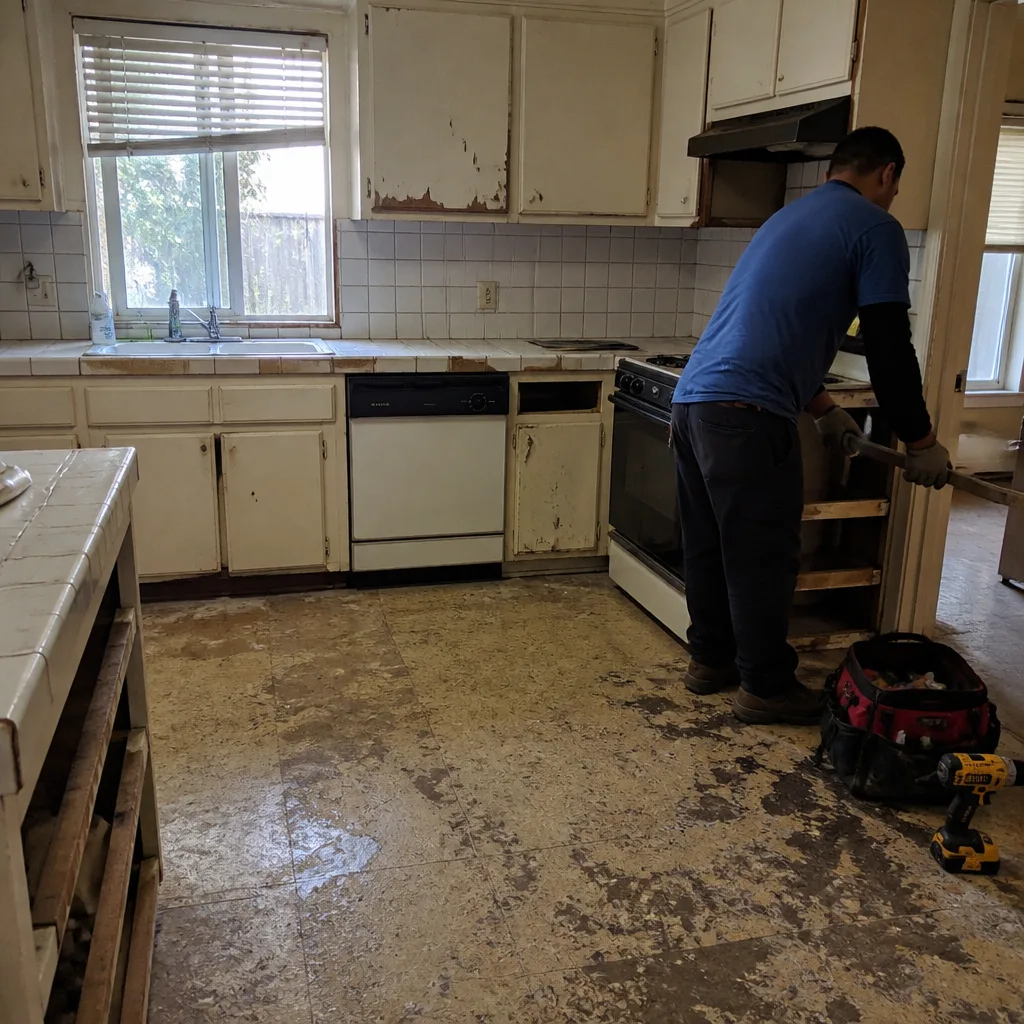 Before
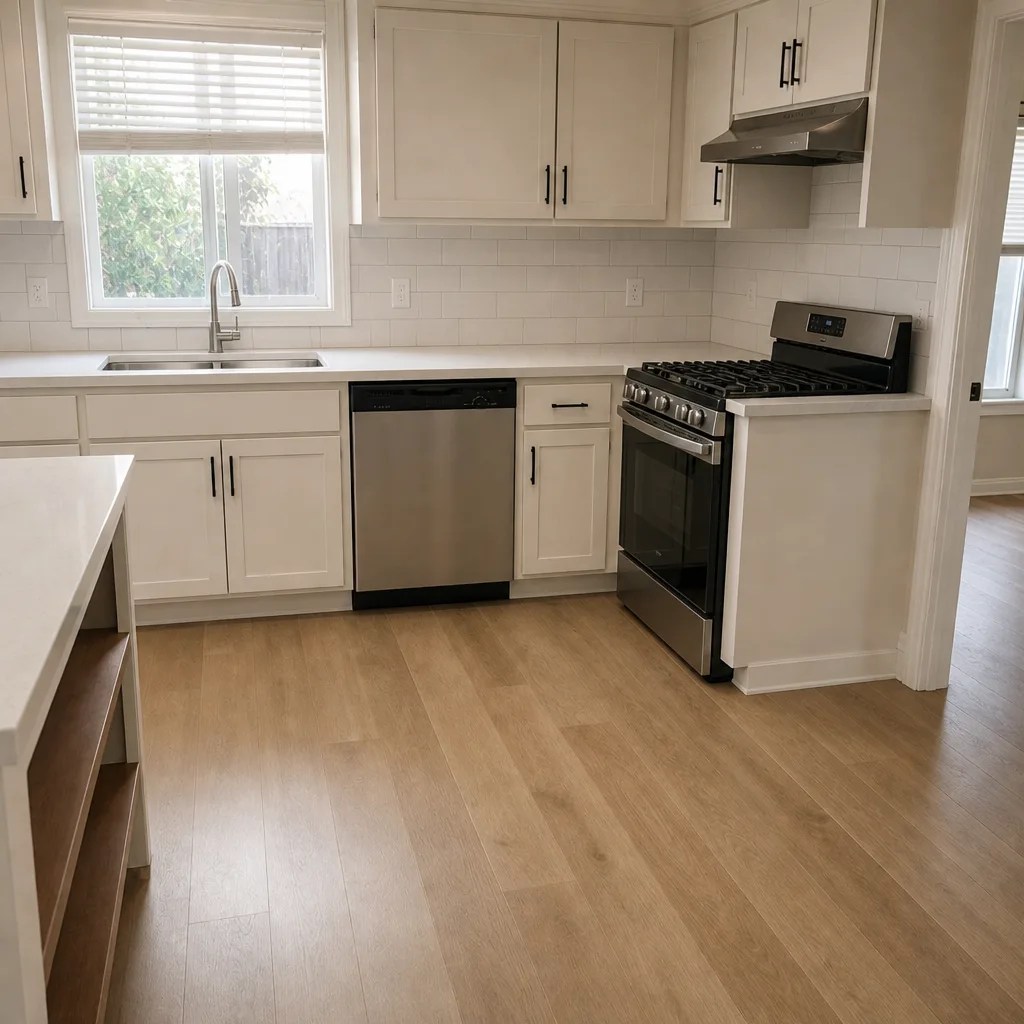 After
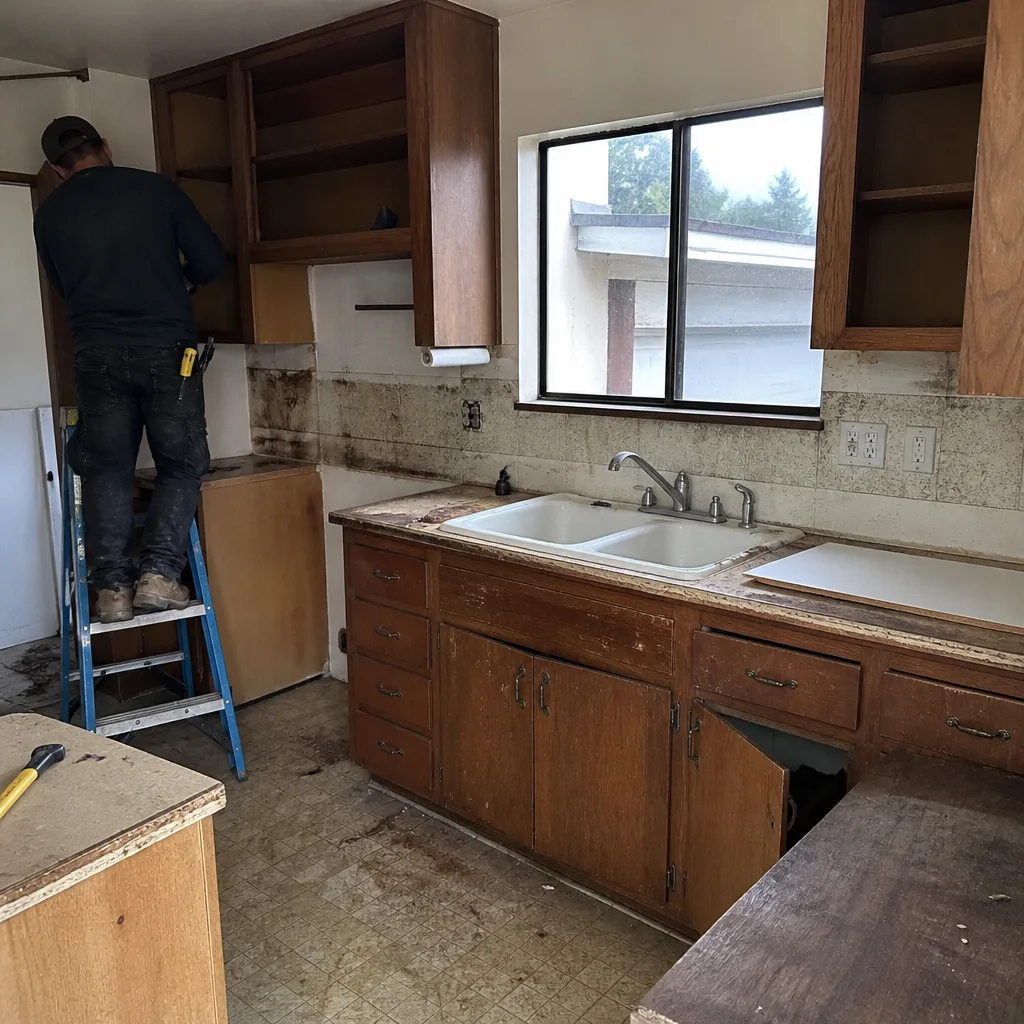 Before
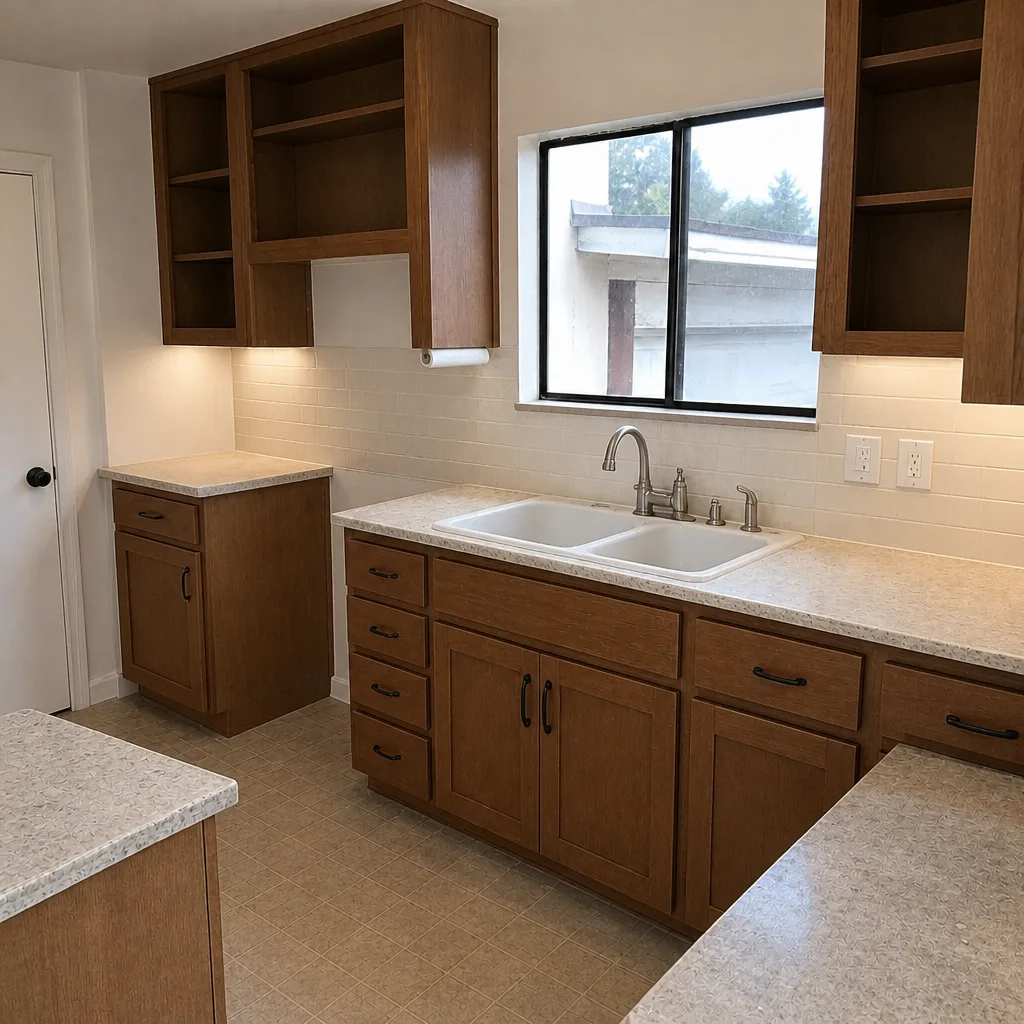 After
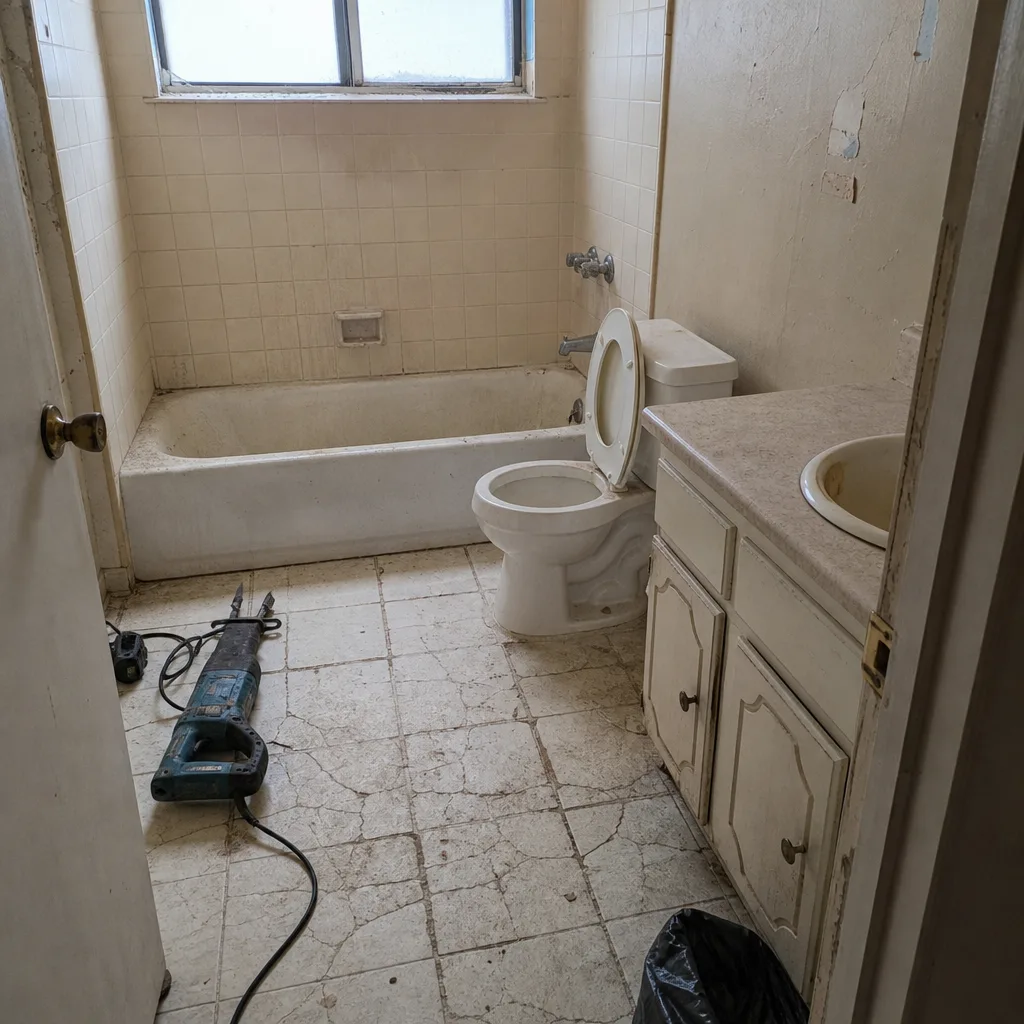 Before
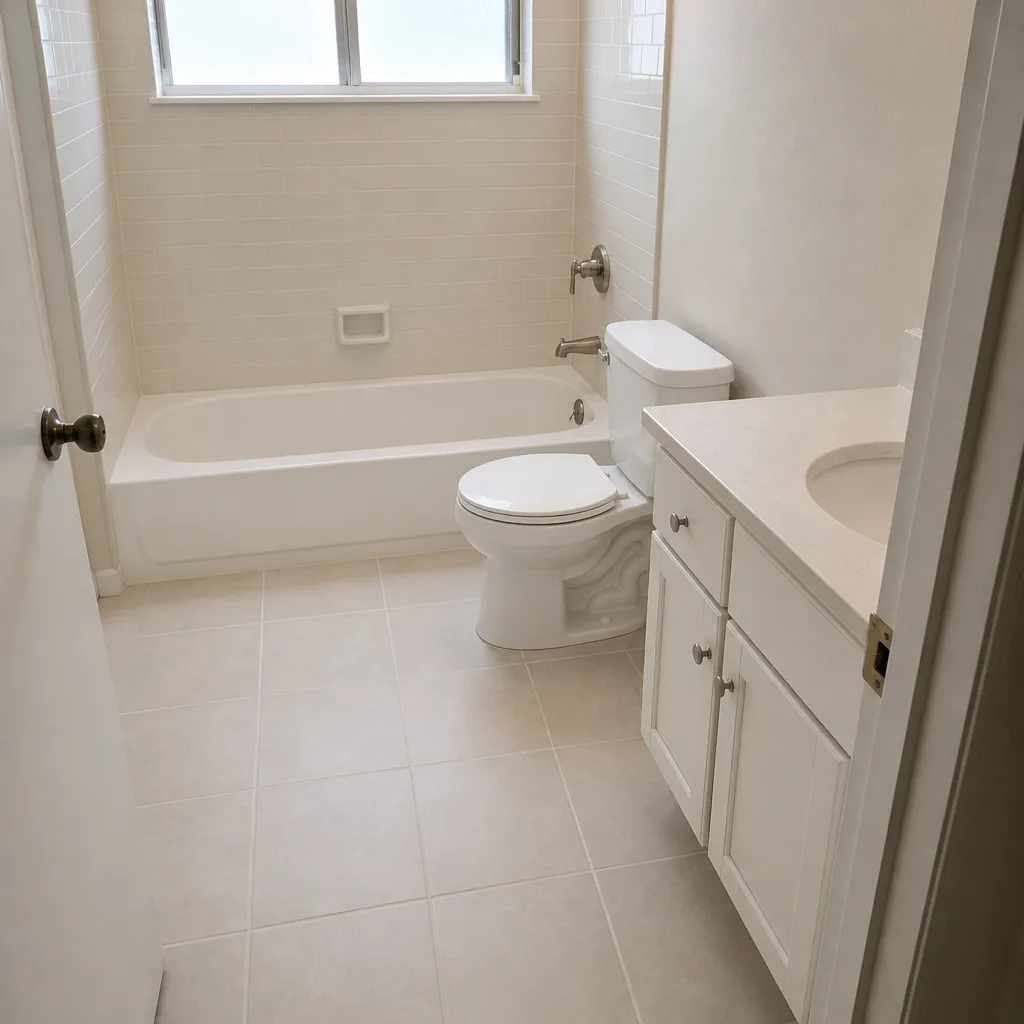 After
Tile vs. Vinyl Plank Kitchen Flooring in Lake Forest: The Slab Underneath Decides
For most Lake Forest kitchens, porcelain tile is the lower-risk choice unless your concrete slab passes a moisture test and the floor is dead level, in which case a quality vinyl plank (12-mil wear layer minimum) is a defensible pick. Here’s the part the product comparison guides skip: in this city’s 1970s-1990s slab-on-grade tract homes, both floors fail for the same reason when the contractor never checked the concrete. Moisture wicks up through the slab, tile grout cracks from flex, and vinyl plank adhesive lets go. Call (855) 532-8973 and we’ll test the slab before anyone sells you a floor.
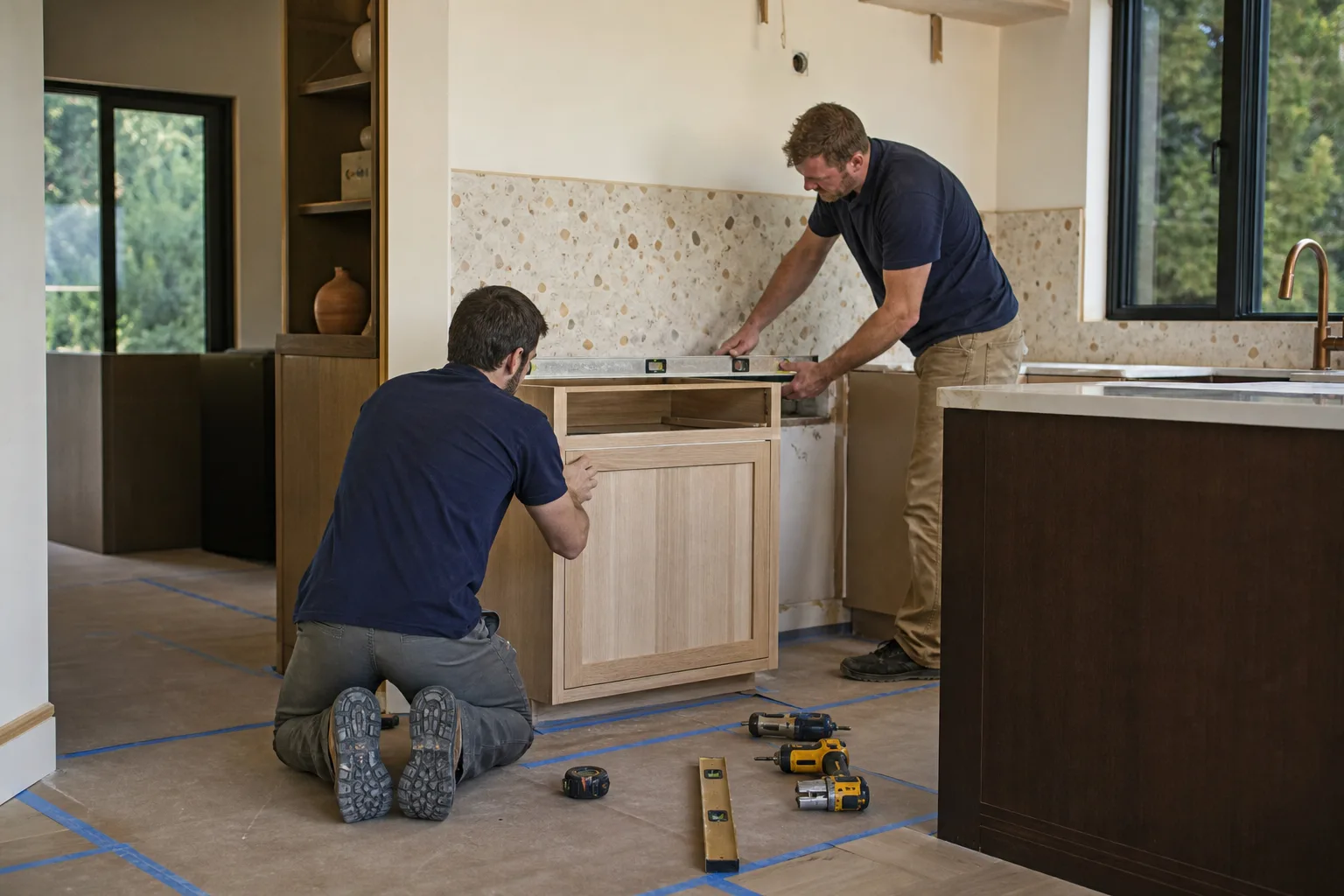
Why the slab matters more than the product in Lake Forest
Lake Forest sits on a semi-arid inland stretch of Orange County, and the winter rains soak into the graded soil around these tract homes. On a slab-on-grade foundation, that moisture migrates through the concrete and has nowhere to go but up into whatever you glue or mortar on top. We’ve pulled up vinyl plank in Portola Hills and Foothill Ranch that looked perfect at installation and started lifting at the seams within 18 months, not because the brand was cheap but because nobody checked vapor transmission first.
Tile fails the same way, just differently. A slab that isn’t flat causes deflection, deflection cracks grout lines, and you’re left with hairline cracks spreading from the center of the kitchen out toward the cabinets. Neither failure is the product’s fault. Both are the assessment’s fault.
Here’s what the assessment actually catches:
- Moisture transmission: a simple calcium chloride or plastic-sheet test tells us whether the slab is emitting enough vapor to wreck an adhesive bond.
- Levelness: a 10-foot straightedge run across the kitchen shows high and low spots. Floor prep (self-leveling compound, patching) adds to the budget and has to be priced in, not discovered mid-job.
- Cracks and control joints: old slabs crack. Cracks telegraph through tile and can split a plank seam. They need a membrane or a repair before any finish goes down.
That prep is the difference between a floor that lasts and one you’re redoing. We price it upfront – the number you see is the number you pay – so it doesn’t surface as a surprise line item halfway through the install.
The honest side-by-side for a Lake Forest kitchen
Once the slab passes, the comparison gets simpler. Here’s how the two options genuinely stack up in this climate and this housing stock.
| Factor | Porcelain Tile | Vinyl Plank (LVP) |
|---|---|---|
| Moisture tolerance | Good once slab is tested and sealed; grout needs sealing | Fails over unchecked slab moisture via adhesive/edge lift |
| Heat stability | Dimensionally stable; handles indoor/outdoor temperature swings well | Can cup or gap at edges in rooms that heat unevenly |
| Comfort underfoot | Hard and cool | Warmer, softer |
| Installation time | Slower; mortar cure and grout | Faster; often same-day for a kitchen |
| Fine dust and ash cleanup | Wipes clean; no surface texture to trap grit | Embossed textures can hold fine particulate |
| Resale and HOA fit | Neutral, durable, rarely triggers material review | Some styles/thicknesses may not meet HOA minimums |
| Typical kitchen floor budget | Higher material and labor | Lower material, faster labor |
That last row matters. A kitchen floor replacement usually rides inside a larger remodel budget – the full Kitchen Remodeling range in Lake Forest runs $14,000-$45,000 – so the floor choice is a slice of a bigger number, not a standalone decision. For a full-scope look at what a kitchen overhaul involves here, see our Kitchen Remodeling in Lake Forest page.
The Lake Forest climate case for porcelain tile
This is a semi-arid inland climate with hot, dry summers and periodic Santa Ana winds. That seasonal swing does something to kitchen floors that coastal guides never mention: air-conditioned interiors sit at one temperature while hot outdoor air pushes against exterior walls, and rooms that heat unevenly stress the floor at their edges. Porcelain tile barely moves under that load. Vinyl plank can cup or develop gaps where it meets the toe-kick or doorway transition, especially near a west-facing slider that bakes all afternoon.
Then there’s the particulate reality. When the Santa Anas blow, fine ash and dust settle across Lake Forest homes, and anyone who opens windows or cooks outdoors tracks that grit onto kitchen floors. Tile’s hard glaze cleans completely with a damp mop. Some LVP surface textures have embossed grooves that hold that fine dust, and over a season it works into the pattern. It’s a small thing until you’re scrubbing a floor that should wipe clean.
And the resale and HOA angle is real here. Lake Forest is a master-planned city where a lot of work happens inside tightly regulated HOAs with architectural review, and the higher-end communities can specify material quality standards. Porcelain tile is neutral, photographs well for a listing, and almost never triggers a materials question. Some LVP styles and thicknesses won’t clear that bar. If you’re on a resale timeline under five years, that’s worth factoring in before you buy.
When vinyl plank is the right call
We’re not going to pretend tile wins every time. If your slab passes a moisture test and reads level, and you prioritize warmth underfoot and a faster install, a quality LVP with a 12-mil wear layer minimum is a defensible choice. It’s softer to stand on in a kitchen where you cook for hours, it goes down in far less time, and a good plank product handles normal kitchen traffic without issue. The catch is the word “quality” – bargain planks with thin wear layers scuff and dull, and a cheap product over a good slab still disappoints.
Our rule of thumb: qualify the slab first, then match the product to the room and your timeline. If the floor is going over a sound, dry, level slab and resale isn’t imminent, LVP is fine. If there’s moisture, an uneven surface, or a sale in the next few years, tile is the lower-risk investment. Our technicians – up to 12 years of experience – have pulled both kinds of failed floors out of Lake Forest kitchens, and the failure almost always traces back to the concrete, not the box.
What a Lake Forest kitchen floor really costs
Because the floor arrives as part of a broader kitchen project, it’s more useful to look at the line items. These are the ranges we work from in Lake Forest, and they hold whether the answer to your tile vs. vinyl plank question turns out one way or the other.
- Small kitchen remodel (floor included): $9,000-$20,000
- Full kitchen remodel with new floor, cabinets, and counters: $14,000-$45,000
- Cabinet installation: $4,000-$13,000
- Countertop installation: $2,000-$6,500
- Backsplash installation: $800-$2,500
Floor prep – leveling compound, membrane over cracks, moisture mitigation – is what separates a realistic quote from an optimistic one. We put those numbers in writing before work starts, and the projects over $10,000 qualify for $1,000 off plus 0% financing for 18 months if the timing helps. Materials come from brands we trust, and the whole job sits under our 730-Day Done Right Promise – if it’s not done right, we make it right.
If your kitchen is part of a bigger plan – an addition, an ADU – the same slab assessment applies, and it’s why we start there on any home project in this city’s aging tract stock.
FAQs
Porcelain tile is the safer bet on a concrete slab unless the slab passes a moisture and levelness test, because moisture wicking up through the slab breaks down LVP adhesive while it mostly leaves properly set tile alone. The test is quick and it should happen before you buy anything. Call (855) 532-8973 for a free estimate and we’ll check the slab first.
Not safely without prep, because an uneven slab causes deflection that lifts plank seams and cracks grout alike. Leveling compound and crack membrane add cost, and we price that upfront rather than mid-job. Reach out at (855) 532-8973 for a no-pressure assessment – estimates are free.
Tile cleans more completely, because its hard surface wipes free of fine ash and grit while some LVP textures trap particulate in embossed grooves. A smooth-surface plank helps, but tile is the easier floor to keep clean through a wind event. Call us at (855) 532-8973 and we’ll walk you through which surfaces fit your kitchen.
Porcelain tile almost never triggers a materials question and photographs well for resale, while some LVP styles and thicknesses may fall short of material quality standards in higher-end Lake Forest communities. Resale timelines under five years favor tile. We’ll help you read your HOA guidelines before you commit – call (855) 532-8973 for a free design consult.
Have the slab checked before you buy a floor
If you’d rather have it looked at than guess, Groundwork Construction Co. of Lake Forest offers a no-pressure assessment in Lake Forest. We’ll test the slab, walk the kitchen, and give you an honest read on whether tile or vinyl plank fits your home – call (855) 532-8973. A live person answers, day or night.
Written by the team at Groundwork Construction Co. of Lake Forest, serving Lake Forest, CA.