Last updated November 18, 2026



Free written scope consultation - allowances, timeline, and change-order rules on paper before a single trade is scheduled
DIY vs Professional Fence Installation: What’s Safe to Do Yourself
The most expensive DIY fence mistake isn’t a crooked post. It’s setting a post on a property line that turns out to be your neighbor’s property. A $400 survey would have prevented it. A $15,000 legal dispute won’t easily fix it, and neither will the fence you already buried four feet in the ground. We’ve watched homeowners in Lake Forest win the small battles and lose the big one, and the pattern is always the same: panels and hardware are fair game for a weekend, but posts and footings are where amateur work turns into structural and legal liability. This guide marks the line clearly, so you know which half of the job to keep and which half to hand off.
Quick Answer
Panel replacement, gate hardware swaps, and wood refinishing are genuinely safe and cost-effective to do yourself. Post installation and footing work are not: they require a property survey, a utility locate through 811, correct concrete depth and mix for local soil, and code-compliant alignment to your setbacks. Those five tasks carry the structural and legal risk that justifies a professional. Everything else, you can own with confidence.
Styles & brands we work with
- Kitchen remodeling
- Bathroom remodeling
- Home additions & ADU
- Roofing
- Windows & doors
- Driveway & pavers
- Fence
Table of Contents
- The Three Fence Tasks That Are Safe to DIY
- Why a Property Survey Comes Before Any DIY Post Work
- Footing Depth and Concrete Mix for Lake Forest Soil
- The 811 Underground Utility Call Every Digger Owes
- What a Professional Fence Bid Should Include
- Comparing the Real DIY Cost to a Professional Quote
- Common Mistakes to Avoid
- When to Call a Professional
The Three Fence Tasks That Are Safe to DIY
Not every part of fence work is a minefield. Three jobs reward a careful homeowner and carry almost no structural or legal downside, which means you should take them on with a clear conscience and a Saturday to spare.
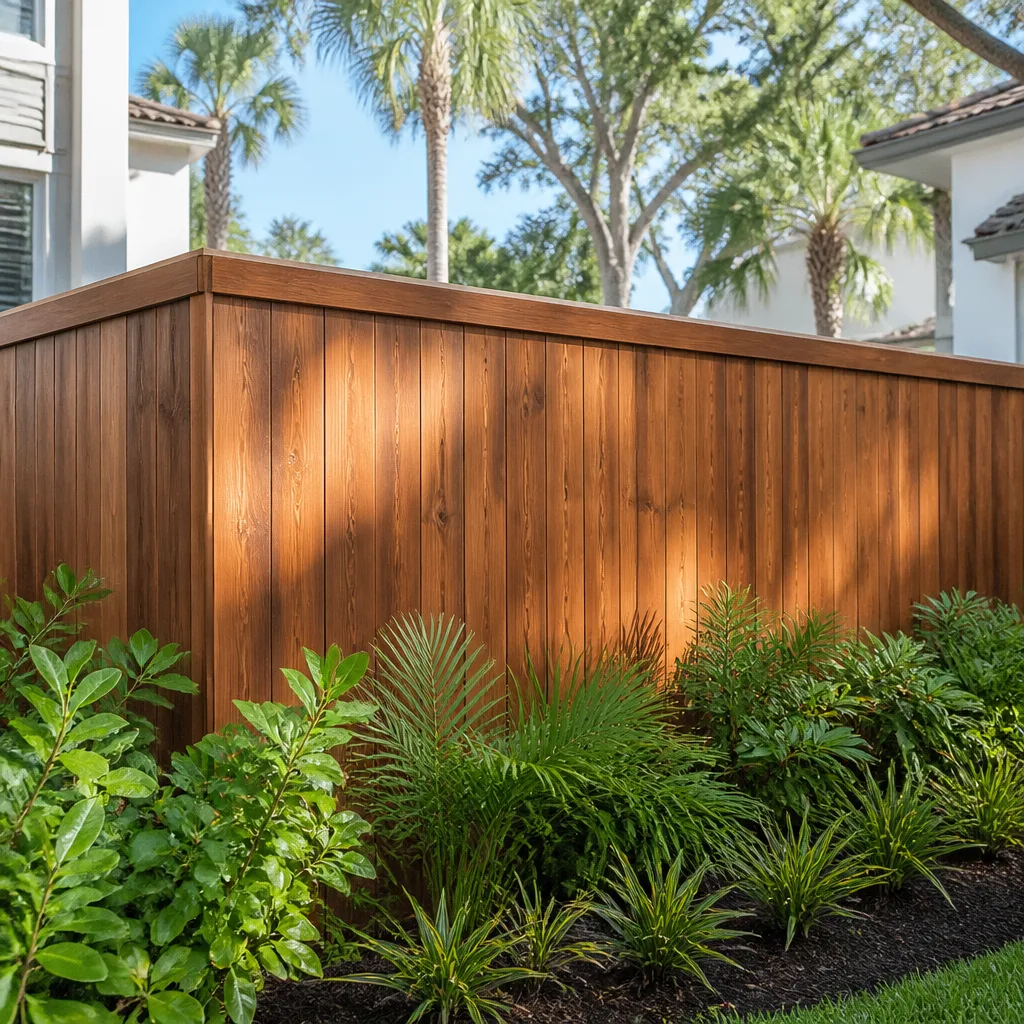
Panel replacement. When a single run of pickets or a pre-assembled panel splits, warps, or blows out, swapping it is genuinely straightforward. The posts and rails stay; you cut the old panel loose, hang the new one level, and refasten. Keep the same material and height so the line stays consistent, and match the picket spacing to the neighboring panels. This is the single biggest cost saver in fence maintenance, since a repair rather than a rebuild preserves the posts you already paid to set.
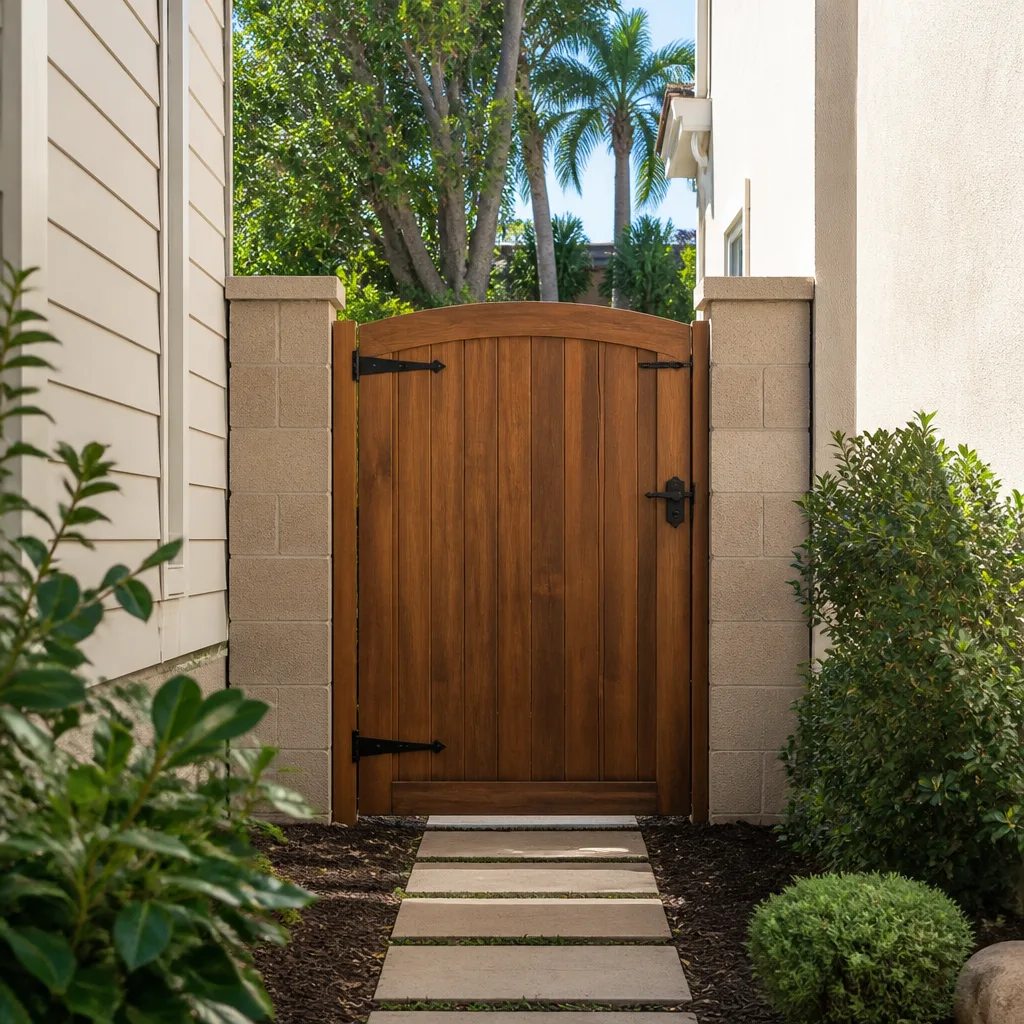
Gate hardware replacement. Hinges, latches, self-closers, and drop rods wear out long before the gate itself does. Swapping sagging hinges for heavier hardware, or replacing a rusted latch with a powder-coated one, is a thirty-minute job with a screwdriver, a drill, and the right replacement part. The one caveat: when you drill new holes, waterproof the fresh exposed wood with an exterior sealant so water doesn’t get behind the hardware and rot the stile.
Wood surface refinishing. Pressure washing, sanding, and re-sealing a cedar or pine fence extends its life by years and is one of the highest-return DIY tasks in home maintenance. A penetrating oil or water-based stain applied in dry, moderate weather (Lake Forest’s fall and spring are ideal) protects the wood from UV and moisture cycling.
Load-bearing changes, post replacements, and any run near a property line are a different category of work. That’s where the line falls.
Why a Property Survey Comes Before Any DIY Post Work
Before you dig a single hole for a post near a boundary, order a property survey. A residential boundary survey in the Lake Forest market typically runs $350 to $650 for a standard lot, and it does one thing that no amount of neighborly goodwill can replace: it establishes, on paper, exactly where your property ends. Skipping it to save the fee is the most expensive decision in the entire project, because fences are the number-one trigger for boundary disputes.
Here’s the trap. A fence near a line that turns out to sit on a neighbor’s property, or that encroaches on an easement, is a problem the moment it’s set in concrete. What starts as a casual conversation becomes a dispute, and California boundary and encroachment cases routinely run into five figures in legal and remediation costs before they resolve. A $400 survey versus a $15,000 mess is not a close call.
There’s a code layer too. The City of Lake Forest enforces setback and height rules for fences, and the front-yard, corner-lot, and sight-triangle rules near intersections are stricter than most homeowners assume. Orange County properties also frequently carry recorded easements (utility, drainage, slope) where fencing isn’t permitted or must be a specific type. Your survey both reveals those easements and gives you the numbers to check against current city requirements before you build.
If you’re comparing the DIY path against fence installation in Lake Forest, remember that a professional fence contractor orders or verifies the survey as part of the job. That’s not overhead you can skip; it’s the step that keeps the fence on your side of the line.
Footing Depth and Concrete Mix for Lake Forest Soil
The reason a professionally set post stays plumb for twenty years and a rushed one leans by year five comes down to the footing. In Lake Forest, footing design has to account for two local realities: expansive clay soils that swell and shrink with moisture, and the seasonal dry-wet swing of a Mediterranean climate that moves clay more than almost any other factor. A post set too shallow, or set in the wrong mix, works loose as the clay expands in a wet winter and contracts in a dry summer.
General industry practice puts post footings for a typical residential fence well below the frost or expansive-soil influence line, and in most residential fence work that means roughly one-third of the above-grade post height buried in concrete. For a six-foot fence, that’s built to land around a two-foot-plus footing, with the hole widened at the base to a bell shape so the concrete keys into the soil instead of sliding up. The load is carried by that wider base and the depth, not by the top few inches.
The concrete itself matters. A pre-mixed bagged product rated for structural post setting (Quikrete and Sakrete both make high-strength post-mix products in easily read bag ratings) mixed to the bag instructions will outperform a thin, over-watered mixture every time. Over-watering is the most common DIY failure; it weakens the concrete and reduces the bearing capacity you’re paying for. Do not pour a fence footing on top of disturbed, uncompacted soil, and never backfill a post with plain dirt and a six-inch cap of concrete. That’s a post that will lean.
Practical depth checklist for Lake Forest:
- Measure the line and mark post centers before you dig, not after.
- Dig each hole deeper than the minimum and wider at the base for a better footing.
- Confirm drainage: posts on a low spot need deeper footings and better soil compaction.
- Check slope: hillside lots around Foothill Ranch and Portola Hills need professionally engineered footings.
- Let concrete cure before loading the posts; hanging heavy panels too early causes racking.
When footing design gets into slope stability or retaining conditions, that’s engineering territory. It belongs with a pro who can build to it, not a weekend project.
The 811 Underground Utility Call Every Digger Owes
Before the first shovelful goes into any fence line, call 811, the national Call Before You Dig system, which routes your request to Underground Service Alert of Southern California. This is free, mandated in California before any excavation, and it’s how you find out whether gas, electric, water, or communications lines cross your planned post line. In Lake Forest, working near established neighborhoods means there are decades of underground infrastructure under what looks like a bare strip of dirt.
Here’s how it works, and why the timing matters:
- Call 811 or submit the request online at least two business days before you plan to dig. State law requires giving the utility operators that notice window.
- Utility companies mark the underground lines on your property with color-coded paint or flags, typically within a couple of days of your request.
- Keep the marked markings in place until excavation is complete; do not fence over or disturb the marks before you dig.
- Hand-dig around any marked utility rather than machine-digging, and if a post lands directly over a line, relocate the post rather than working around it.
- If you hit a line, stop immediately and call the utility operator; never try to re-dig or repair a struck line yourself.
Skipping 811 is both illegal in California and genuinely dangerous. A struck gas line is a safety emergency; a sliced electric or fiber line is a costly repair and a liability. For a homeowner planning a DIY post project, the 811 call is a five-minute step that protects your property and your relationship with the utility operators. And when the marks reveal a utility crossing your planned line, that’s a strong signal the layout needs a professional’s judgment.
What a Professional Fence Bid Should Include
Comparing DIY cost to a professional quote only works if the quote actually describes the job. A bid that lists a footage number and a total tells you almost nothing; a bid that spells out the following reveals whether the contractor is building it right. Use this list to read any quote honestly against your own plan:
- Site plan and property line confirmation. The bid should name the fence line, referenced to the property or a survey, and note any setback or easement considerations.
- Footer specification. Depth, hole diameter, and the concrete product and mix should be line-itemed, not described as “concrete footings” in the abstract.
- Material specification. Brand, product line, and gauge or thickness. A vague “cedar fence” or “vinyl fence” without a product name is a red flag.
- Permit line. Whether the contractor pulls permits and who pays. A real quote states this plainly.
- Utility locate confirmation. The bid should reference 811 and confirm markings before excavation.
- Removal and disposal. Whether hauling off the old fence is included, and the dumpster line.
- Workmanship guarantee. A written warranty in plain language, with the term stated. Ours is the 730-Day Done Right Promise: if it isn’t done right, we make it right.
- Change-order policy. How surprises get priced. Upfront pricing, no surprises, is the standard.
A quote missing survey and footer detail isn’t necessarily a low bid; it’s a bid you can’t compare. Ask for the missing lines in writing. If you’re also weighing hardscape work, the same discipline applies to driveway and pavers in Lake Forest.
Comparing the Real DIY Cost to a Professional Quote
DIY looks cheaper on the receipt and rarely is on the calendar. Add up the honest costs before you decide: materials, the survey you still need, the concrete and mix, the tool rentals (auger, mixer, laser level), the permit, the dumpster, and your own weekends. Then add the cost of redoing the footings if the posts lean, which is the most common DIY failure mode and wipes out the savings entirely.
Here’s the structure of a realistic fence budget in the Lake Forest area, laid out so you can compare:
- Materials: wood, vinyl, or composite panels, posts, rails, fasteners, and concrete. Composite and vinyl run higher than cedar.
- Survey: a survey if one isn’t on record, in the range noted above.
- Permit and inspection: cost and timing set by the city, based on the fence type, height, and location.
- Labor: the biggest swing factor, and the one the DIY path replaces with your time.
- Refinishing or sealing: needed every few years for wood, regardless of who installed it.
Where a professional quote wins is in the parts that are invisible on a receipt: the footer built to spec, the permit pulled and the inspection passed, the workmanship in writing. Ask about the Groundwork Construction Co. of Lake Forest home page for the full scope of what we handle from foundation to finish line.
Common Mistakes to Avoid
- Digging before the survey. Homeowners in older Lake Forest neighborhoods set posts on a line they assumed was theirs, then discover an easement or a neighbor’s survey marker two panels in. Fixing it means pulling and resetting posts, or legal action.
- Skipping the 811 call. Some homeowners dig first and “watch for lines.” Southern California yards are full of utility runs under bare dirt, and a struck gas or electric line is a safety emergency, not a delay.
- Setting posts too shallow for expansive clay. A post placed in loose soil with a thin concrete cap will look fine for two seasons, then lean after the first wet winter and dry summer cycling. Depth and a bell-shaped base are the fix.
- Over-watering the concrete. Thinned-out mix is weaker and crumbly, and the post won’t stay plumb. Mix to the bag instructions, which is what structural post-mix brands like Quikrete and Sakrete are formulated for.
- Using the wrong post material near the ground. Pressure-treated ground-contact-rated posts are required wherever wood sits in soil; non-rated or untreated posts rot at the base within a few years.
- Ignoring the sight-triangle rule on a corner lot. Lake Forest enforces height limits and clear-visibility rules on corner properties, and a fence built through the sight triangle gets flagged at inspection.
- Burying the line without drainage thought. Posts set on low, poorly drained spots in Lake Forest sit in standing water and rot at a rate no material warranty will honor.
When to Call a Professional
Hand off the job the moment you cross from replacement into installation. If you’re setting new posts, moving an existing line, working a slope or hillside lot, dealing with a boundary or easement question, or building anything that needs a permit and inspection, that’s professional territory. The same is true whenever you’re not certain where your property line is, or when the 811 markings show utilities crossing the planned fence line. Our technicians have up to 12 years of experience with exactly this work, and we bring background-checked, uniformed technicians to every project. Groundwork Construction Co. of Lake Forest offers free estimates in Lake Forest. Call (855) 532-8973 to schedule yours.
See the difference
 Before
 After
 Before
 After
 Before
 After
Frequently Asked Questions
It’s worth doing the three safe tasks yourself: panel replacement, gate hardware swaps, and refinishing. Those save real money with almost no risk. New post installation and footing work are usually better handed to a professional, because the survey, 811 locate, footer depth, and permit work carry structural and legal risk. Call us at (855) 532-8973 for a free estimate and a side-by-side comparison.
A residential boundary survey in the Lake Forest area typically runs $350 to $650 for a standard lot. That fee is small against the cost of a boundary dispute, which can run five figures. Some properties already have a survey on record; ask the city and your title company before ordering. If the line is uncertain, get the survey first and call us to review it.
Yes. California law requires calling 811 (Underground Service Alert of Southern California) at least two business days before any excavation, and it’s free. Skipping it means digging blind through gas, electric, water, or communications lines, which is both dangerous and a repair bill. If the markings reveal lines through your planned fence line, call us at (855) 532-8973 and we’ll help you re-lay it.
General practice buries roughly one-third of the above-grade post, so a six-foot fence means footings around two feet or deeper, with a widened base for expansive clay. Hillside lots around Foothill Ranch and Portola Hills often need engineered footings, not a standard depth. We size footings to the soil and slope on every job; call (855) 532-8973 for a free estimate.
A fair quote spells out the survey basis, the footer depth and concrete mix, the material brand and product line, who pulls the permit, the 811 confirmation, removal and disposal, and a written workmanship guarantee. Ours adds the 730-Day Done Right Promise: if we don’t do it right, we make it right. Call (855) 532-8973 to schedule your free estimate and design consult.
Yes, a homeowner can build their own fence, but the fence still has to meet City of Lake Forest setback, height, and corner-lot sight-triangle rules, and permits are required in many situations. Building without a permit can mean a stop-work order and removal. We pull permits and pass inspections as part of the job; call (855) 532-8973 to talk through yours.
The Bottom Line
The safe DIY list is short and valuable: panels, hardware, and refinishing. The risky list is short too, and it’s where the money goes wrong: posts, footings, surveys, and utility locates. Set footings on a line you haven’t surveyed and you risk a legal dispute a survey would have prevented. Set them in shallow, over-watered concrete and you’re rebuilding in five years. A professional quote you can read line by line is the honest comparison, and it comes with the footer built to spec and a written guarantee behind it. Do the safe half yourself, hand off the expensive half, and get both halves done right.
Ready to compare options or schedule an install? Call (855) 532-8973 for a free estimate and design consult. We answer with a live person 24/7, offer had-hassle upfront pricing, $1,000 off projects over $10,000, and 0% financing for 18 months. From fence lines to full-scale additions like home additions and ADU in Lake Forest, we handle the whole project, backed by the 730-Day Done Right Promise.
Written by the team at Groundwork Construction Co. of Lake Forest.