Last updated November 18, 2026

Free written scope consultation - allowances, timeline, and change-order rules on paper before a single trade is scheduled
Home Additions & ADU Warning Signs Every Homeowner Should Know
If a contractor gives you a firm ADU price before seeing a soil report and stamped plans, that number is a guess, and you’re the one who’ll pay for how wrong it turns out to be. We’ve watched homeowners in Lake Forest sign six-figure addition contracts built on a single 20-minute walkthrough and a ballpark figure scribbled on a business card. The build starts, the surprises pile up, and suddenly the “fixed price” has grown by 30 percent. This guide covers the specific red flags experienced builders spot in minutes: missing material specs, wrong license classifications, risk-shifting contract terms, skipped inspections, and payment schedules designed to keep the contractor ahead. By the end, you’ll know exactly which questions to ask and which answers should make you walk away.
Quick Answer
The biggest warning signs of a bad ADU or home addition contractor are a firm price quoted before soil reports and stamped plans exist, a scope of work with no material specification sheet, a license that doesn’t match the classification the job legally requires, and a payment schedule that keeps the contractor overpaid at every stage. Any one of these is a reason to slow down. Two or more together mean you’re looking at a contractor who is either in over their head or planning to cut corners later. In our experience across Lake Forest and the surrounding foothill neighborhoods, the sales pitch almost always looks polished. The problems hide in the documents.
Styles & brands we work with
- Kitchen remodeling
- Bathroom remodeling
- Home additions & ADU
- Roofing
- Windows & doors
- Driveway & pavers
- Fence
Table of Contents
- Why a Scope of Work Without a Material Specification Sheet Is a Trap
- The License Classifications California ADU Work Actually Requires
- How to Read a Contract for Terms That Shift Risk Onto You
- On-Site Warning Signs During Active Construction
- What a Legitimate Payment Schedule Looks Like
- Permits, Inspections, and What Lake Forest Requirements Reveal
- Common Mistakes to Avoid
- When to Call a Professional
Why a Scope of Work Without a Material Specification Sheet Is a Trap
A scope of work tells you what gets built. A material specification sheet tells you what it gets built with. If your bid package has the first and not the second, you’ve handed the contractor a blank check to substitute cheaper products without dropping the price a dollar. This is the single most common warning sign we see when homeowners bring us bids from other contractors to compare.
Here’s how the substitution works. The bid says “premium vinyl flooring throughout.” That could mean a $2.50 per square foot product or an $8 per square foot product, and the contractor decides which after you’ve signed. The bid says “energy-efficient windows” and the crew installs single-hung units with a U-factor that fails Title 24 the moment the inspector looks at the label. The bid says “custom cabinetry” and you get particleboard boxes with thermofoil doors that start peeling in two summers of Lake Forest heat.
A real material specification sheet names the manufacturer, the product line, and the model number for every finish item. It’s not a marketing document; it’s the legal description of what you’re paying for. When you compare two bids on a Lake Forest addition, the lower one is often lower purely because the specs are thinner. Line up the actual products side by side and the “expensive” bid frequently isn’t expensive at all.
A legitimate material spec for an ADU or addition typically includes:
- Framing lumber: species, grade, and moisture content (kiln-dried vs. green)
- Windows and doors: brand, series, glazing package, U-factor, and Title 24 compliance label
- Roofing: manufacturer, product line, underlayment type, and warranty terms in writing
- Insulation: R-value per assembly and where each type goes
- Fixtures: exact model numbers for faucets, toilets, and lighting
- Finish materials: flooring, tile, trim, paint, and hardware identified by product name and SKU where possible
- Exterior cladding: product line and fire-rating documentation if you’re in a wildland-urban interface zone
If a contractor can’t produce this sheet before you sign, ask why. The answer is usually that they haven’t priced the job yet, which means the price they gave you isn’t real. Groundwork Construction Co. builds every proposal around named brand partners – KraftMaid cabinets and Cambria surfaces in kitchens, GAF and Owens Corning roofing assemblies, Andersen and Marvin windows – so the specification sheet and the bid are the same document. That’s part of what “upfront pricing, no surprises” actually means in practice.
For a full breakdown of what ADU construction involves from foundation to finish, see our Home Additions & ADU in Lake Forest page.
The License Classifications California ADU Work Actually Requires
California’s Contractors State License Board issues licenses by classification, and the classification matters enormously for ADU and addition work. A handyman with a B-General Building license can legally build a single-family addition in most cases, but the specific trades – electrical, plumbing, HVAC, roofing – each carry their own classification and licensing requirements. A contractor who can’t explain which classifications will be on your job is either uninformed or hoping you won’t ask.
The classification you’ll see most often on ADU and addition projects is the Class B General Building Contractor license. Below that, Class C licenses break into 40-plus specialty categories. For an ADU, you typically need:
- Class B (General Building Contractor): holds the overall project and may subcontract specialty trades
- C-10 (Electrical): required for panel upgrades, new circuits, and solar tie-ins
- C-36 (Plumbing): required for new water and waste lines, gas, and fixtures
- C-20 (HVAC): required for ducted systems and Title 24 mechanical compliance
- C-39 (Roofing): required for full roof assemblies, underlayment, and flashing
- C-54 (Tile) or C-33 (Painting): depending on finish scope
Here’s the verification process. Go to the CSLB website, search by license number, and confirm four things: the license is active, the classification matches the work, the bond is current, and there are no disciplinary actions or citations on file. The site also shows when the license was issued, which matters when you’re evaluating whether the contractor has the depth of experience to run a complex addition. A license issued six months ago with no other history is a yellow flag on a $250,000 ADU.
Do this check before your first meeting, not after you’ve paid a deposit. A reputable contractor will hand you the license number without being asked. If you have to dig for it, take that as a data point. In Lake Forest, where most ADU permits route through the city’s planning and building department, a contractor who doesn’t know the CSLB lookup cold is a contractor who hasn’t been through many permit cycles. Ask how many Lake Forest ADU permits they’ve pulled. The answer should be specific, not “a bunch.”
How to Read a Contract for Terms That Shift Risk Onto You
Most homeowners read the price and the completion date and skim the rest. The rest is where a bad contract does its damage. Three clause types appear again and again in the contracts that end up in disputes, and we’ve walked homeowners through all three when they’ve called us after a project went sideways.
Open-ended cost-plus pricing. A cost-plus contract says you’ll pay the contractor’s actual costs plus a fixed percentage markup. On the surface it sounds fair. In practice, it removes every incentive to control costs, and the “plus” percentage applies to every surprise, every escalation, and every change order. If your contract says “cost plus 15 percent” without a guaranteed maximum price or a not-to-exceed ceiling, you’ve accepted unlimited financial exposure on a project where you have the least ability to control costs. Ask for a fixed price with a defined allowance structure, or at minimum a GMP.
Vague change order language. A well-written contract defines exactly how change orders work: who can authorize them, what documentation is required, how much lead time, and what happens if a change causes a delay. A vague contract says “any changes to the scope will be billed at the contractor’s standard rates.” That sentence lets the contractor invent the rates after the fact and apply them to changes you didn’t clearly approve. Every change order should be a written document with a price, a schedule impact, and your signature. No signature, no charge.
Mandatory arbitration clauses that strip your options. Buried in the fine print, these clauses say any dispute goes to binding arbitration instead of court, often with the arbitrator chosen by the contractor or the arbitration body’s fees borne entirely by you. Arbitration isn’t inherently bad, but a forced binding clause written by the contractor’s attorney, with limited discovery and no appeal, is a clause that exists to make suing them harder. Some contracts also cap damages at the contract value, waive your right to a jury trial, and prohibit class actions. Read those paragraphs twice. Ask for them to be removed or modified. A contractor confident in their work has no reason to insist on them.
The contract should also spell out the 730-Day Done Right Promise or whatever workmanship warranty the contractor actually offers. A warranty that appears in an ad but not in your signed agreement is a warranty you’ll never collect on. Get it in writing, with the term quantified. Our Groundwork Construction Co. of Lake Forest home page lays out how we structure our own agreements if you want a reference point for what a complete contract looks like.
On-Site Warning Signs During Active Construction
The sales process ends and the work begins. This is where the warnings turn physical. If you’re walking the site regularly and you know what to look for, some problems become visible before they become expensive.
Work proceeding without scheduled inspections. Every phase of an addition or ADU has a required inspection point: foundation forms before concrete pour, framing before drywall, rough electrical and plumbing before insulation, final inspection after finishes. If crews are moving forward without the inspector having signed off on the previous phase, the contractor is either covering work the inspector would have failed or trying to skip the inspection, and either one is a problem that comes back at final. Ask to see the inspection record card. The city posts one at the site. If it isn’t there or isn’t updated, ask why.
Concrete poured without a posted permit. A poured foundation is where corners get buried permanently. There should be a permit visibly posted at the site before any concrete work begins. If there’s no permit and no inspector has signed off on the rebar and forms, you’re looking at a foundation that may need to be demolished and re-poured, and the contractor will try to charge you for the redo.
Subcontractors who can’t name the GC. Ask the electrician on site who they’re working for. A licensed specialty subcontractor should be able to name the general contractor and the project. If you get a shrug or “some guy named Mike,” you may be looking at a contractor who has subcontracted to a sub who subcontracted to another sub, which is a chain where responsibility evaporates. A reputable GC knows every crew member on site and every subcontractor by name, with the license number on file.
Crews who don’t know the spec. A framing crew that can’t tell you the house wrap brand or the window series being installed is a crew working from a verbal instruction chain. Specification drift at this level is where the “premium” bid quietly becomes a builder-grade installation, and you don’t find out until the finishes go in.
In Lake Forest specifically, heat and fire-resistant construction come into play. Foothill areas near Whiting Ranch and the canyons are in higher fire severity zones where Chapter 7A exterior requirements apply. If the contractor hasn’t referenced those requirements at the framing and cladding stage, the work may not pass final inspection. For more on how we handle exterior requirements across Lake Forest, our Fence Installation in Lake Forest page covers the fire-rated materials parallel for exterior fencing and hardscaping.
What a Legitimate Payment Schedule Looks Like
The payment schedule is the contract’s financial engine, and it’s where a bad contractor makes sure they’re never underwater. A well-designed draw schedule keeps both parties aligned: the homeowner isn’t overpaying for work not yet done, and the contractor isn’t financing the job out of pocket. A poorly designed one front-loads the contractor’s cash and leaves you with limited leverage if they walk.
Here’s what a properly structured draw schedule looks like on an ADU or addition project:
- Deposit (5-10 percent): due at signing, capped low enough that you can afford to walk if the job never starts. California caps home improvement contract deposits at 10 percent or $1,000, whichever is less, so any deposit above that is a red flag.
- Foundation and framing (20-25 percent): released after inspection sign-off, not after the work is “done.” If a contractor wants this before the framing inspection passes, decline.
- Rough-in (roofing, electrical, plumbing, HVAC) (20-25 percent): released after rough-in inspections pass.
- Drywall and finishes (20-25 percent): released in stages as work is completed and signed off.
- Final completion and punch list (10-15 percent): held until the final walkthrough, the punch list is signed off, and final inspection clears.
The critical principle: the contractor should never be more than one phase ahead of the payment. If a contractor asks for 50 percent at signing, they’re asking you to finance the job and to absorb the loss if they disappear. This exact structure is one of the leading causes of contractor abandonment and financial loss, and it’s the reason California’s CSLB publishes specific guidance on down payments and draw schedules.
A legitimate contractor also offers some form of financing to make large-scale remodels accessible without a lump-sum payment upfront. We offer 0% financing for 18 months and $1,000 off projects over $10,000, which lets Lake Forest homeowners plan a full ADU build without draining savings. That’s not a marketing gimmick; it’s a way for the draw schedule to line up with a realistic household cash flow.
Permits, Inspections, and What Lake Forest Requirements Reveal
Lake Forest sits within Orange County and operates its own building department, which means ADU and addition permits route through the city, not a county agency. The city adopted ADU regulations consistent with state law (Government Code Sections 65852.2 and 65852.22) but applies local design, height, setback, and parking standards on top of the state baseline. A contractor who doesn’t know the difference between a “state-baseline ADU” and the city’s specific interpretation is a contractor who hasn’t pulled many Lake Forest ADU permits.
What a permit review reveals about your contractor is real and specific. Ask three questions before signing:
- Which permit types will be filed, and in what order? A straightforward ADU typically involves a building permit, an electrical permit, a plumbing permit, and a mechanical permit, plus any grading or right-of-way permit if the site requires it.
- Who prepares the plans, and is that person licensed? Plans for an ADU need to be stamped by a licensed architect or engineer, or prepared by a licensed contractor who holds the design-build capacity under the CSLB rules. Ask to see the license and the stamp on the plan set.
- What’s the realistic timeline through Lake Forest’s permitting process? Plan review, corrections, re-submittal, inspection scheduling – each stage has a lead time. A contractor who says “six to eight weeks for permits” on a full ADU hasn’t been through Orange County plan check recently. Expect corrections. Expect review cycles.
If a contractor offers to “handle the permit later” or says permits aren’t needed for an addition because “it’s under the threshold,” that’s wrong in almost every case. Unpermitted additions come back to bite at resale, at insurance claim time, and at the next inspection of any adjacent work. In Lake Forest, where the housing stock ranges from 1960s ranch homes near the lake to newer builds in the Foothill Ranch corridor, permitted vs. unpermitted work on a property can swing tens of thousands of dollars in appraisal value. A contractor who treats the permit as optional is a contractor who’s willing to leave you with an uninsurable, unsellable structure.
For a sense of how driveway and site-work permits interact with an addition, our Driveway & Pavers in Lake Forest page goes into grading and right-of-way requirements that often get overlooked on ADU projects.
Common Mistakes to Avoid
- Signing before the spec sheet exists. A bid without a material specification sheet is a bid you can’t compare against any other. Insist on the spec, and the comparison becomes possible and useful.
- Taking a verbal license number. Look it up on the CSLB site yourself and confirm classification, bond, and disciplinary history. A license number that exists is not the same as a license that covers your scope of work.
- Accepting open-ended cost-plus without a maximum. Cost-plus without a not-to-exceed cap turns every surprise into your financial problem. Ask for a GMP or fixed-price structure with defined allowances.
- Skipping the arbitration read. Read the dispute resolution clause before signing. If you don’t understand it, have a construction attorney read it. The cost of a one-hour review is small against a five-figure dispute.
- Front-loading the deposit. California’s 10 percent / $1,000 cap on home improvement deposits is there for a reason. Any deposit above that, or any draw schedule more than one phase ahead of the work, is a warning.
- Ignoring the fire-severity zone. In Lake Forest foothill areas near the canyons, Chapter 7A exterior requirements apply to new construction. A contractor who hasn’t reviewed them at the design stage is going to discover them at inspection, at your expense.
- Not walking the site. Show up unannounced every couple of weeks. Look at the inspection card, the permit posting, and the crews. The problems you’d otherwise miss become visible within minutes of a real walk.
See the difference
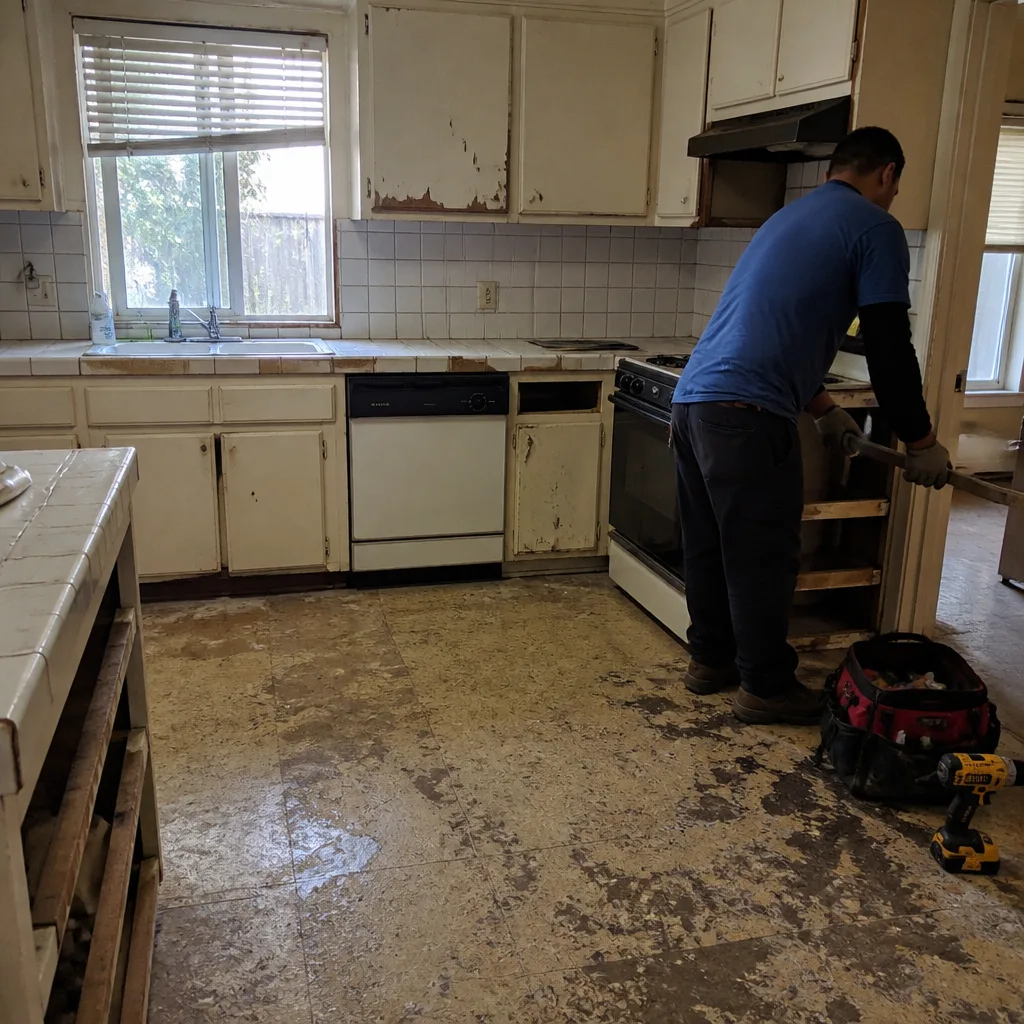 Before
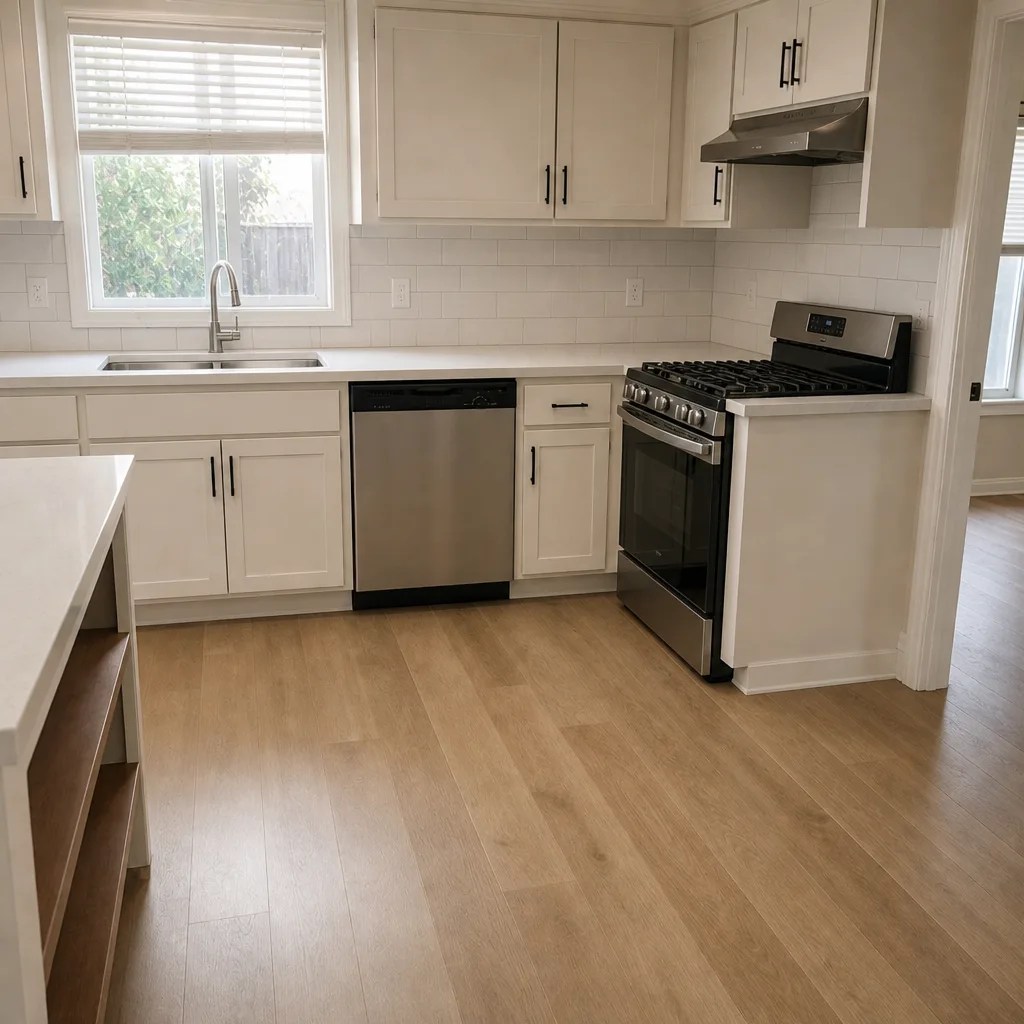 After
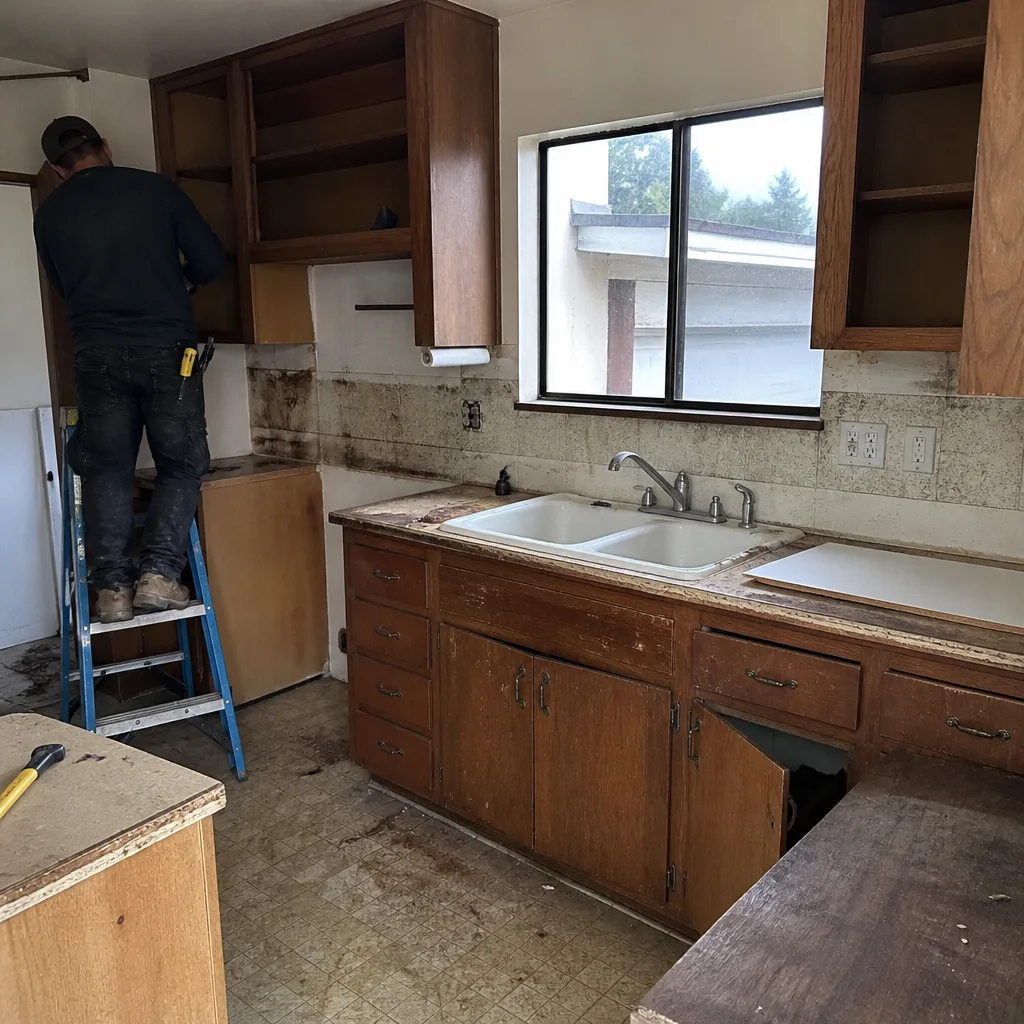 Before
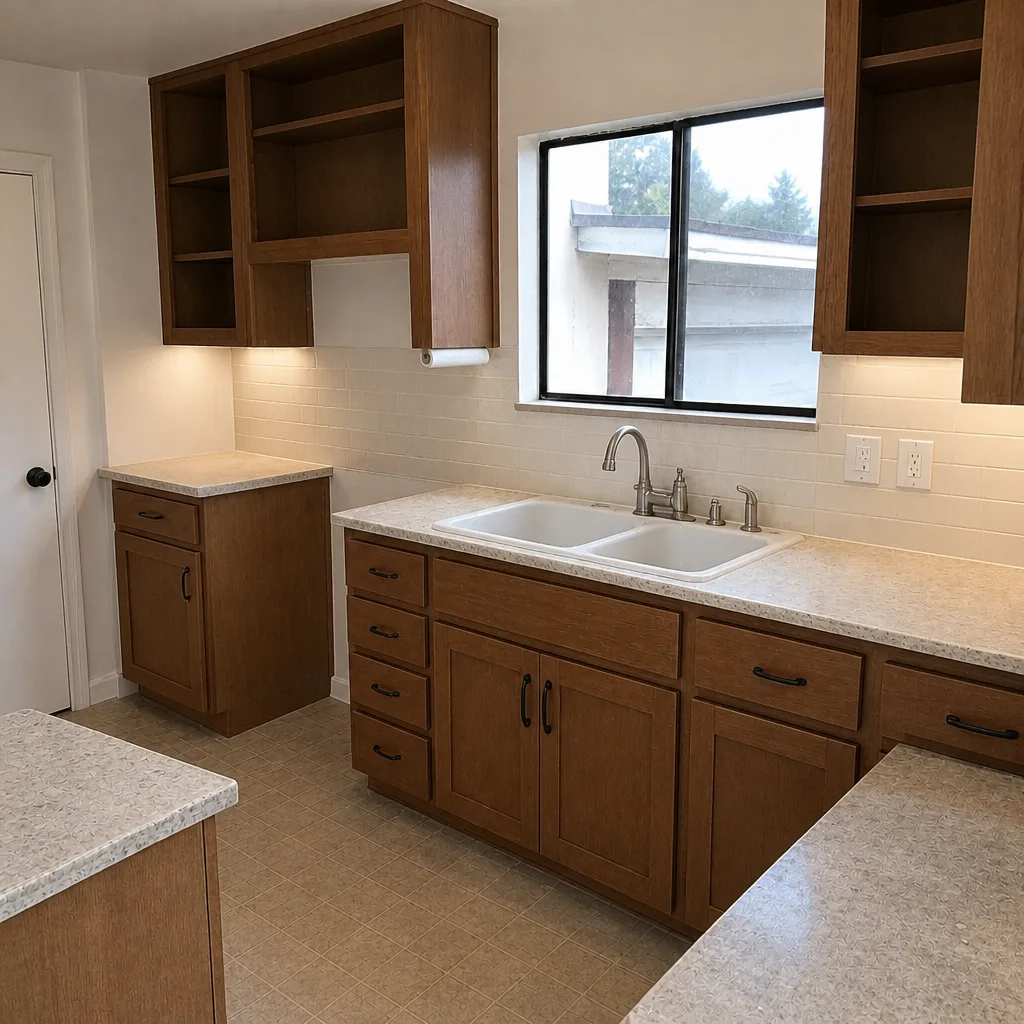 After
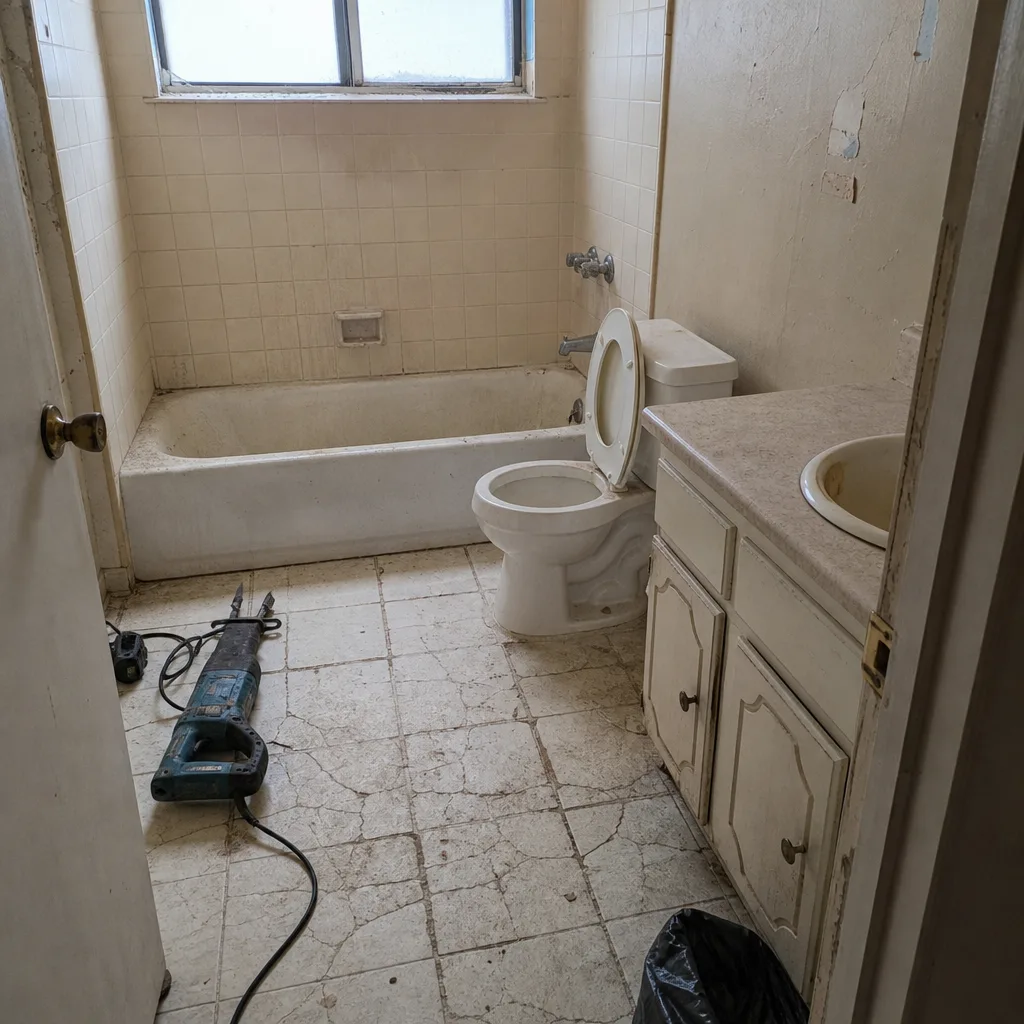 Before
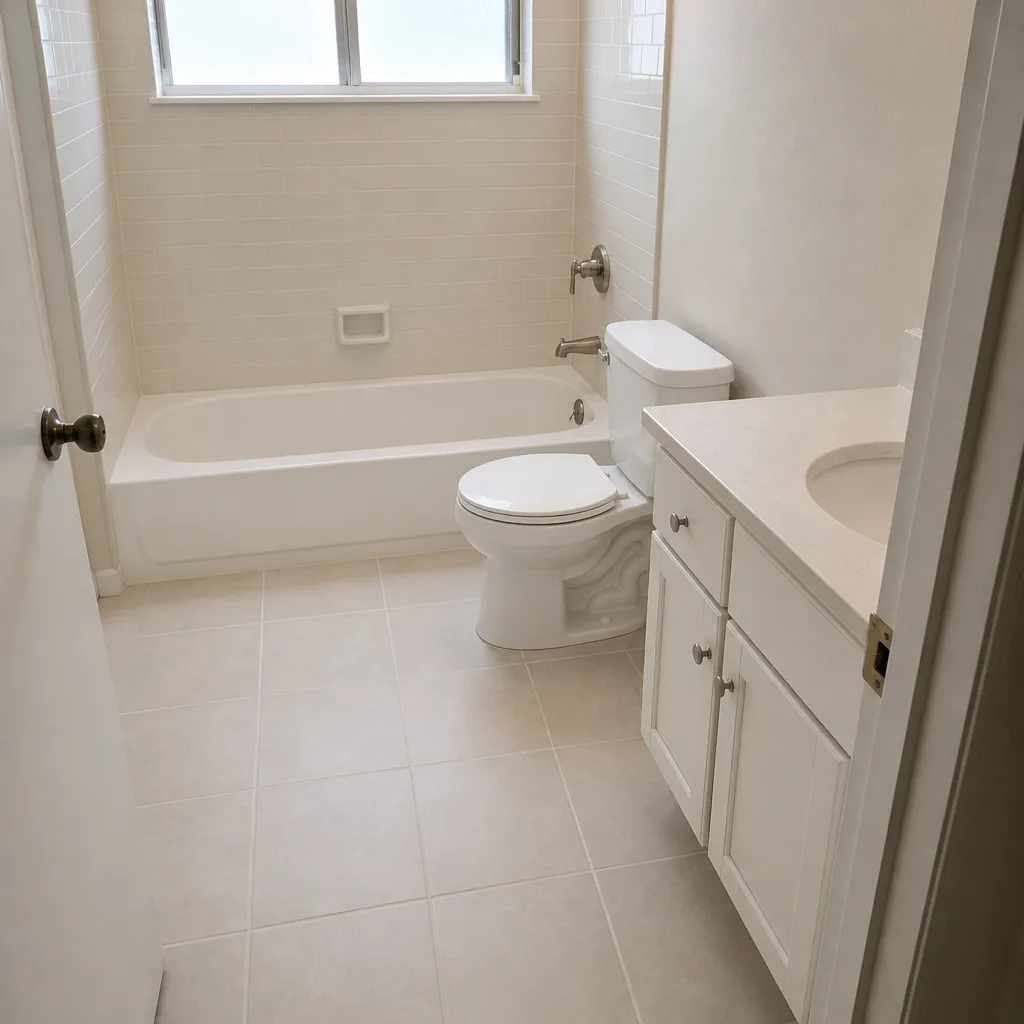 After
When to Call a Professional
Some decisions in an ADU or addition project belong to you, and some belong to people with the licensing, insurance, and experience to carry them. If you’ve received a bid without a specification sheet, a contract with open-ended cost-plus language, a draw schedule that front-loads more than 10 percent, or a license you can’t verify on the CSLB site, call a licensed general contractor before you sign anything. If a site you’re touring has concrete poured without a posted permit or crews working ahead of inspection, stop the work and get a professional assessment immediately. These aren’t situations to negotiate your way through; they’re situations to walk away from and start over. Groundwork Construction Co. of Lake Forest offers free estimates in Lake Forest – call (855) 532-8973. Our technicians have up to 12 years of experience, are background-checked, and arrive in uniform, and every project is covered by our 730-Day Done Right Promise.
Frequently Asked Questions
The single most reliable warning sign is a firm price quoted before the contractor has reviewed a soil report and stamped plans. A legitimate contractor can’t price an ADU accurately without knowing the site conditions and the actual structural scope, so a firm number at that stage is a guess. The second most reliable sign is a bid package without a material specification sheet – a bid that doesn’t name the products can’t be compared against any other bid, and it lets the contractor substitute cheaper materials after signing. If you see both together, walk away. Call (855) 532-8973 for a free estimate with a written specification included.
Go to the Contractors State License Board website, enter the license number the contractor gave you, and confirm four things: the license is active, the classification matches the work (Class B for general building, C-10 for electrical, C-36 for plumbing, C-20 for HVAC, C-39 for roofing), the bond is current, and there are no disciplinary actions on file. Any contractor who refuses to give you the number, or who asks you to “just trust them,” is a contractor to avoid. Verify before you meet, not after you’ve paid a deposit.
A legitimate draw schedule keeps the contractor no more than one phase ahead of the payment. Deposits should be capped at 10 percent or $1,000, whichever is less, and each subsequent draw should release only after the corresponding inspection has passed. Expect a roughly even distribution across foundation, framing, rough-in, finishes, and final completion, with the final 10-15 percent held until the punch list clears. If a contractor wants 30 to 50 percent at signing, that’s a front-loaded schedule designed to keep them overpaid at every stage. Call (855) 532-8973 for a free estimate with a written draw schedule included.
No. Lake Forest requires a building permit, plus electrical, plumbing, and mechanical permits, for any ADU or addition. Skipping the permit creates an unpermitted structure that becomes a problem at resale, at insurance claim time, and when any adjacent work is inspected. Some contractors will offer to “handle the permit later” or claim the addition is under a threshold that exempts it – treat that as a reason to find a different contractor. Call (855) 532-8973 to schedule a free estimate that includes permit scope and timeline.
Plan review through Lake Forest’s building department typically involves multiple review cycles, and a complete ADU permit is usually measured in months, not weeks, from initial submittal to permit issuance. Plan corrections are the norm, not the exception, and the timeline depends on the completeness of the plan set and the current review queue. A contractor who promises a firm permit timeline shorter than 6 to 8 weeks is either unfamiliar with the process or glossing over the review cycles. Call (855) 532-8973 for a free estimate that includes a realistic permit timeline based on your specific scope.
Stop paying beyond the work completed and consult a construction attorney immediately to review your options under California contract law. Do not sign any change orders until the attorney has reviewed them, and document everything – photos, emails, inspection records, payment receipts. If work is proceeding without permits or ahead of inspections, you may have grounds to stop the work and demand a refund of unearned draws. Groundwork Construction Co. of Lake Forest offers free estimates for homeowners who’ve walked away from a bad contract and need a clean start – call (855) 532-8973.
The Bottom Line
The warning signs of a bad ADU or addition contractor live in the paperwork and the site, not in the sales presentation. A firm price before soil reports and stamped plans, a bid without a material specification sheet, a license that doesn’t match the scope, open-ended cost-plus pricing, vague change orders, forced arbitration, a front-loaded draw schedule, concrete poured without a posted permit – each one is a data point. Together, they tell you which contractors are building a real project and which are building a story. In Lake Forest, where the housing stock, fire severity zones, and city permitting process add their own requirements, the contractor who knows the specifics is the contractor you want. Groundwork Construction Co. of Lake Forest offers a free project estimate and design consult, background-checked technicians, live-person phone support 24/7, and a 730-Day Done Right Promise on every project. Call (855) 532-8973 to schedule your free estimate – the number you see is the number you pay.
Written by the team at Groundwork Construction Co. of Lake Forest.