Last updated November 18, 2026

Free written scope consultation - allowances, timeline, and change-order rules on paper before a single trade is scheduled
DIY vs Professional Bathroom Remodeling: What’s Safe to Do Yourself
A Lake Forest homeowner painted their new bathroom themselves and saved $400. They also voided the waterproofing warranty on a $12,000 tile installation by doing it in the wrong order – the painter’s tape and primer went on before we could sign off on the shower membrane, and the manufacturer’s warranty went with it. That’s the pattern we see again and again: the DIY savings are real, but they live in a narrow lane, and stepping one inch outside it can cost more than the whole remodel. This guide draws the hard line. We’ll show you exactly which bathroom tasks save money without risk, which ones look beginner-friendly but aren’t, and how California code and your Orange County home’s resale record decide what you can legally touch. By the end you’ll have a go/no-go checklist you can use before you pick up a single tool.
Quick Answer
Safe DIY bathroom work is limited to cosmetic, non-code tasks that don’t touch water lines, structure, or permitted systems: demolition (with care), painting, swapping a vanity or mirror, replacing a toilet, and installing surface fixtures. Anything involving the shower waterproofing membrane, tile over a wet area, moving plumbing or electrical, or altering the room’s structure belongs with a licensed professional – and in California, much of it legally requires one. The dividing line isn’t your ability. It’s whether the task touches water, structure, or code.
Styles & brands we work with
- Kitchen remodeling
- Bathroom remodeling
- Home additions & ADU
- Roofing
- Windows & doors
- Driveway & pavers
- Fence
Table of Contents
- The Line That Matters: Water, Structure, and Code
- Bathroom Jobs Where DIY Genuinely Saves Money
- Why Tile Looks Like a DIY Job (And Why the Membrane Never Is)
- What California Building Code Says About Your Bathroom Remodel
- The Insurance and Resale Consequences of Unpermitted Work in Orange County
- Your Go/No-Go Decision Tree
- When to Call a Professional
The Line That Matters: Water, Structure, and Code
Most homeowner conversations about DIY start in the wrong place. You ask “Am I capable of doing this?” when the real question is “Can this task go wrong in a way that follows the house?” Those are different questions with different answers. A capable person can absolutely lay tile. A capable person cannot make a failed shower pan un-happen two years later when the floor joists are soft and the subfloor has to come out.
We sort every bathroom task into three lanes, and the lane decides everything:
- Cosmetic tasks change how the room looks without touching systems. Paint, trim, a new mirror, a freestanding cabinet. These are yours to do.
- System tasks touch water supply, drain lines, or electrical circuits. These carry code requirements, permit obligations, and failure modes that start inside the wall where you can’t see them.
- Structural tasks move walls, alter framing, or change the wet-area envelope. These are never homeowner work in a bathroom, full stop.
Here’s the part that catches people: a task can look cosmetic and be a system task. Swapping a light fixture feels like changing a lamp. But if the old fixture was on a circuit with no ground, or the box is undersized for the new load, you’ve created a fire risk inside a wall you just finished. In Lake Forest, where much of the housing stock went up in the 1970s through the 1990s, we regularly find bathroom circuits that were marginal when they were new and are now asked to carry a heated towel bar and a vent fan. The work was never “just a light swap.”
The consequences scale with the lane. A bad paint job costs you a weekend and a can of primer. A bad waterproofing job costs you the tile, the substrate, possibly the subfloor, and a fight with an insurance adjuster about whether the resulting mold is a “sudden” event or a “long-term seepage” exclusion. That’s the whole thesis in one sentence: cosmetic mistakes cost money, system mistakes cost the house.
Bathroom Jobs Where DIY Genuinely Saves Money
There is real money in the safe lane. A typical Lake Forest bathroom refresh – paint, fixtures, vanity, mirror, toilet – can run $900 to $2,400 in labor if you hire it all out, and most of that work is squarely within what a careful homeowner can do. We’d rather you spend that budget on better tile and a nicer vanity than pay us to roll paint. Here’s where the savings are legitimate.
Demolition
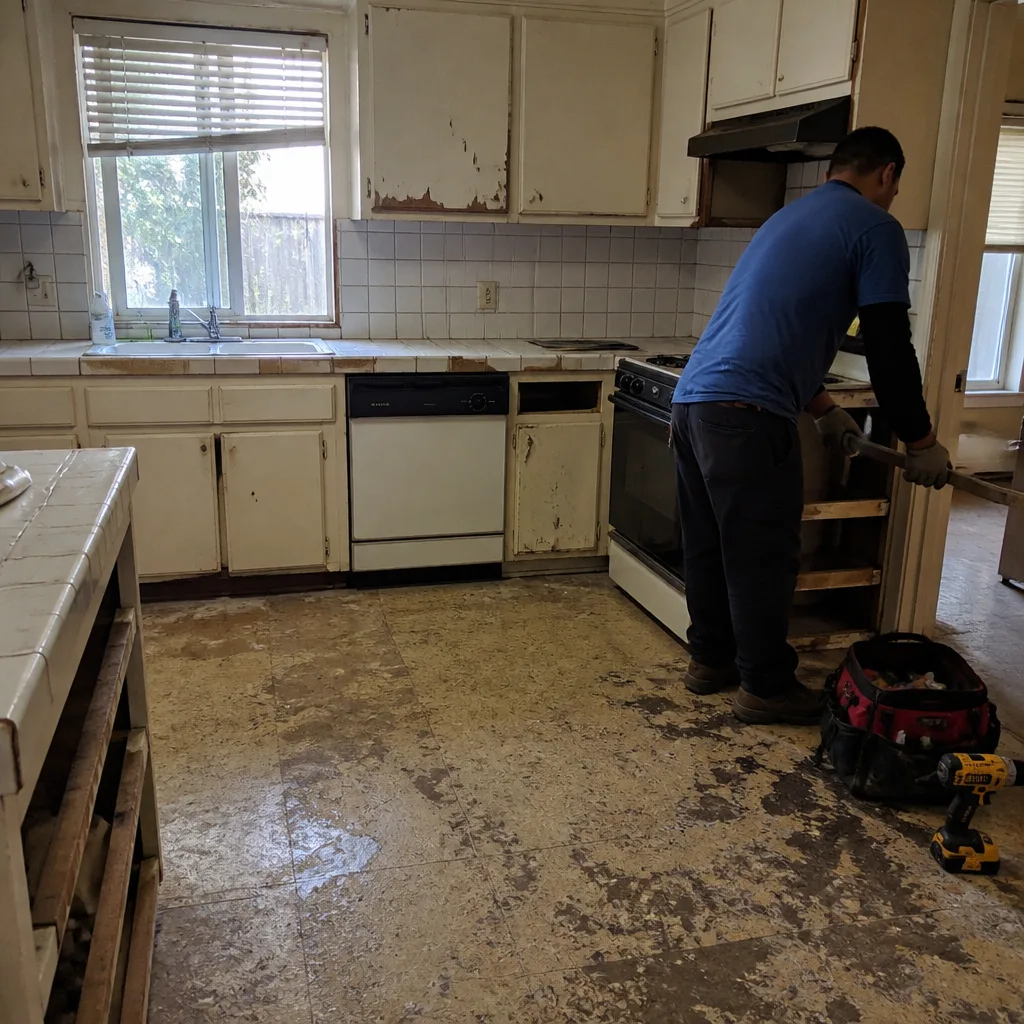
Removing old tile, vanity, toilet, and tub surround is the single biggest DIY labor saving in a bathroom remodel, often $600 to $1,500 in Lake Forest. It’s also the most physical day of the project. Two cautions. First, know what’s behind the wall before you swing: in homes built before the late 1980s you may find lead paint or asbestos-containing materials in old flooring and joint compound, and those need testing, not a sledgehammer. Second, protect what you’re keeping. A dropped hammer on a cast-iron drain can crack a fitting you won’t discover until the water’s back on.
Painting and Finish Work
Paint, caulk, trim, and a fresh coat on the ceiling are pure cosmetics with zero code exposure. Use a bathroom-rated paint with a mildew-resistant additive, and give it 72 hours of ventilation before you seal the room back up. In Lake Forest’s dry inland climate, paint cures faster in summer than homeowners expect – sometimes too fast – so don’t push a second coat before the first is truly set.
Fixture and Surface Swaps
- Replacing a toilet: Yes, with the right wax ring, flange in good condition, and a shutoff valve that actually closes. If the shutoff is seized or the flange is cracked, stop and call.
- Swapping a vanity: A freestanding or wall-hung vanity set into an existing plumbing location is doable. Moving the supply or drain is not.
- Mirror, shelving, towel bars: All cosmetic, all yours, as long as you hit studs or use proper anchors in tile.
- Showerhead and faucet trim: Replacing the visible trim and showerhead is homeowner-permissible. Replacing the rough-in valve behind the wall is not.
What We Would Never DIY
Skip these, no matter how many videos you’ve watched: any waterproofing membrane work, moving a drain or supply line, adding a dedicated circuit for a new fan or heated floor, anything that requires cutting into structural framing, and gas work if your home has a gas-fired feature. These are the tasks where the failure is slow, hidden, and expensive.
Why Tile Looks Like a DIY Job (And Why the Membrane Never Is)
Tile is the great deceiver of bathroom remodeling. It’s pattern work. It’s craft. It feels like the kind of thing a patient person can master with practice, and to be fair, a patient person can. The tile goes down, it looks beautiful, and you feel like you just saved $3,000. Six months later the grout line at the shower curb starts to darken, and eighteen months after that a Lake Forest homeowner is calling us about a spongy floor near the drain.
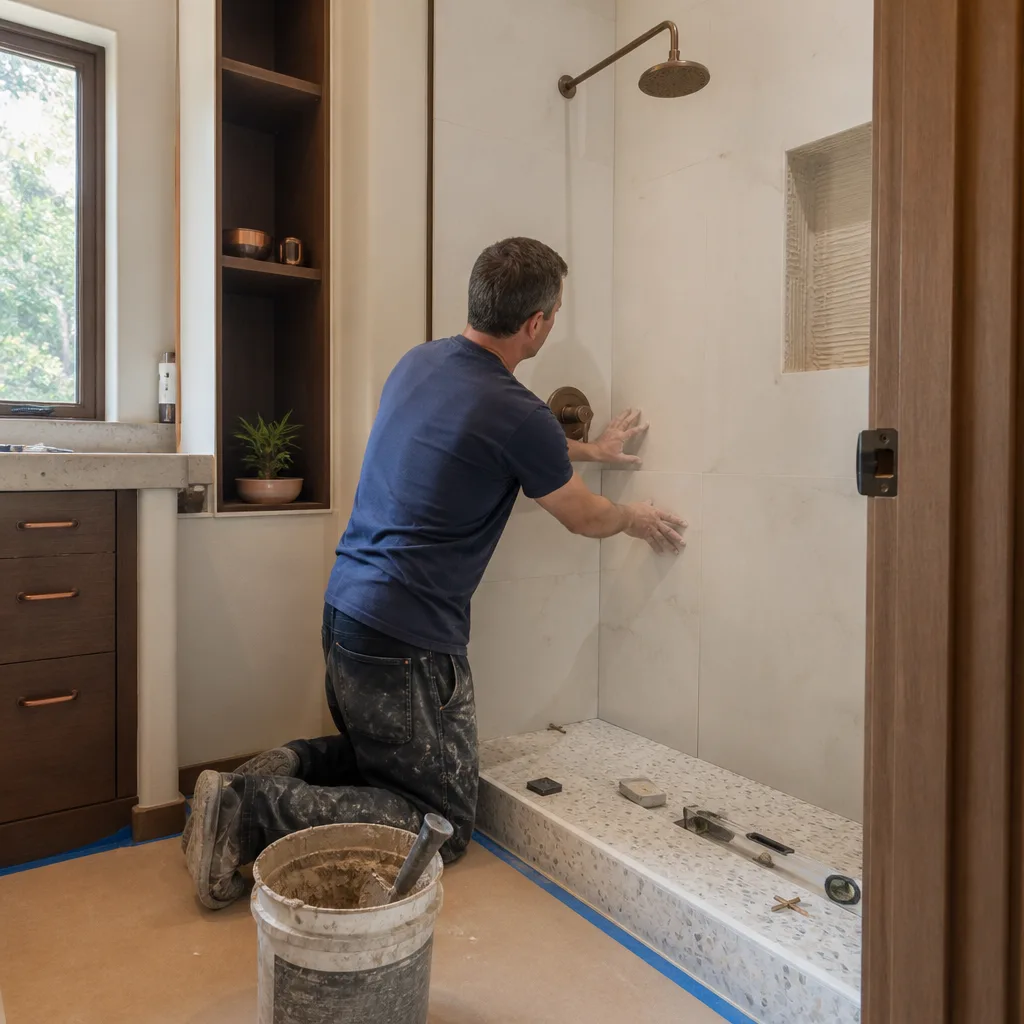
What happened isn’t the tile. It’s the layer underneath. The waterproofing membrane in a shower is a continuous, sealed envelope that ties into the drain flange, wraps the curb and the corners, and climbs the walls to a minimum height above the showerhead. In California, the code-compliant detail for a tile shower involves a sloped mortar bed or a pre-sloped foam pan, a bonded or liquid-applied waterproof membrane, fiberglass mesh at every change of plane, and a flood test before a single tile is set. That’s not a weekend craft project. That’s a sequence where every step depends on the one before, and the failure mode of getting any single step wrong is invisible until it’s structural.
Some specifics we check on every shower we build:
- The preslope is pitched 1/4 inch per foot toward the drain, and it’s pitched before the membrane goes down – not after.
- Inside and outside corners get pre-formed membrane pieces or mesh-reinforced liquid, never a folded sheet.
- The membrane passes a flood test – 24 hours of standing water – before tile goes up.
- The drain is a clamping two-stage drain, or a bonded flange system rated for the membrane being used.
- Wall board in the wet area is a cement or glass-mat product rated for wet service, not standard drywall with a coat of red sealer on it.
That last one alone accounts for a large share of the callbacks we get. Red liquid applied over greenboard is not a waterproofing system, even though it’s sold near one in the aisle. This is the point in the project where we tell Lake Forest homeowners the same thing every time: lay the tile yourself if you want, that’s craft, but do not build the envelope under it unless you’re ready to own the outcome for a decade. This isn’t just a finish detail, it’s the difference between a shower that lasts and one that leaks into the room below.
What California Building Code Says About Your Bathroom Remodel
California is stricter than most of the country about who can do what in a home, and Lake Forest falls under the same code regime that governs the rest of Orange County. The general rule: a homeowner may do work on their own residence, but any work that requires a building permit must be done by, or under the direct supervision of, a licensed contractor – and certain trades require a licensed professional regardless. Plumbing and electrical have their own licensing layers, and in practice that means moving a drain or adding a bathroom circuit isn’t a homeowner job.
The most common bathroom items that require a permit in Lake Forest and the surrounding Orange County cities:
- Moving or adding plumbing fixtures. Relocating a toilet, sink, or shower drain, or adding a new fixture line, triggers a plumbing permit and inspection.
- Adding or relocating electrical circuits, outlets, or fixtures in wet locations. New bathroom lighting, a vent fan on a new circuit, or a heated floor all pull an electrical permit.
- Water heater replacement if it’s a tanked unit with new venting or gas line work – common enough in bathroom-adjacent utility closets.
- Structural changes – moving a wall, enlarging a window, adding a skylight, building a curbless shower that requires floor framing changes.
- Converting a tub to a walk-in shower if it involves altering the drain or structural floor.
Note what isn’t on that list: painting, replacing a toilet in the same location, swapping a vanity in the same footprint, and hanging a mirror. Those are the safe DIY lane we covered earlier, and no inspector needs to see them. The list exists so that a Lake Forest homeowner can make a clean decision before calling a contractor: if the work touches the drain, the circuit, or the framing, you’re in permit territory, and permit territory means licensed professional.
One more piece of code that matters in every bathroom we build: ventilation. Every full bathroom needs a working exhaust fan sized to the room, venting to the exterior – not into the attic. In a Lake Forest home with an older fan, the most common failure is a fan venting into the attic insulation, which traps moisture and creates the exact mold problem the fan was supposed to prevent. If you’re swapping the fan yourself, confirm the duct actually terminates outside before you turn it on.
The Insurance and Resale Consequences of Unpermitted Work in Orange County
Here’s where the DIY conversation stops being about capability and starts being about liability. Unpermitted plumbing and electrical work in Orange County has two costs that homeowners rarely think about until they hit one: insurance and resale disclosure.
On the insurance side, a standard homeowner’s policy covers sudden, accidental water damage. It does not reliably cover “long-term seepage” – the slow leak behind a DIY shower that rots a subfloor over eighteen months. If an adjuster traces a claim to unpermitted plumbing with no inspection record, coverage becomes a fight, and in some cases a denial. The difference between “our shower leaked” and “our unpermitted shower leaked” is the difference between a covered claim and a wall of adjuster questions.
On the resale side, California requires disclosure. When a Lake Forest home goes on the market, the seller’s Transfer Disclosure Statement must disclose known unpermitted work, and a buyer’s inspector will flag the missing permit on the record at the city. That missing permit can mean a buyer walks, a price reduction, or a demand that the current owner retrofit or demolish before close of escrow. In Orange County’s price band, a half-remodeled bathroom with a permit problem can cost more at resale than the whole remodel ever saved. The arithmetic is sobering: a $4,000 DIY shower enclosure that voids a permit record can knock $20,000 off an offer.
There’s also the warranty layer. Groundwork Construction Co. of Lake Forest backs every project with a 730-Day Done Right Promise – if it’s not done right, we make it right – one of the longest workmanship guarantees in the residential construction space. You don’t get that guarantee on a DIY shower, and you can’t claim it on a project where the waterproofing was compromised by a later painter, a later light swap, or a later vanity install. Every task on the safe lane we outlined is one we’re happy to see you handle. But once you’re inside the envelope, the warranty conversation is part of the project planning, and it’s worth knowing before you start what you’re giving up.
Your Go/No-Go Decision Tree
Use this before you pick up a tool. Walk the questions in order, and the first “no” is your answer.
- Does the task touch water supply, drain lines, or the shower envelope? If yes, stop. Call a licensed plumber or a bathroom contractor. This is the highest-stakes category and the one where DIY mistakes cost the most.
- Does the task add or move any electrical circuit, outlet, or fixture in a wet location? If yes, stop. Electrical in a bathroom is not a homeowner task in California, even a small one.
- Does the task change framing, a wall, a window, or the floor structure? If yes, stop. Structural work requires a permit and a licensed contractor.
- Is the work in the same location and footprint as what you’re replacing? If no – a moved toilet, a converted tub, a relocated vanity – stop. You’re in permit territory even if the task looks cosmetic.
- Does the task sit on top of work you’re already having inspected? If yes, coordinate the order. Paint goes after the tile and the inspection, not before. This is exactly the mistake from our opening story.
- Is the task cosmetic and inside the existing footprint (paint, trim, replacing a toilet, swapping a vanity, hardware, mirror)? If yes, you’re in the safe lane. Go do it.
When the answer is “no” at step 1, 2, or 3, don’t re-run the question hoping for a different result. The cost isn’t in the work itself. It’s in the inspection record, the insurance claim, and the resale disclosure you’ll eventually have to sign. If the answer is “no” at step 5, you’re not really asking a DIY question – you’re asking a scheduling question, and that’s a contractor conversation.
Common Mistakes to Avoid
- Painting before the tile is set and inspected. Going back to our opening story – a Lake Forest homeowner saved $400 on paint and voided a $12,000 waterproofing install by taping and priming over a shower membrane before it was signed off. Paint is the last step, not the first.
- Laying tile over greenboard with red sealer. This is the single most common non-permitted shower failure we see. Greenboard with a coat of red liquid is not a waterproofing system, and it does not pass a flood test. In a Lake Forest shower, the board under the tile should be a cement or glass-mat product rated for wet service.
- Skipping the city permit to save time. Orange County cities can and do flag unpermitted work at resale, and a missing permit record on a bathroom can delay a sale or reduce the offer. A permit costs a fraction of the resale hit.
- DIYing a drain relocation because the tile is already out. This is the most common “while we’re in here” temptation. Every square foot of exposed floor makes moving the drain feel cheap. It isn’t – it’s a licensed plumbing item and a permit every time.
- Venting the new exhaust fan into the attic. Common, quiet, and costly in a Lake Forest home with older attic insulation. The fan needs to duct to the exterior, not stop at the attic floor.
- Doing structural or framing work inside the wet-area envelope. A curbless shower conversion often looks like a finish task and is actually a framing change. That’s structural, and structural is never homeowner work.
- Buying tile before the layout is set. DIY tile orders frequently come up 15 to 25 percent short of what’s needed for a proper layout with cuts, waste, and a spare box for the 730-day future. Buy the extra now, not in six months when the dye lot is gone.
See the difference
 Before
 After
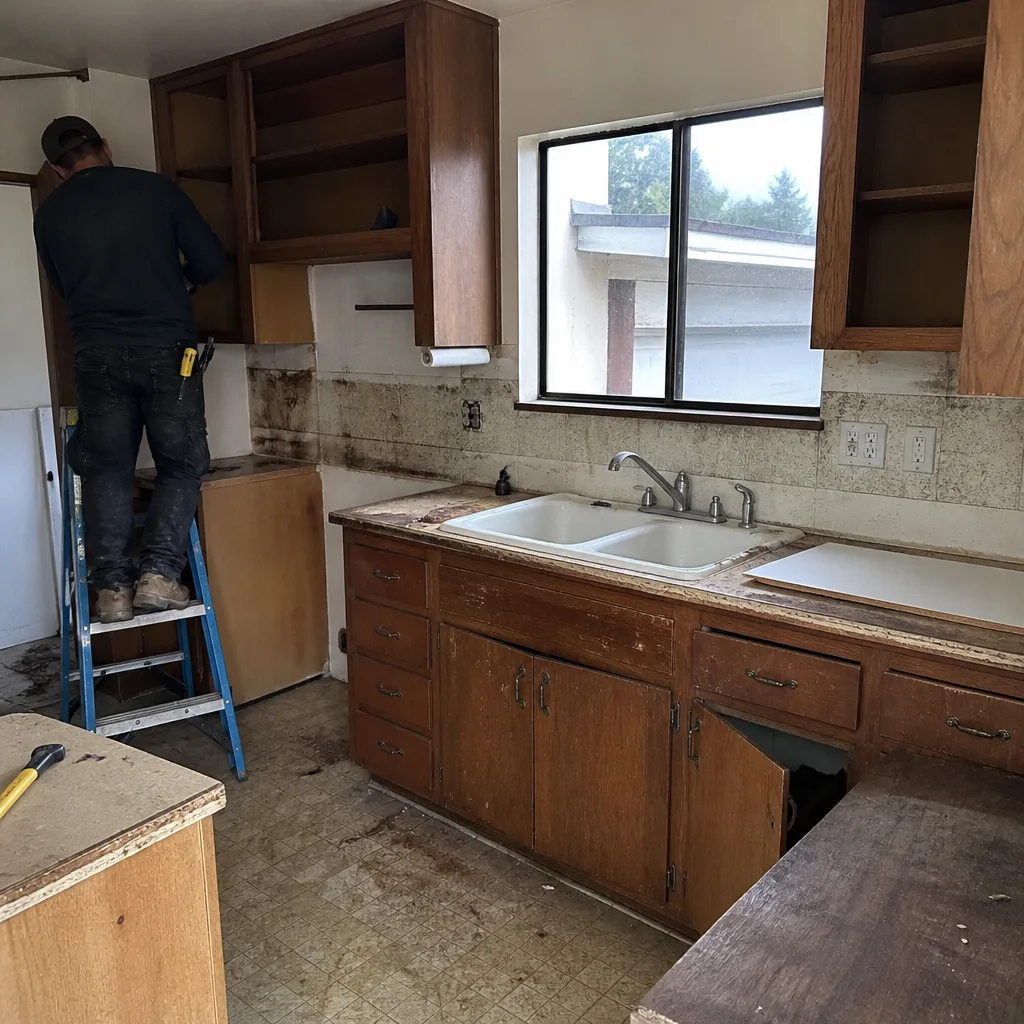 Before
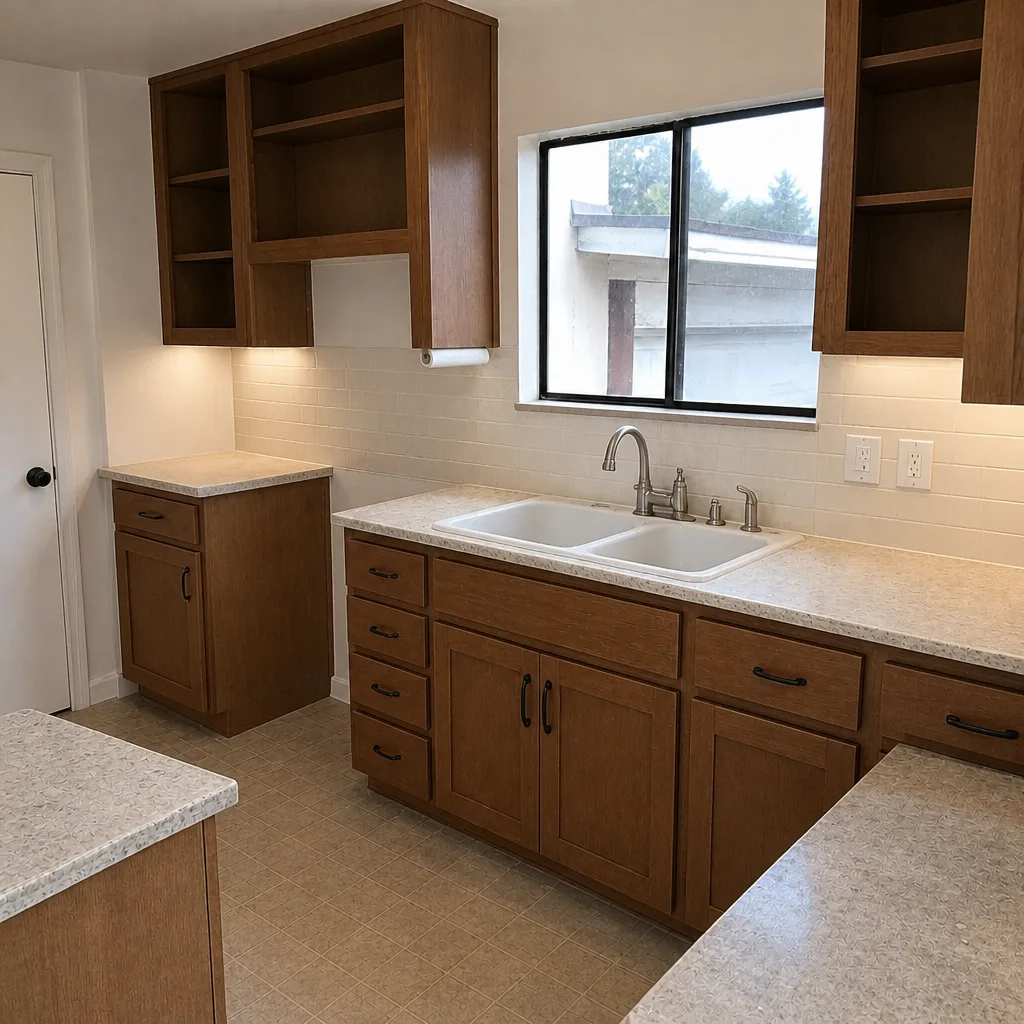 After
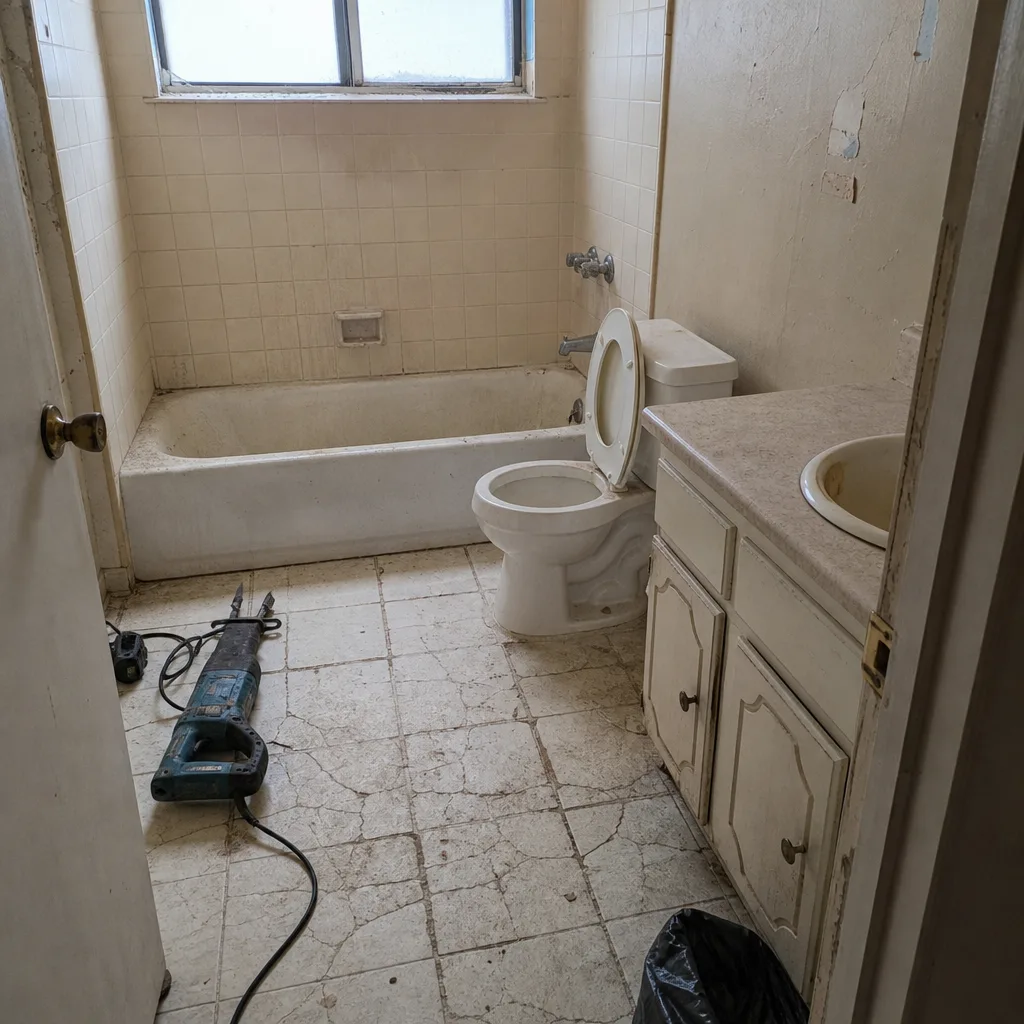 Before
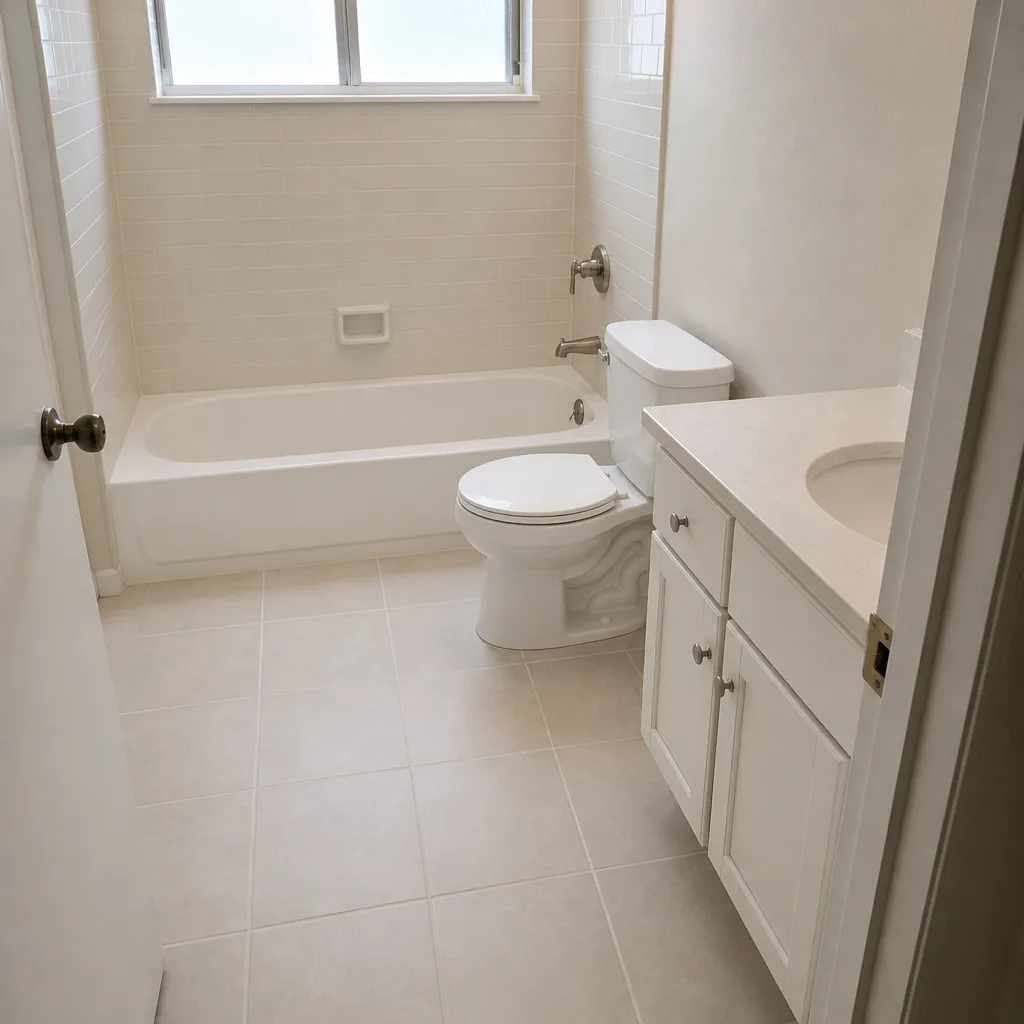 After
When to Call a Professional
Call a licensed bathroom contractor in Lake Forest the moment your project touches the shower envelope, the drain, the circuit, or the framing – those are the four categories where DIY turns from a savings into a liability. Call us too if the work is larger than one task, if the permit record matters to your home’s resale, or if you’ve already had a failed DIY attempt and need a clean rebuild. And call us before you paint over anything a manufacturer has to inspect, because the warranty conversation starts long before the paint goes on. Groundwork Construction Co. of Lake Forest offers free estimates in Lake Forest – call (855) 532-8973. Our technicians have up to 12 years of experience, they call, and they show up in uniform, background-checked and ready to work. From foundation to finish line, with upfront pricing that means the number you see is the number you pay, we’re the partner for the parts of your Lake Forest remodel that have to be done right the first time.
Frequently Asked Questions
The safe DIY list in Lake Forest is cosmetic and inside the existing footprint: demolition, painting, caulk and trim, replacing a toilet in the same location, swapping a vanity in the same footprint, installing a mirror, and replacing showerhead and faucet trim. Anything that touches the drain, a circuit, or the framing is off the list. If you’re not sure which lane a task is in, call us – the free estimate includes a quick read on what’s safe to hand off.
The tile isn’t the problem – the waterproofing membrane underneath it is. A code-compliant California shower needs a sloped pan, a continuous waterproof membrane tied to the drain, mesh at every corner and change of plane, and a 24-hour flood test before tile goes up. One missed corner or a sheet folded instead of pre-formed lets water into a wall where it stays hidden for months. Call (855) 532-8973 if you want your shower envelope built right.
You need a permit for any plumbing relocation, any electrical work on a circuit, any structural change, and any alteration to the wet-area envelope that requires an inspection – a tub-to-shower conversion, for example. Paint, a toilet swap in the same place, and a vanity swap in the same footprint don’t require one. When in doubt, call (855) 532-8973 and we’ll tell you whether the work you’re planning triggers a permit in Lake Forest.
Yes, and usually more than the work cost to DIY in the first place. California’s Transfer Disclosure Statement requires sellers to disclose known unpermitted work, and buyers’ inspectors flag the missing permit at the city. In Orange County, an open bathroom permit is a common reason for a price reduction or a demand to correct before close. Call (855) 532-8973 if you’ve inherited unpermitted work and want a clear path to making it right.
The early warning signs are grout darkening at the shower floor and curb, a spongy or flexing floor near the drain, efflorescence (that white mineral haze on the grout), and a musty smell that doesn’t go away with ventilation. Any one of these in a Lake Forest shower means water is getting into the assembly – stop using the shower and get it evaluated. Call (855) 532-8973 and we’ll take a look before the damage spreads.
A full bathroom remodel in Lake Forest commonly runs a wide range depending on size, finish level, and whether fixtures are relocated – but every Groundwork project starts with a written, upfront number, not a ballpark. We also offer 0% financing for 18 months and $1,000 off projects over $10,000, so the five-figure job can be planned rather than panicked. Call (855) 532-8973 for a free estimate and design consult.
The Bottom Line
DIY bathroom remodeling saves real money in a narrow lane: demolition, painting, cosmetic swaps, and same-footprint replacements. Outside that lane, the task stops being about your capability and starts being about water, structure, and code – and those three categories can cost more than the whole remodel if they go wrong. The safe path is to keep the cosmetic lane for yourself and hand the system and structural work to a licensed contractor, so the inspection record, the insurance coverage, and the resale disclosure all reflect a bathroom that was done right. If you want the full-scope read on your Lake Forest bathroom before you start, we’re happy to walk it with you. For the rest of the house, our team also handles Driveway & Pavers in Lake Forest and Fence Installation in Lake Forest, and if your project grows into new square footage, see Home Additions & ADU in Lake Forest. Start at our Groundwork Construction Co. of Lake Forest home page for the full picture.
Call Groundwork Construction Co. of Lake Forest at (855) 532-8973 to schedule your free estimate. We’re a full-scope construction partner for the parts of your bathroom that have to be done right the first time, backed by the 730-Day Done Right Promise and upfront pricing – the number you see is the number you pay.
Written by the team at Groundwork Construction Co. of Lake Forest.