Last updated November 18, 2026
Free written scope consultation - allowances, timeline, and change-order rules on paper before a single trade is scheduled
How Long Does Bathroom Remodeling Take? Timelines and What to Expect
The average bathroom remodel takes 3 to 5 weeks. But “average” is a statistical fiction that includes jobs where everything went right, and in Lake Forest homes built between 1980 and 2000, surprise is practically a line item. Cast iron drains that have quietly corroded since Reagan was in office, tile set over drywall with mastic, and walls that hide a previous owner’s “weekend project.” This guide breaks down where the time actually goes: demo, rough-in, waterproofing cure times, tile set, grout cure, fixtures, and punch list. You’ll learn why waterproofing is the most rushed phase in budget remodels, how custom materials add weeks no one controls, and what payment schedule protects you when a timeline slips. By the end, you’ll be able to read a contractor’s schedule like a builder.
Quick Answer
A full bathroom remodel in Lake Forest typically takes 3 to 5 weeks of active construction time, and most homeowners should plan for 5 to 8 weeks total from demolition to final walkthrough once you factor in material lead times and permit review. A simple cosmetic refresh (vanity, fixtures, paint) can finish in 10 to 14 days, while a layout change or shower relocation runs 6 to 9 weeks. The single biggest variable isn’t labor speed, it’s what’s behind your walls and when your tile and fixtures actually arrive.
Styles & brands we work with
- Kitchen remodeling
- Bathroom remodeling
- Home additions & ADU
- Roofing
- Windows & doors
- Driveway & pavers
- Fence
Table of Contents
- A Phase-by-Phase Breakdown: Where the 3 to 5 Weeks Goes
- Why Waterproofing Cure Time Is Non-Negotiable
- Material Lead Times: The Weeks That Have Nothing to Do With Labor
- Three Surprises in Older Lake Forest Homes That Add 5 to 10 Days
- Realistic Timelines by Remodel Type
- What a Realistic Payment-and-Progress Schedule Looks Like
- Permits, Inspections, and Lake Forest Code
- Materials, Brands, and What They Mean for Your Calendar
A Phase-by-Phase Breakdown: Where the 3 to 5 Weeks Goes
When a contractor hands you a single number like “two weeks,” they are either guessing or hiding complexity. A real bathroom schedule is built from sequence: each phase depends on the one before it, and some phases can’t be accelerated no matter how many people you put on the job. Here’s how a typical 4-week bathroom remodel breaks down, phase by phase.
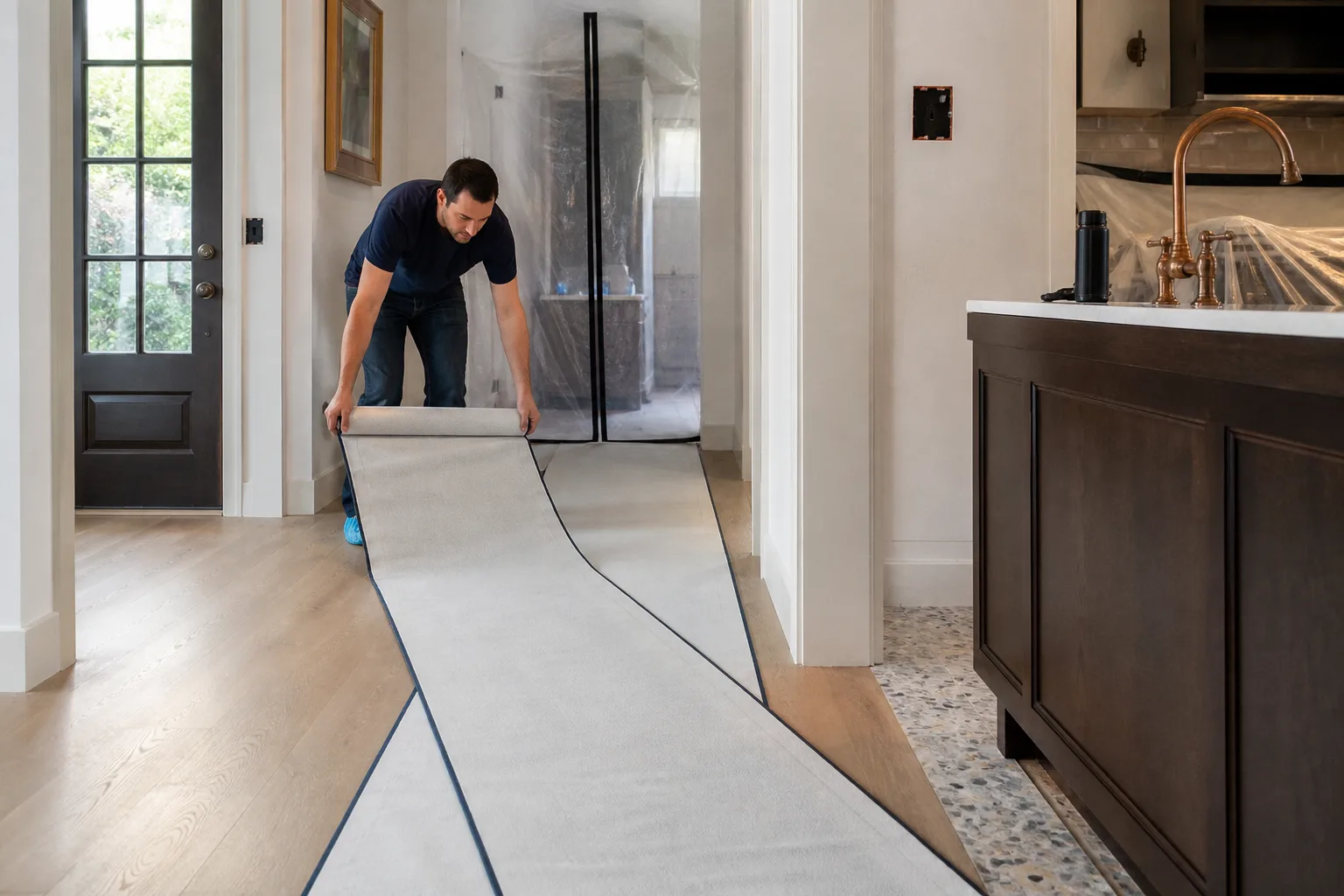
- Demo and site protection – 1 to 2 days. Tear-out of the old tub, tile, vanity, and toilet. This is where a job either reveals itself as clean or opens a can of worms. Hitting a soft subfloor or a wet wall takes the schedule from 4 weeks to 5 before lunch on day two.
- Rough-in plumbing and electrical – 3 to 5 days. New drain lines, supply lines, and electrical circuits get run and inspected. If you’re relocating the shower or moving the toilet, add 2 days. Panel work in older homes often needs its own inspection window, which can slip a day or two depending on the city.
- Inspection and sign-off – 1 to 2 days. Rough plumbing and electrical inspections have to pass before the walls close. This is a scheduled appointment, not a walk-on.
- Insulation and drywall – 2 to 3 days. Hanging, taping, and mud. Drywall mud needs time between coats, which is why a good drywall finish can’t be rushed into a single day.
- Waterproofing – 2 to 4 days including cure time. The membrane goes in, then it has to cure before tile gets set. This is the phase budget remodels skip and it’s the one that costs you years later.
- Tile set and grout – 5 to 8 days. Wall tile first, then floor tile. Grout cure alone is typically 24 to 72 hours before you can seal or use the shower.
- Fixtures, vanity, and finishes – 3 to 5 days. Toilet, vanity, faucets, shower valve trim, lighting, exhaust fan, mirrors, and hardware.
- Punch list and walkthrough – 1 to 2 days. Caulk touch-ups, paint touch-ups, and a final walk with you.
Add it up honestly and you land at 3 to 5 weeks of active work, and 4 to 6 weeks with buffer. In a Lake Forest home from the mid-1980s, that honest number is almost always closer to the high end.
Why Waterproofing Cure Time Is Non-Negotiable
Waterproofing is the most commonly rushed phase in budget bathroom remodels, and it’s also the reason half the “budget” bathrooms we tear out are failing within a few years. A curing membrane like a Schluter system or a liquid-applied roll-on has a manufacturer-specified cure window before tile can go over it. Skip that window and the mortar won’t bond, or the membrane itself fails from trapped moisture. It’s not a sales pitch. It’s chemistry.
In our experience, budget contractors cut cure time to stay inside a two-week promise, because a two-week promise is impossible without skipping steps. If your contractor’s timeline requires a membrane to cure in four hours, that’s a red flag, not a shortcut.
What a proper waterproofing phase looks like:
- Day one: substrate prep and primer. Cement board or backer board gets installed over the wet area.
- Day one or two: membrane application. Pre-formed shower pan corners and seam bands get placed on any Schluter-type system.
- Day two to four: full cure. Manufacturer specs typically call for 24 to 72 hours depending on product, humidity, and ambient temperature.
- Flood test: a 24-hour flood test is a smart check on any pan, and it’s the cheapest insurance you’ll ever buy.
Lake Forest’s inland climate helps here. Our low coastal humidity means exterior-facing walls and shower enclosures dry faster than a home in, say, a wetter climate, but the inside of a shower is a sealed envelope. Interior humidity from a running exhaust fan and a recent drywall mud buildup means ambient moisture is often higher than trades assume. We build cure time into the schedule, every job, because the 4 days you “save” cost $6,000 to $12,000 in tile tear-out when the shower leaks into the garage below.
Material Lead Times: The Weeks That Have Nothing to Do With Labor
Here’s the part of a timeline most homeowners don’t see until it delays the job: labor and materials run on two different clocks. A crew can rough-in plumbing in three days. A custom tile can take three weeks to arrive. If the two clocks aren’t synced before demo day, your contractor is standing around drinking coffee on your dime or they’re pushing the schedule into month two.
The materials that quietly add time:
- Custom and specialty tile. Standard porcelain is 3 to 7 days from a local supplier. A custom patterned or imported tile can run 3 to 6 weeks.
- Frameless glass shower enclosures. Templated after tile is installed, then fabricated. Add 2 to 3 weeks from template to install. Glass can’t be ordered until the tile is done, which means it’s almost always the last phase.
- Specialty fixtures. Freestanding tubs, custom vanity tops, wall-mount toilets with in-wall carriers, and high-end fill valves like Grohe fixtures can run 4 to 8 weeks when not in local stock.
- Custom cabinetry. A KraftMaid or equivalent semi-custom vanity runs 3 to 6 weeks. In-stock RTA or box-store vanities ship in a week, and the quality difference is visible in a season.
- Backordered trim and hardware. Faucets, tub fillers, and shower valve trim in a specific finish can hit backorder windows of 6 to 10 weeks with zero warning.
What this means for your schedule: the smart order of operations is to lock in materials before demo starts. We ask clients to finalize tile, fixtures, and vanity selections two to three weeks before demolition, so the truck arrives on the day the tile setter shows up.
Three Surprises in Older Lake Forest Homes That Add 5 to 10 Days
Lake Forest has a specific housing stock. Neighborhoods like Foothill Ranch, Portola Hills, and the older tracts off El Toro Road were mostly built between the early 1980s and the early 2000s. That means we’re working in houses with 30-plus years of settled construction and sometimes multiple generations of renovation on top. Three scenarios show up often enough that we schedule for them.
1. Asbestos in flooring, mastic, or drywall joint compound
Homes built before the mid-1980s often have vinyl floor tile, sheet vinyl, or the mastic underneath containing asbestos. If your bathroom was built in the early to mid-1980s, it’s worth having the floor and any suspect materials tested before demo. Testing costs $50 to $150 per sample and takes 2 to 5 business days. If asbestos is present, abatement adds 3 to 5 days and typically $800 to $2,500 depending on scope. This is a legal and safety issue, not an optional upgrade. Nobody on the job should be tearing into suspect material without a lab result.
2. Cast iron drain and waste line replacement under slab
Older Lake Forest plumbing often uses cast iron drain lines that have corroded from the inside out. During demo, you find out because the drain line crumbles when the crew removes the old tub drain. Replacing the waste line runs 2 to 4 extra days and $1,500 to $3,500, and it rarely shows up on a pre-construction estimate because you can’t see it until you open the floor. A camera inspection before demo can catch it and pull that surprise forward.
3. Load-bearing wall proximity and header work
A significant number of Lake Forest bathroom remodel questions we hear involve opening up a wall between the bathroom and an adjacent closet or hallway. If the wall you want to move is load-bearing, the header and structural work has to be engineered, permitted, and inspected. That adds 5 to 10 days to the sequence and requires a structural engineer’s stamp. A smart contractor flags this during the design consult, not after the wall is open. Structural change is not a same-week add.
These aren’t scare stats. They’re the reason we walk every older bathroom before quoting it, and the reason we write line-item allowances into the contract for concealed conditions. If the allowance doesn’t get used, you don’t pay it.
Realistic Timelines by Remodel Type
Here’s the honest timeline range for the most common bathroom remodels we see in Lake Forest. These numbers assume a complete scope, a local permit pulled, and materials selected before demo. They include standard cure times. They do not assume the surprises above, which is why a real schedule carries a one- or two-week contingency.
- Cosmetic refresh (new vanity, fixtures, paint, no tile, no layout change): 10 to 14 days.
- Guest or hall bath basic remodel (new tile floor, tub surround, vanity, fixtures, same layout): 3 to 4 weeks.
- Primary bath full remodel (walk-in shower, freestanding tub, tile everywhere, new vanity, new layout): 4 to 6 weeks.
- Primary bath with layout change (moving the toilet, relocating the shower, new plumbing rough-in): 6 to 9 weeks.
- Accessibility remodel (curbless entry, grab bars, roll-in shower, widened doorway): 5 to 8 weeks, plus 5 to 10 days if the doorway involves a header or load-bearing wall.
- Two bathrooms at once: 6 to 9 weeks. The two-clock overlap only roughly doubles, because crews can sequence materials and inspections more efficiently.
A full pricing table belongs on a cost guide, not here. What matters for the timeline conversation is scope: the second a wall changes function, not just finish, the schedule grows. If you’re also looking at a home addition or ADU in Lake Forest, plan bathroom work as part of the larger sequence rather than a standalone project, because both compete for the same inspections and trades.
What a Realistic Payment-and-Progress Schedule Looks Like
A contractor who says “trust me on the timeline” is asking you to trust a verbal promise. A fair payment schedule is written down, tied to milestones, and tied to the work you can see with your own eyes. This is how you hold a contractor to a schedule without becoming the client who calls the foreman at midnight.
A common, fair structure looks like this:
- Deposit at contract signing: 10% to 15% of contract value. This books the crew and orders standard materials.
- Demo completion: 15% to 20% due when demo and rough-in pass, and any concealed condition I discovered has been documented in a written change order you signed.
- Rough inspection passed: 15% to 20%. This is your first physical checkpoint. If the inspection passes, the progress is real.
- Waterproofing and tile set complete: 20% to 25%. By this point more than half the value of the work is visibly in the room.
- Fixtures and finishes installed: 15% to 20%.
- Final walkthrough and punch list: final 10%, due after you and the company have signed off on the punch list.
Two rules protect you as a homeowner. First, keep the final payment meaningful: 10% is enough to make a contractor care about the punch list. Second, never pay ahead of completed work. If a schedule asks for 50% before demo starts, that’s not a payment schedule, it’s a financing plan that puts the contractor’s interests ahead of yours.
Also confirm with any contractor you hire: how are change orders documented, and who signs off before work continues? A written change order in writing is the difference between a controlled schedule and a slow bleed.
If you’re also planning exterior work around the same time, understand that site work has its own season. Fence installation in Lake Forest and driveway and pavers in Lake Forest should be sequenced around the bathroom project, not overlapping, so inspections and crew schedules don’t collide.
Permits, Inspections, and Lake Forest Code
Permits are the most misunderstood part of a bathroom timeline. Homeowners often assume a permit is just paperwork the contractor handles. What actually happens is a scheduled inspection appointment, and a failed inspection costs a day or two per cycle in rescheduling alone. Getting the permit right is a schedule item, not a formality.
In the City of Lake Forest, a bathroom remodel that alters plumbing, electrical, or structural elements requires a permit. Typical requirements:
- Plan review: 2 to 4 weeks from submittal to permit issuance on a standard bathroom remodel. Larger layout changes that involve structural work can run 4 to 6 weeks.
- Inspections: rough plumbing, rough electrical, and structural if applicable. A final inspection closes the permit. Each inspection requires lead time to schedule.
- Title 24 and ventilation: exhaust fans and lighting controls must meet state energy code. Field verification typically happens at rough inspection.
- Change directive: if work proceeds without a permit on permitted scope, the city can require removal and re-inspection. That turns a 5-week job into a 10-week job.
Two details worth knowing in Lake Forest specifically. First, most of the city’s housing stock sits in HOA territory, and HOA architectural approval can run 2 to 6 weeks for exterior changes. Interior-only bathroom remodels usually don’t need HOA approval, but confirm with your HOA board before work begins if any exterior vent relocation or window change is involved. Second, if your bathroom project touches a second-story wet wall, most of Lake Forest’s older homes have a first-floor ceiling plane beneath the shower, which means concrete board underlayment and plumbing access requirements mean the drywall crew sequences around inspections differently than a single-story home.
Any permit pulled should be pulled in the homeowner’s name with the contractor listed, so you have paperwork as evidence of completed inspections. Ask your contractor to hand you the permit number in writing. It’s your home; the permit is your record.
Materials, Brands, and What They Mean for Your Calendar
Brands aren’t just a marketing line. They’re a schedule variable. A named, reputable brand is more likely to have local stock, a manufacturer’s warranty, and replacement parts available on short notice. An unnamed imported fixture is a schedule risk when it fails at punch list, and a waterproofing system like Schluter is a schedule risk when the local supplier is out of corner bands. Here’s how to think about brand and time together.
We work with a curated group of manufacturer partners across every category. In bathrooms that means we recommend and stock standard lines from brands we trust, and we flag custom lines that carry a longer lead time. Yes, a partner catalog speeds up the schedule, but the real value is a warranty behind the material. A manufacturer’s warranty, combined with the 730-Day Done Right Promise, means if something fails you’re covered from both the product side and the workmanship side. That’s the whole point of choosing quality over whatever’s in stock.
A few concrete schedule rules:
- Standard product lines from a known brand are typically stocked at local suppliers and arrive in 3 to 7 days.
- Custom colorways and finishes add 2 to 6 weeks, no matter the brand.
- Glass and mirror are templated after tile, which means they’re always the last item on the calendar, not the first.
- Products with proprietary installation systems (a Schluter shower system is the classic case) have a learning curve and a supplier-availability layer. Factor that into cure time and delivery time.
The pragmatic rule: pick the finish, not the brand, and let a contractor tell you which finishes add weeks. That’s a 10-minute conversation that saves four weeks of waiting.
Common Mistakes to Avoid
- Accepting a two-week timeline on a full replacement. It cannot be done without skipping waterproofing or cure time. If a contractor promises it, ask them what they plan to cut, then walk away.
- Selecting materials after demo. This is the single biggest timeline killer we see. Lock tile, fixtures, and vanity two to three weeks before demo, or accept a schedule slip.
- Skipping the pre-demo camera inspection. On a Lake Forest home built before 2000, a $150 drain camera read catches cast iron corrosion before it becomes a mid-project surprise. Skipping it is how a 4-week job becomes 6.
- Ignoring the HOA and permit calendar. Two to four weeks of plan review plus a 2 to 6 week HOA approval is common in Lake Forest. Start paperwork before you buy a single tile.
- Approving a contract with no change-order process. “We’ll handle it” is not a process. Insist on written change orders before any additional work or charge.
- Removing a load-bearing wall “to open things up” without engineering. In older Lake Forest homes, that wall is often load-bearing, and the result is a 5 to 10 day engineered schedule plus a permit the original plan never included.
- Paying too much before work is completed. A 50% deposit before demo is not a payment schedule. Keep at least 10% for the final punch list, held until the work is signed off.
See the difference
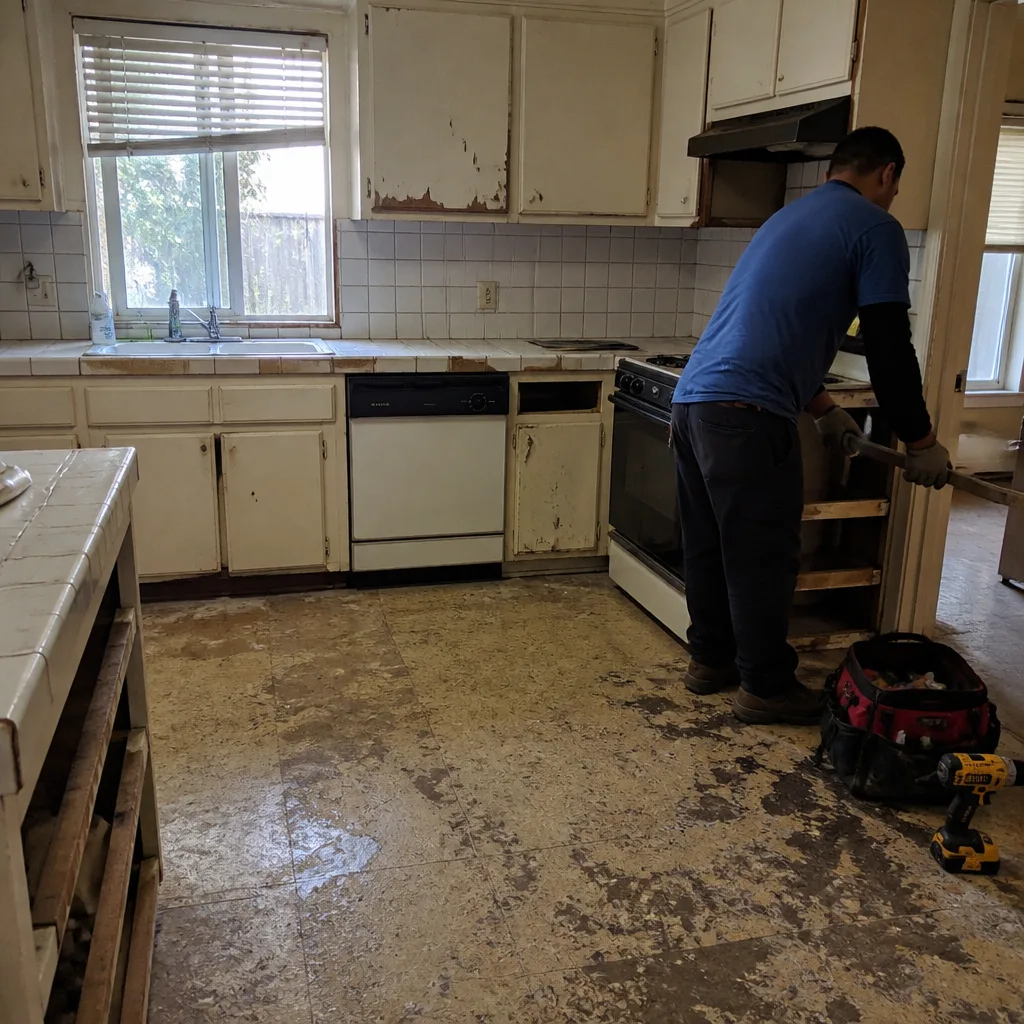 Before
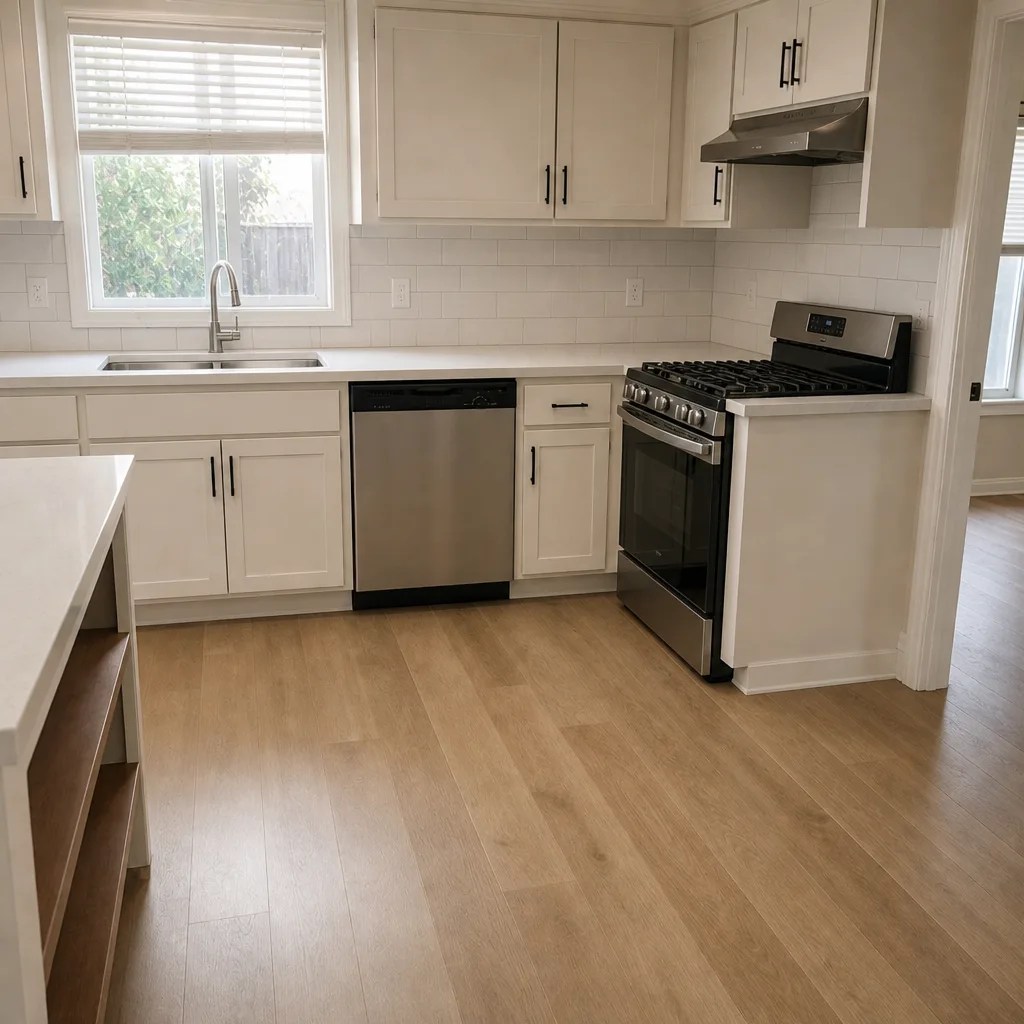 After
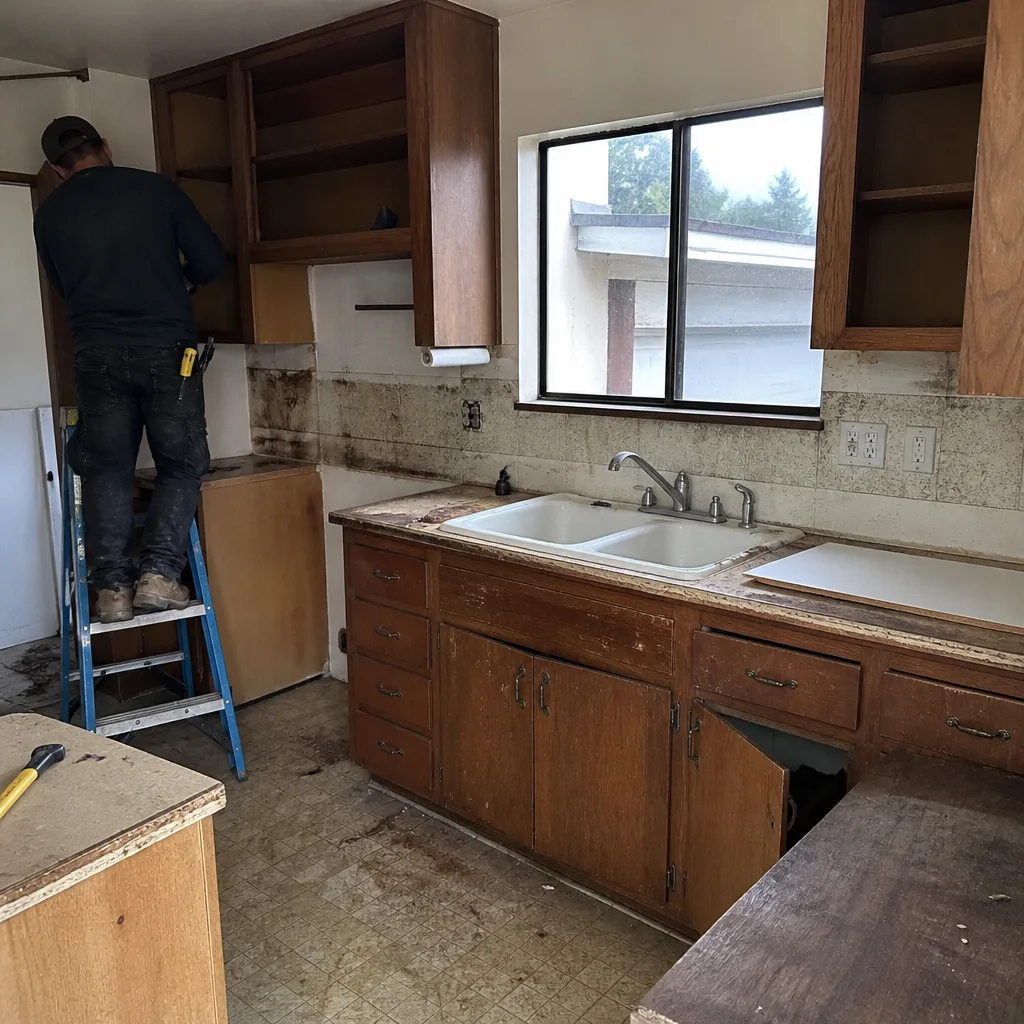 Before
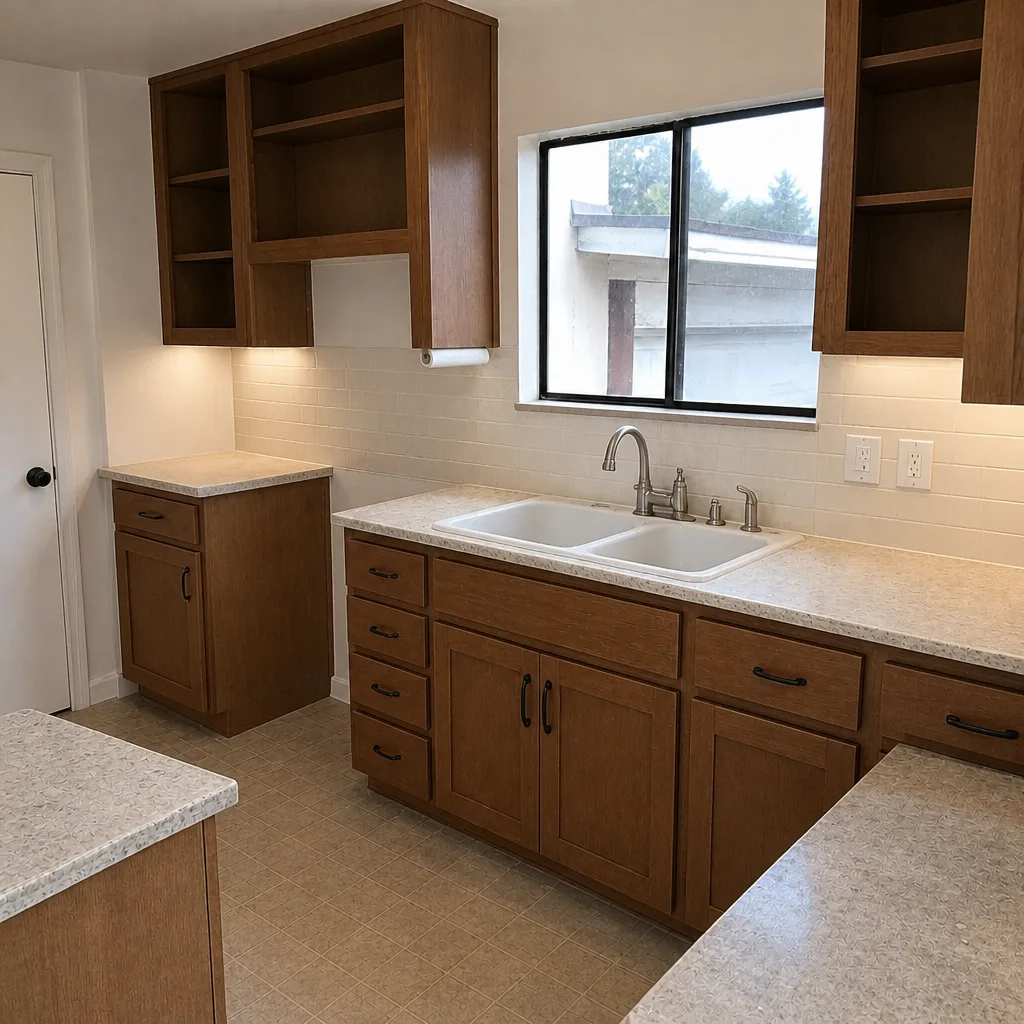 After
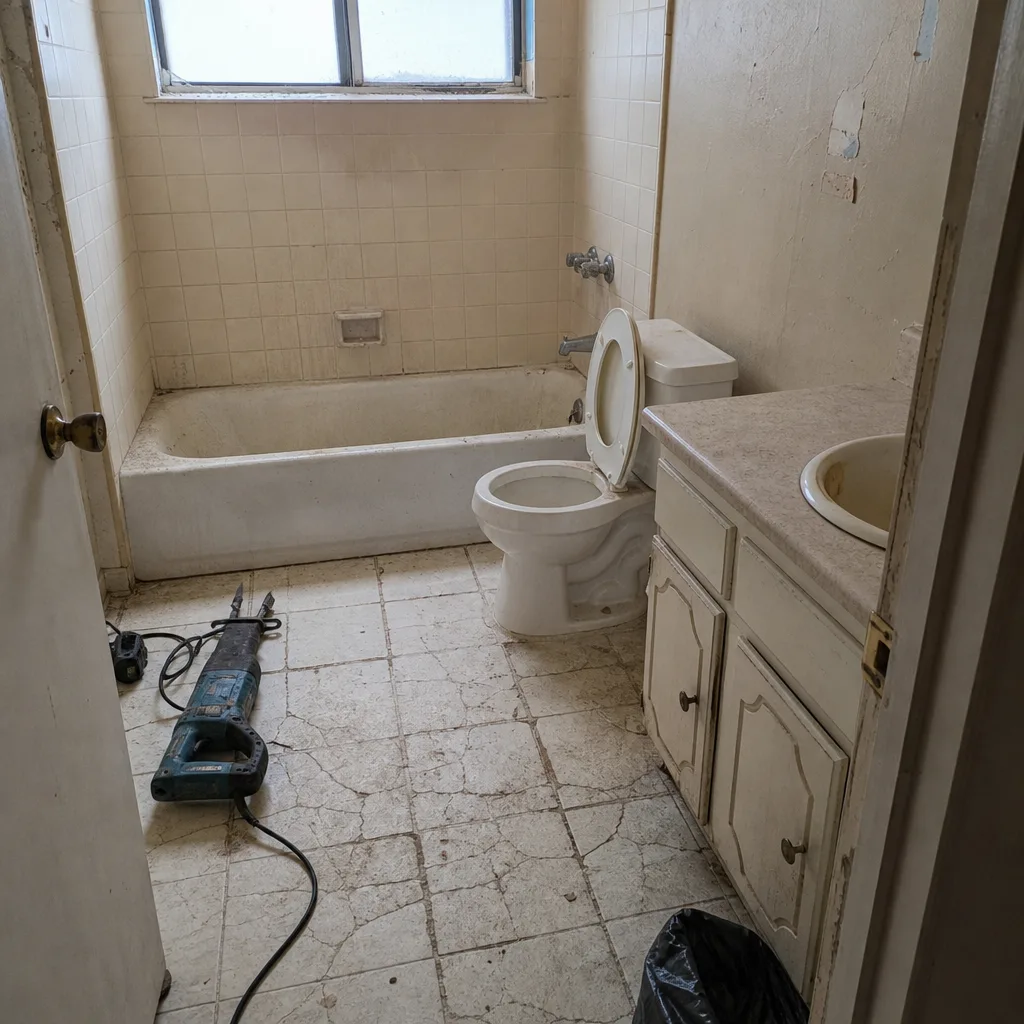 Before
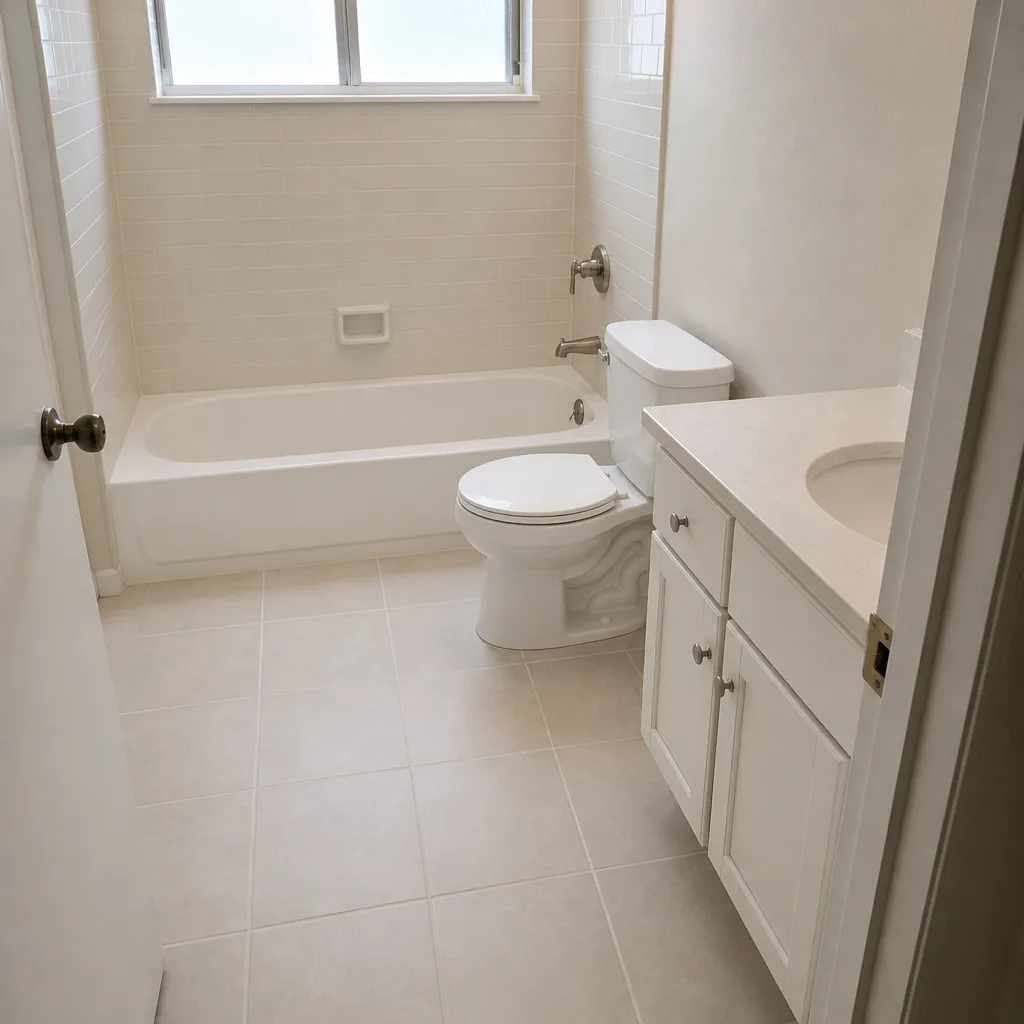 After
When to Call a Professional
Call a professional before you demo anything if any of these apply: your bathroom shares a wall with an exterior wall or a load-bearing wall you want to remove; your home was built before the mid-1980s and the flooring or mastic testing is unknown; your drain lines are cast iron and you haven’t run a camera; you smell sewage or see staining at the base of the toilet; or your plan changes the plumbing layout. A failed DIY shower pan can cost $8,000 to $15,000 to fix, because the leak almost always reaches the ceiling below before you see it. The tile looks easy. The waterproofing isn’t. Groundwork Construction Co. of Lake Forest offers free estimates in Lake Forest – call (855) 532-8973 to schedule yours. Every project comes with a written line-item quote and our 730-Day Done Right Promise.
Frequently Asked Questions
A full bathroom remodel in Lake Forest takes 3 to 5 weeks of active construction and 5 to 8 weeks total from start to final walkthrough once permits and material lead times are counted. Cosmetic refreshes finish in 10 to 14 days, while a layout change with plumbing relocation runs 6 to 9 weeks. Call (855) 532-8973 for a free estimate and a schedule specific to your bathroom.
No. A two-week timeline on a full bathroom replacement requires skipping waterproofing cure time, grout cure, or inspection windows, and those skips are exactly what causes leaks and tile failure within a few years. A cosmetic refresh can finish in two weeks. Anything involving new tile, a new shower, or new plumbing cannot. Call (855) 532-8973 to get a realistic schedule in writing.
A basic hall or guest bath remodel in Lake Forest typically runs $18,000 to $35,000, a primary bath full remodel runs $35,000 to $65,000, and a primary bath with layout change runs $65,000 to $110,000. The spread depends mostly on tile selection, fixture grade, and whether concealed conditions like cast iron drain replacement are found. Call (855) 532-8973 for a free, line-item estimate – the number you see is the number you pay.
Not on scope you’ve agreed to. On a Lake Forest home built before 2000, concealed conditions (asbestos-containing material, cast iron drains, hidden water damage) sometimes appear during demo. A well-written contract covers those with a pre-agreed written change order, not a verbal surprise. Groundwork Construction Co. of Lake Forest uses upfront pricing with no surprises and written change orders before any added work. Call (855) 532-8973 for a free estimate.
Yes. Any permitted scope requires a permit pulled in the City of Lake Forest, and we handle plan review, submittal, and inspections as part of the schedule. A 2 to 4 week plan review window is built into the timeline. You’ll receive the permit number in writing for your records. Call (855) 532-8973 to start your free estimate.
A layout change adds roughly 2 to 4 weeks to a standard bathroom remodel. Moving the toilet, shower, or vanity requires new plumbing rough-in, and if the change touches a load-bearing wall, engineered drawings and an additional inspection add 5 to 10 more days. Plan for 6 to 9 weeks total. Call (855) 532-8973 for a layout-specific schedule.
The Bottom Line
Real bathroom timelines come from sequence, cure times, material lead times, and inspection windows, not from a friendly handshake. A full remodel in Lake Forest takes 3 to 5 weeks of active construction and 5 to 8 weeks end to end. Waterproofing cure time is not negotiable. Asbestos, cast iron drains, and load-bearing walls are the three Lake Forest surprises that add 5 to 10 days. Custom materials add weeks no crew can control. Get a written schedule, a written payment plan tied to milestones, and a written change-order process before you sign. That’s how a bathroom project actually finishes on time. Groundwork Construction Co. of Lake Forest brings every phase of the work under one company, from foundation to finish line, backed in writing by our 730-Day Done Right Promise. Start with the Groundwork Construction Co. of Lake Forest home page to see the services we handle.
Call (855) 532-8973 for your free estimate and design consult. Calls are answered by a live person, 24/7. We also offer $1,000 off projects over $10,000 and 0% financing for 18 months, so a large-scale bathroom remodel fits a real budget without surprises.
Written by the team at Groundwork Construction Co. of Lake Forest.